
 한국어
 English
 日本語
 中文(简体)
 Viewing now
Stilnox CR 12.5 mg Tablet (Zolpidem Tartrate)
Zolpidem Tartrate 6.5mg
Tablet · Prescription medication
Handok Co., Ltd.
MFDS item code 200700636 · Approved 2007.01.17 · Insurance code 652100650
Short-term treatment of insomnia in adults (difficulty falling asleep and staying asleep)
This medication is used for the short-term treatment of insomnia in adults who have difficulty falling asleep or maintaining sleep.
The dose of this medicine should be determined individually. 1. Adults: Administer 12.5mg of zolpidem tartrate once daily immediately before going to bed. Use the lowest effective dose; the daily dose should not exceed 12.5mg. 2. Adults aged 65 years and older and patients with hepatic impairment: Administer 6.25mg of zolpidem tartrate once daily immediately before going to bed. Since taking this medicine may impair driving or other activities that require full alertness the next day, take it once immediately before going to bed and allow at least 7-8 hours between taking the medicine and getting up. Efficacy was demonstrated when this medicine was administered as needed (3~7 days per week) in a 24-week confirmatory therapeutic clinical trial in adults with chronic primary insomnia. As with other sleeping medicines, long-term use is not recommended. The treatment duration should be as short as possible and should not exceed 4 weeks. Because the risk of abuse and dependence increases with the duration of treatment, do not continue beyond the maximum treatment period without reassessing the patient's condition. Do not split or crush this medicine, and do not chew it.
Extreme caution should be exercised when taking this medication for the first time or after a break, as it may lead to actions such as walking or driving while asleep, under a state of diminished consciousness. Such actions can result in severe injury to oneself or others and may sometimes be fatal. If experiences of complex sleep behaviors occur, discontinue this medication immediately and consult a doctor. When sleep disorders are present, physical or mental issues may exist, so the underlying cause should be carefully assessed before using this medication. If insomnia does not improve after 7-10 days of treatment, other conditions should be ruled out. Side effects may worsen depending on the dosage; therefore, it is particularly important for older individuals to start with the minimal dosage. This medication can cause various behavioral changes such as anxiety, aggression, hallucinations, etc., and these symptoms may worsen when taken with alcohol or other central nervous system depressants. Mental symptoms such as memory loss or suicidal impulses can occur unpredictably, so caution is needed. If new abnormal behaviors or symptoms occur during treatment, immediate evaluation should be sought. Due to its potent sedative effect, mental clarity may be impaired post-dosage, so activities requiring alertness, such as driving or operating heavy machinery, should be avoided. Taking this medication alongside alcohol can enhance effects and pose risks, so it must not be taken together. Using it concurrently with opioids can result in respiratory depression that could be life-threatening; thus, it should only be used at the lowest dose for the shortest duration under strict medical supervision when necessary. This medication can rarely cause severe allergic reactions such as swelling of the tongue, larynx, etc., so if such symptoms occur, stop taking it immediately. It should not be used by patients with severely impaired liver function, and patients with liver or kidney dysfunction must adjust dosages and be closely monitored. This medication can lead to abuse and dependence, so individuals with a history of mental illness or substance abuse should use it with extreme caution. It is advisable to avoid use during pregnancy, especially in the first three months and at the end of pregnancy; breastfeeding women should also avoid it. Use is not indicated for children under 18 years as safety and efficacy are not established. Older adults may experience side effects more readily; therefore, starting at a lower dose and careful monitoring is critical. In case of overdose, symptoms may include decreased consciousness and respiratory depression, requiring immediate emergency treatment. Store this medication out of reach of children and in its original container.
Not everyone experiences these, and they can vary from person to person.
This medication may be sensitive to air or moisture, so it should be stored in a sealed container. It is best to keep the storage temperature between 1 degree and 30 degrees Celsius to maintain the medication's efficacy over time.
A blue, round film-coated controlled-release tablet with a convex shape on both sides, engraved with ZMR on one side.
28 tablets/bottle, 100 tablets/bottle, 14 tablets/box [(14 tablets/blister)]
Even with the same ingredient, strength, dosage form and how it is taken can differ.
Viewing nowZolpidem Tartrate 6.5mg
Tablet · Prescription medication
Handok Co., Ltd.

Zolpidem Tartrate 10mg
Tablet · Prescription medication
Hanmi Pharmaceutical Co., Ltd.

Zolpidem Tartrate 10mg
Tablet · Prescription medication
Han In Pharmaceutical Co., Ltd.
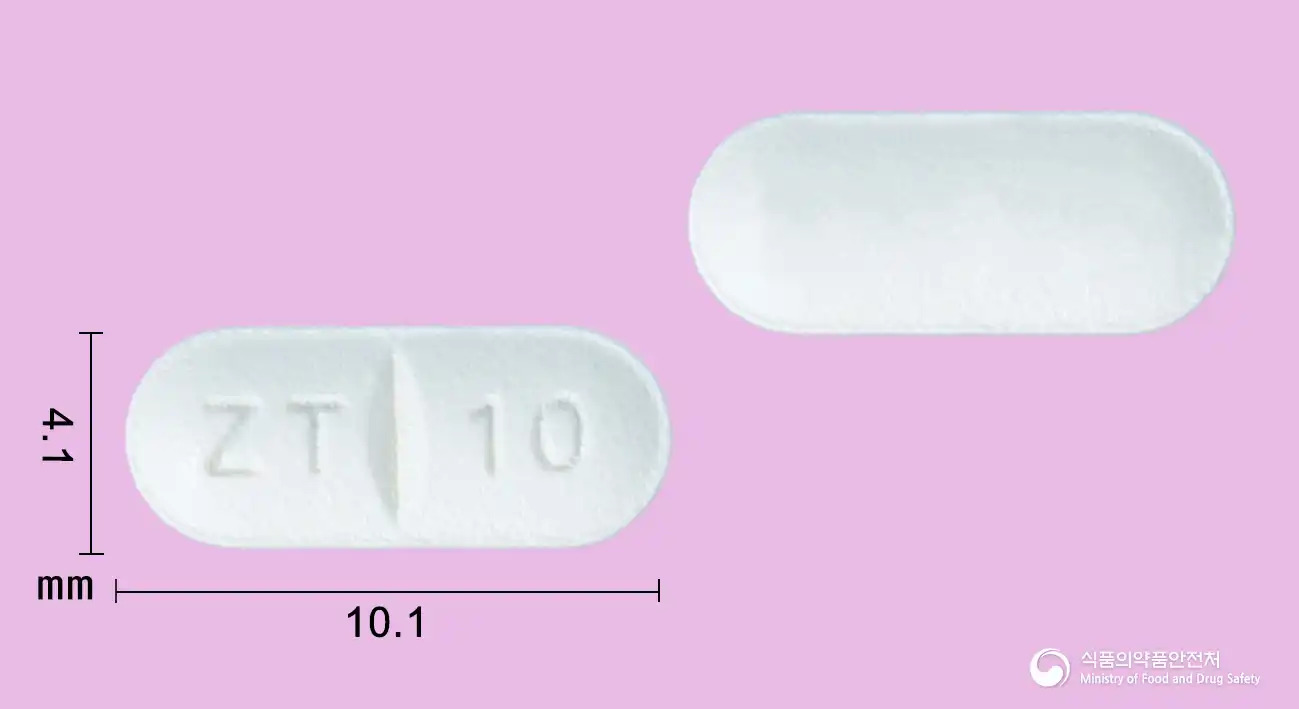
Zolpidem Tartrate 10mg
Tablet · Prescription medication
(Co., Ltd.) Korean Pharma

Zolpidem Tartrate 10mg
Tablet · Prescription medication
Korea Pharmaceutical Co., Ltd.

Zolpidem Tartrate 10mg
Tablet · Prescription medication
Handok Co., Ltd.

Zolpidem Tartrate 3.25mg
Tablet · Prescription medication
Handok Co., Ltd.

Zolpidem Tartrate 10mg
Tablet · Prescription medication
Myungin Pharmaceutical Co., Ltd.
Even with the same ingredient, the dose and directions can differ by strength and dosage form. Talk to a doctor or pharmacist before switching from a medication you are already taking.
No questions yet.
For anything that needs medical judgment, consult a doctor or pharmacist.
This drug information is based on data provided by the Korea Ministry of Food and Drug Safety.
Consult a doctor or pharmacist for accurate dosage, administration, and usage instructions.