
 한국어
 English
 日本語
 中文(简体)
 Viewing now
Cellcept Capsule 250 mg (Mycophenolate Mofetil)
Mycophenolate Mofetil 250mg
Hard capsule · Prescription medication
Roche Korea, Co., Ltd.
MFDS item code 200610652 · Approved 2006.10.25 · Insurance code 645000330
Prevention of acute rejection after organ transplantation (kidney, heart, etc.)
This medication is used to prevent acute organ rejection in patients undergoing kidney, heart, or liver transplantation. Additionally, it is administered in conjunction with cyclosporine and corticosteroids to improve the compatibility of the transplanted organ and regulate the immune response, helping the transplanted organ to function stably.
Refer to the prescribing information for the concomitantly administered corticosteroids and cyclosporine when using this medicine. Oral administration of this medicine should be started as soon as possible after kidney, heart, or liver transplantation. 1. Kidney transplantation ○ Adults: Administer 1 g of mycophenolate mofetil orally twice daily. In clinical trials, 3 g daily (1.5 g twice daily) showed efficacy and safety, but a benefit in efficacy has not been established in kidney transplant patients. 2. Heart transplantation ○ Adults: Administer 1.5 g of this medicine orally twice daily (daily dose 3g). 3. Liver transplantation ○ Adults: Administer 1.5 g of this medicine orally twice daily (daily dose 3g). 4. Dosage and administration in special populations 1) Patients with severe renal impairment: (1) In patients with severe chronic renal impairment (glomerular filtration rate < 25 mL/min/1.73 m2), do not administer more than 1 g of this medicine twice daily unless immediately after transplantation. No dose adjustment is necessary in patients with delayed graft function after transplantation. (2) There are no data in heart transplant patients with severe chronic renal impairment. Use this medicine in these patients only when the expected benefit outweighs the possible risks. 2) Older patients: Older patients may be treated with the recommended doses of 1 g twice daily after kidney transplantation and 1.5g twice daily after heart transplantation. However, the risk of adverse reactions may generally be increased in these older patients. The risk of adverse reactions may also be increased in patients receiving this medicine concomitantly with other immunosuppressants (see Adverse Reactions). 3) No dose adjustment is necessary in kidney transplant patients with severe hepatic parenchymal disease; however, there are no data in heart transplant patients with severe hepatic parenchymal disease. If neutropenia (ANC [absolute neutrophil count] < 1.3 x 10³/㎕) is observed, interrupt or reduce the dose of this medicine, perform appropriate diagnostic tests, and provide necessary treatment. 5. Treatment during rejection: Kidney transplant rejection does not alter the pharmacokinetics of MPA; discontinuation or dose reduction of this medicine is not required.
○ Children and adolescents (2~18 years): Administer this medicine to patients with a body surface area of 1. 25 m2 or greater. - 1.25 ~ 1.5 m2: Administer 750 mg of this medicine orally twice daily (daily dose 1.5g). - Greater than 1.5 m2: Administer 1.0 g of this medicine orally twice daily (daily dose 2g). ○ Infants under 2 years of age: Use of this medicine is not recommended because safety and efficacy data in patients under 2 years of age are limited.
Women of childbearing potential must use contraception. The risk of miscarriage or congenital malformations can significantly increase when taking this medication during pregnancy. This drug may suppress immune function, making patients susceptible to infections; therefore, it should only be prescribed by specialists experienced in immunosuppressive therapy for kidney, heart, or liver transplant patients. It is contraindicated in patients with a history of hypersensitivity or allergies, certain genetic disorders, and in pregnant or breastfeeding women. Caution is advised in patients with severely reduced kidney function or severe gastrointestinal disease, and in those with delayed organ function recovery post-transplant. Patients should be closely monitored. Serious side effects such as diarrhea, vomiting, leukopenia, infections, and lymphoma may occur, so patients must report any unusual symptoms to their healthcare providers immediately. Particularly, the risk of infections is heightened, potentially leading to life-threatening conditions such as tuberculosis, atypical mycobacterial infections, meningitis, and endocarditis. Regular blood tests should be conducted to monitor white blood cell counts and liver and kidney functions while on this medication. If abnormalities are detected, adjustments in dosages may be necessary. Elderly patients may have a higher risk of side effects such as infections, gastrointestinal bleeding, and pulmonary edema. This drug has many drug interactions; caution should be exercised when used with immunosuppressants, antibiotics, antacids, oral contraceptives, etc., and all medications being taken should be disclosed to healthcare providers. Women of childbearing potential should have pregnancy tests before and during treatment and utilize effective contraceptive methods during and after treatment. Male patients should also use effective contraception during and for a certain period after treatment. Women who are breastfeeding should not take this medication, and care should be taken to avoid direct contact of the powder with skin or mucous membranes; in case of contact, wash thoroughly immediately. This medication may cause drowsiness or dizziness, so caution is needed when driving or operating machinery. In case of overdose, the risk of immunosuppression and infection increases, and bone marrow suppression may occur, so consult a healthcare provider immediately; this medication cannot be removed by hemodialysis. For storage, keep the medication in a tightly closed container to protect it from air and moisture, and store it in a cool place below 25 degrees Celsius. Keep out of reach of children.
Diarrhea, leukopenia, sepsis, vomiting, tuberculosis, atypical mycobacterial infection, meningitis, infectious endocarditis, lymphoma, skin malignancy, lymphoproliferative diseases, mucocutaneous candidiasis, cytomegalovirus viremia/syndrome, herpes simplex, anemia, thrombocytopenia, pancytopenia, ulcers, bleeding, hematemesis, melena, hemorrhagic gastritis, colitis, nausea, peripheral edema, facial edema, scrotal edema, myalgia, neck pain, low back pain, confusion, depression, insomnia, restlessness, anxiety, adverse events, dizziness, headache, hypertonia, sensory abnormalities, somnolence, tremor, seizures, taste disturbance, tachycardia, hypertension, hypotension, venous thrombosis, vasodilation, bronchiectasis, cough, dyspnea, pleural effusion, abdominal distension, abdominal pain, colitis, constipation, anorexia, dyspepsia, esophagitis, belching, bloating, gastritis, gastrointestinal bleeding, gastrointestinal ulcer, gingival hyperplasia, intestinal obstruction, oral ulceration, pancreatitis, stomatitis, hypersensitivity reaction, increased serum alkaline phosphatase, increased serum lactic dehydrogenase, increased liver enzymes, hepatitis, hyperbilirubinemia, jaundice, acne, hair loss, rash, skin hypertrophy, arthralgia, muscle weakness, increased serum creatinine, increased blood urea, hematuria, renal dysfunction, fatigue, chills, edema, hernia, malaise, pain, fever, acute inflammatory syndrome related to new purine synthesis inhibitors, anaphylaxis, moniliasis, prostate disease, congestive heart failure, taste disorder, urinary incontinence, toothache, pruritus of external genitalia, perineal effusion, hepatitis due to reactivation of hepatitis B virus, severe neutropenia, agranulocytosis, progressive multifocal leukoencephalopathy (PML), BK virus-associated nephropathy
Not everyone experiences these, and they can vary from person to person.
This medication should be stored in a tightly closed container to protect it from air and moisture, preferably in a cool place below 25 degrees Celsius, to maintain its efficacy over time.
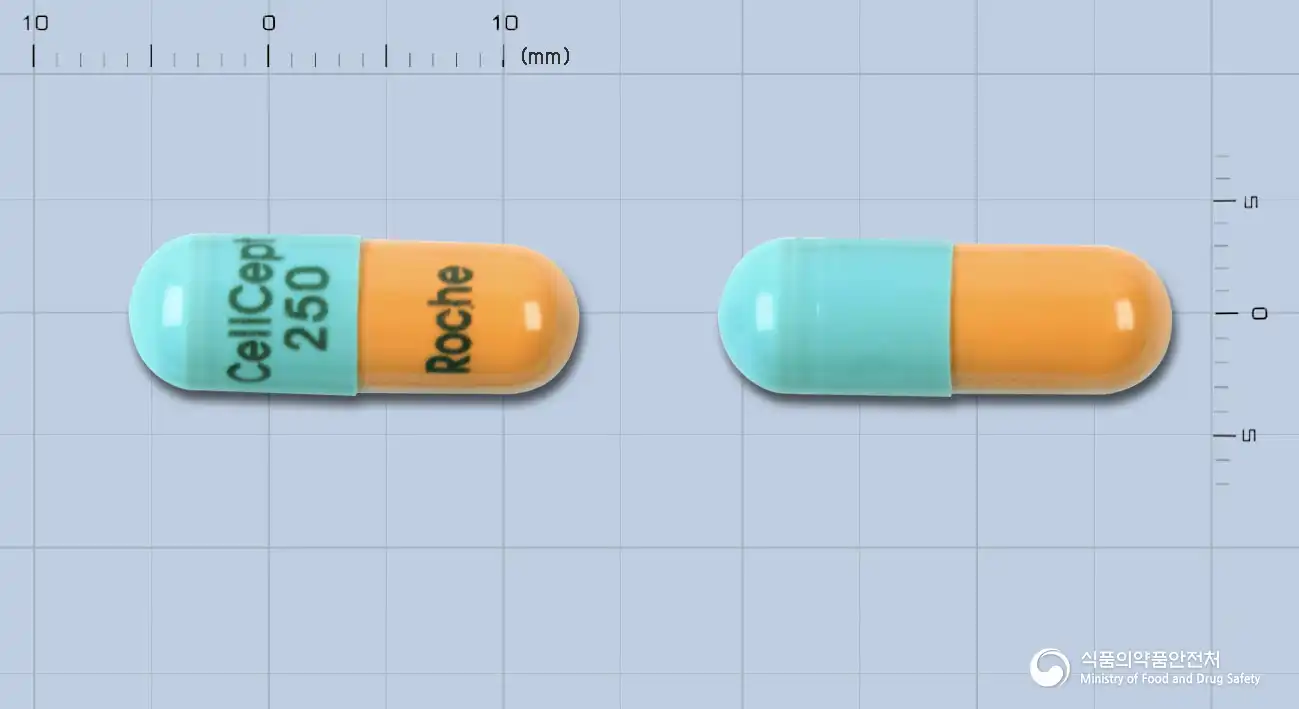
A hard capsule filled with a white to off-white powder, with a light blue upper body and a light brown lower body.
100 capsules (10 capsules in PTP packaging x 10)
Even with the same ingredient, strength, dosage form and how it is taken can differ.
Viewing nowMycophenolate Mofetil 250mg
Hard capsule · Prescription medication
Roche Korea, Co., Ltd.
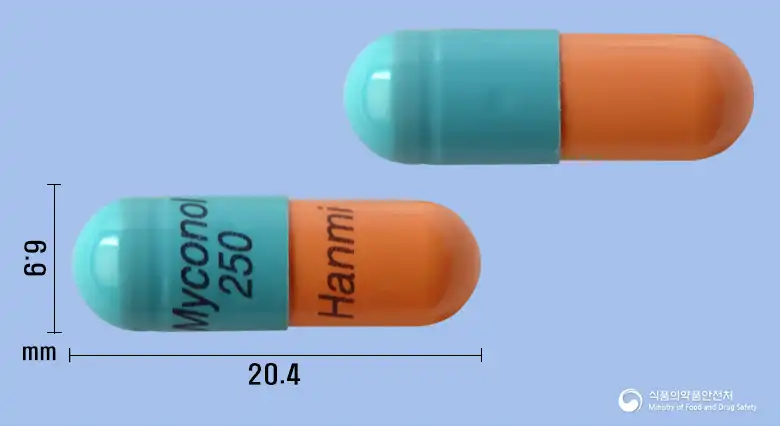
Mycophenolate Mofetil 250mg
Hard capsule · Prescription medication
Hanmi Pharmaceutical Co., Ltd.
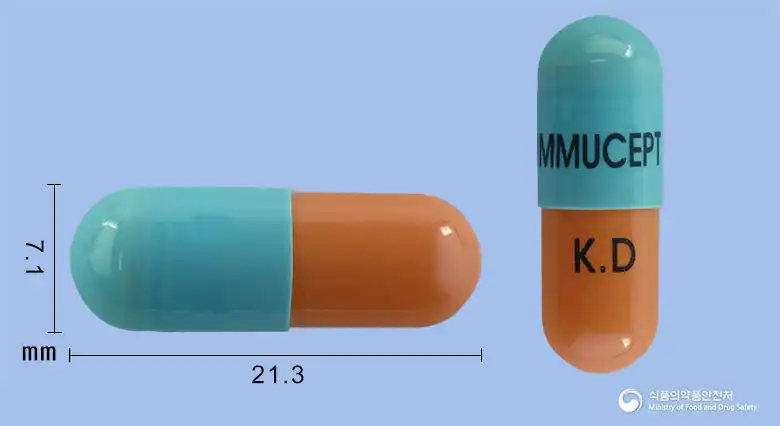
Mycophenolate Mofetil 250mg
Hard capsule · Prescription medication
Kwangdong Pharmaceutical Co., Ltd.
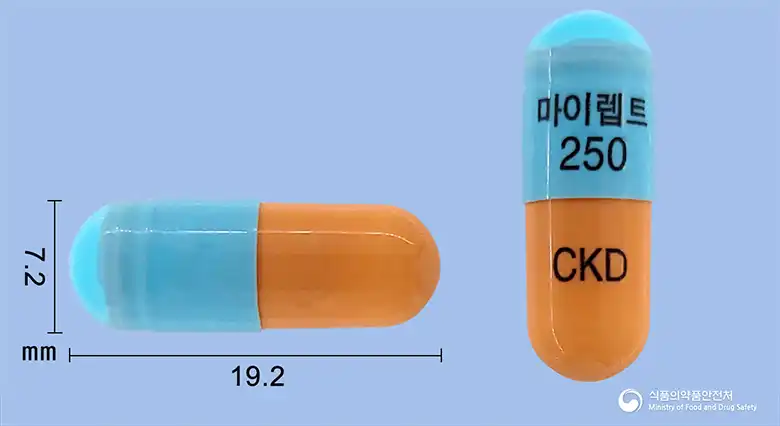
Mycophenolate Mofetil 250mg
Hard capsule · Prescription medication
Jongkundang Co., Ltd.
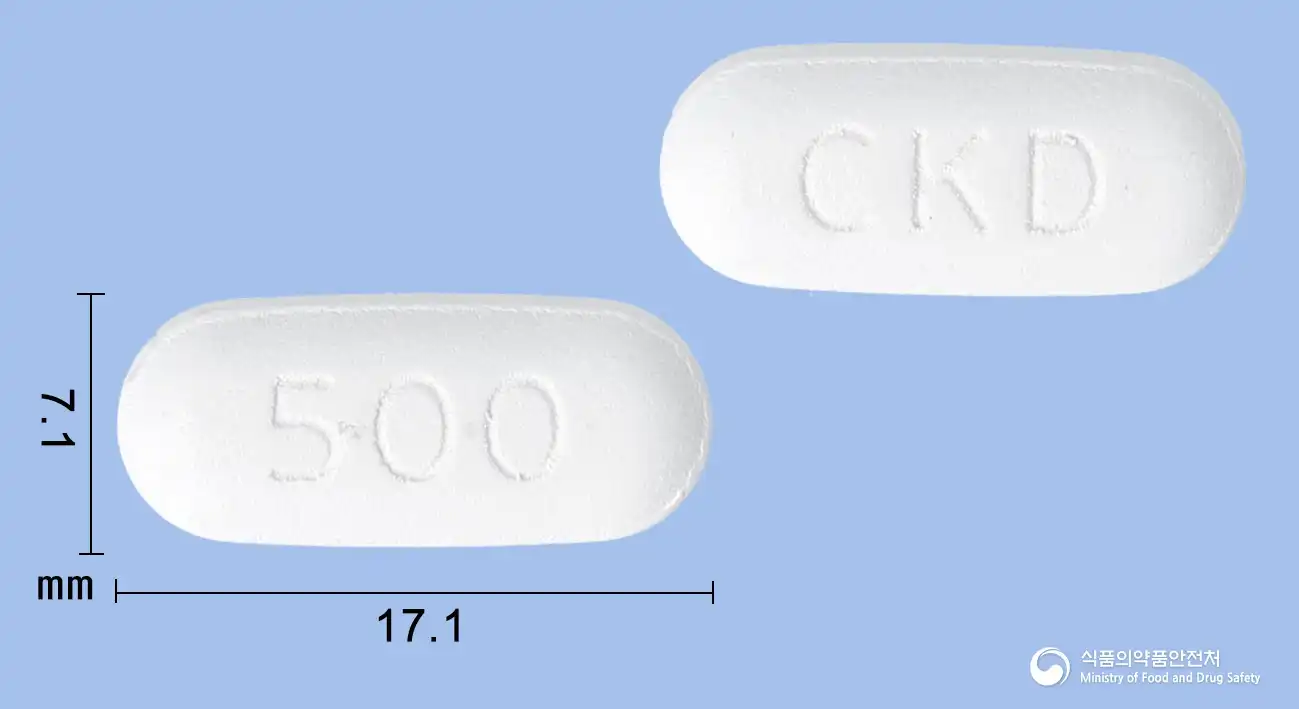
Mycophenolate Mofetil 500mg
Tablet · Prescription medication
Jong Kun Dang Co., Ltd.
Mycophenolate Mofetil
Prescription medication
Korea Roche Co., Ltd.
Mycophenolate Mofetil 34.98g
Prescription medication
(Co., Ltd.) Chong Kun Dang
Even with the same ingredient, the dose and directions can differ by strength and dosage form. Talk to a doctor or pharmacist before switching from a medication you are already taking.
No questions yet.
For anything that needs medical judgment, consult a doctor or pharmacist.
This drug information is based on data provided by the Korea Ministry of Food and Drug Safety.
Consult a doctor or pharmacist for accurate dosage, administration, and usage instructions.