
 한국어
 English
 日本語
 中文(简体)
 Viewing now
Sutent Capsules 50 mg (Sunitinib Malate)
Sunitinib Malate 66.8mg
Hard capsule · Prescription medication
Pfizer Korea, Co., Ltd.
MFDS item code 200606182 · Approved 2006.06.19 · Insurance code 648900490
Treatment of renal cell carcinoma, including adjuvant therapy after surgery; gastrointestinal stromal tumors; and pancreatic neuroendocrine tumors
This medication is used for gastrointestinal stromal tumors that have not responded to imatinib therapy. It also helps in the treatment of advanced renal cell carcinoma. It is used as adjuvant therapy following surgical resection in adult patients with recurrent renal cell carcinoma who are at high risk, contributing to improved treatment outcomes. The high-risk group is defined based on tumor staging and the patient's physical condition. Finally, it is also applicable to patients with unresectable and highly differentiated advanced or metastatic pancreatic neuroendocrine tumors, aiding in symptom improvement. This drug is used for various cancers including gastrointestinal stromal tumors, renal cell carcinoma, and pancreatic neuroendocrine tumors.
This medicine should be administered under the supervision of a physician experienced in the use of anticancer agents. 1. Gastrointestinal stromal tumor and advanced renal cell carcinoma The recommended dose of this medicine is 50 mg orally once daily for 4 weeks, followed by a 2-week rest period. Repeat treatment in 6-week cycles. This medicine may be taken with or without food. 2. Adjuvant treatment after surgery for renal cell carcinoma The recommended dose of this medicine for adjuvant treatment after surgery for renal cell carcinoma is 50 mg orally once daily for 4 weeks, followed by a 2-week rest period (4 weeks on treatment/2 weeks off treatment). Administer for 9 cycles of 6 weeks each. This medicine may be taken with or without food. 3. Pancreatic neuroendocrine tumors Administer 37.5 mg once daily without a rest period. It may be taken with or without food. 4. Dose and dosage adjustment 1) Based on individual safety and tolerability, dose increases or decreases in increments of 12.5 mg are recommended. For gastrointestinal stromal tumor and renal cell carcinoma, dose increases up to a maximum of 87.5 mg or decreases to a minimum of 25 mg are recommended. In the clinical trial of adjuvant treatment after surgery for renal cell carcinoma, the minimum dose administered was 37.5 mg. 2) Strong CYP3A4 inhibitors, such as ketoconazole, may increase the plasma concentration of this medicine. If replacing a concomitant medication, consider replacing it with another medication that has no or minimal potential for enzyme inhibition. If this medicine must be coadministered with a strong CYP3A4 inhibitor, consider reducing the dose to a minimum of 37.5 mg once daily (for gastrointestinal stromal tumor and advanced renal cell carcinoma) or 25 mg (for pancreatic neuroendocrine tumors). 3) Strong CYP3A4 inducers, such as rifampin, may decrease the plasma concentration of this medicine. If replacing a concomitant medication, consider replacing it with another medication that has no or minimal potential for enzyme induction. If this medicine must be coadministered with a strong CYP3A4 inducer, consider increasing the dose to a maximum of 87.5 mg once daily (for gastrointestinal stromal tumor and advanced renal cell carcinoma) or 62.5 mg (for pancreatic neuroendocrine tumors). If the dose is increased, carefully monitor the patient for potential toxicity. St. John's wort may decrease the plasma concentration of this medicine to an unpredictable extent. Patients receiving this medicine must not take St. John's wort concomitantly. 4) Temporary interruption of treatment may be necessary based on the individual patient's safety and tolerability.
This drug may interfere with normal vascular development of the fetus when taken during pregnancy, posing a serious risk of abnormalities to the fetus. Women who are pregnant or may become pregnant should not take this medication, and must avoid becoming pregnant while on treatment. Patients with hypersensitivity to this drug should not take it. Various side effects may occur, such as fatigue, diarrhea, nausea, stomatitis, hypertension, bleeding, rash, numbness in hands and feet, hence caution is needed. Particularly, serious side effects such as decreases in blood cell counts, liver function impairment, heart function decline, pancreatitis, and skin reactions may occur, necessitating regular monitoring. This drug can be administered to patients with poor liver and kidney function, but the dosage may need adjustment based on the condition, requiring consultation with healthcare providers. There may be dizziness while driving or operating machinery, so caution is advised. This drug may interact with other medications, so all current medications and health supplements should be disclosed to healthcare providers. If nursing, it is recommended to discontinue breastfeeding as this drug may be passed into breast milk. This drug may affect fertility, so caution is advised for both males and females when taking it. Patients undergoing surgery may need to temporarily discontinue this drug around the time of the procedure as it may affect wound healing. If unusual symptoms or serious side effects occur while on this medication, immediate consultation with healthcare providers is necessary for appropriate treatment.
Pulmonary embolism, thrombocytopenia, tumor hemorrhage, febrile neutropenia, hypertension, liver failure, torsades de pointes, fatigue, diarrhea, nausea, stomatitis, dyspepsia, vomiting, abdominal pain, constipation, skin discoloration, rash, peripheral erythema and sensory disturbance syndrome, dry skin, hair discoloration, mucosal inflammation, asthenia, taste disorder, loss of appetite, bleeding, anemia, neutropenia, hypothyroidism, deep vein thrombosis, epistaxis, pleural effusion, chromaturia, oral pain, tongue pain, dry mouth, gastroesophageal reflux disease, limb pain, arthralgia, myalgia, mucosal inflammation, edema, decreased hemoglobin, increased serum creatine phosphokinase, decreased cardiac output, increased lipase, decreased platelet count, leukopenia, periorbital edema, increased tear production, dehydration, dizziness, paresthesia, dyspnea, abdominal bloating, aphthous stomatitis, gingival hemorrhage, exfoliative dermatitis, vesicles, eyelid edema, pharyngitis, alopecia, erythema, pruritus, skin damage, skin reaction, nail abnormalities, yellow skin, increased serum amylase, decreased WBC, weight loss, abnormal cardiac output, increased serum amylase, fever, chills, influenza-like symptoms, decreased cardiac output, weight loss, heart failure, congestive heart failure, QT interval prolongation, seizures, adrenal dysfunction, venous thromboembolism, impaired wound healing, osteonecrosis of the jaw, tumor lysis syndrome, necrotizing fasciitis, thrombotic microangiopathy, proteinuria, hypoglycemia, lung, gastrointestinal tract, tumor, urinary tract, cerebral hemorrhage, necrotizing fasciitis, erythema multiforme, Stevens-Johnson syndrome, cholecystitis, cholecystitis, hyperthyroidism, angioedema, severe infection, pneumonia, bronchitis, urinary tract infection, skin infection, sepsis, septic shock, abscess, myopathy, rhabdomyolysis, fistula formation, ageusia, hyperammonemic encephalopathy, cardiomyopathy, myocardial ischemia, myocardial infarction, renal impairment, renal failure, nephrotic syndrome, arterial thromboembolism, cerebrovascular accident, transient ischemic attack, cerebral infarction, aneurysm, arterial dissection, gastrointestinal perforation, esophagitis, colitis, ischemic colitis, thyroiditis, angioedema, necrotizing fasciitis, thrombotic microangiopathy, thrombotic thrombocytopenic purpura, hemolytic uremic syndrome, life-threatening bleeding associated with thrombocytopenia, asthenia, pneumonia, dyspnea, acute renal failure, worsening condition, colitis, sepsis, pleural effusion, hemoptysis, muscular weakness, cholecystitis, circulatory failure, heart failure, malnutrition, fever, hypoglycemia, mental disorders, melena, death, abdominal distention, bilirubinemia, azotemia, hematuria, jaundice, hepatorenal syndrome, hypothyroidism, convulsions, conjunctivitis, hyperkalemia, hypercalcemia, pneumothorax, headache, intracranial hemorrhage, back pain, hiccups, paralysis, unspecified hemorrhage, leukocytosis, ascites, anemia, delirium, surgical intervention, postoperative wound infection, esophageal carcinoma, esophagitis, loss of appetite, myocardial infarction, pericardial effusion, cardiac hypertrophy, deep vein thrombosis, malignant neoplasm, dizziness, dizziness, hemolytic uremic syndrome, congestive heart failure, gastric carcinoma, enterostomy, intestinal obstruction, hyponatremia, hypotension, systemic inflammatory response syndrome, rectal bleeding, laceration, confusion, appendicitis, pancreatitis, hematemesis, pain, disseminated intravascular coagulation, septic shock, lung carcinoma, dermatitis, thrombotic thrombocytopenic purpura, thromboembolism, jaundice, pharyngitis, azotemia, back pain, gingivitis, cough, sputum disorders, melena, hyponatremia, increased alkaline phosphatase, gastritis, toothache, conjunctivitis, dysuria, purpura, skeletal pain, hiccups, malnutrition, oral hemorrhage, cheilitis, hyperkalemia, tinnitus, voice disturbance, pleural effusion, purpura, urinary abnormalities, neuropathy, hypoproteinemia, dysuria, colitis, acne, hyperglycemia, hypercholesterolemia, increased sweating, stomatitis, discoloration of fingers and toes, visual disturbances, albuminuria, menstrual disorders, lip ulcers, hypophosphatemia, tremors, substernal chest pain, confusion, shingles, delirium, laceration, hearing loss, dermatitis, tuberculosis infection, paralysis, ascites, unspecified intestinal disease, bradycardia, postoperative wound infection, surgical intervention, circulatory failure, gynecomastia, urinary incontinence, movement disorders, gastric ulcer, hypokalemia, hypotension, mental disorders, drowsiness, proctitis, periodontal destruction, hemorrhoids, hematemesis, septic shock, skin irritation, oliguria, anal disorders, hypertriglyceridemia, glaucoma, palpitations, increased bowel frequency, gout
Not everyone experiences these, and they can vary from person to person.
This medication should be stored in a tightly sealed container to prevent exposure to air or moisture. It is recommended to maintain the storage temperature between 1 to 30 degrees Celsius.
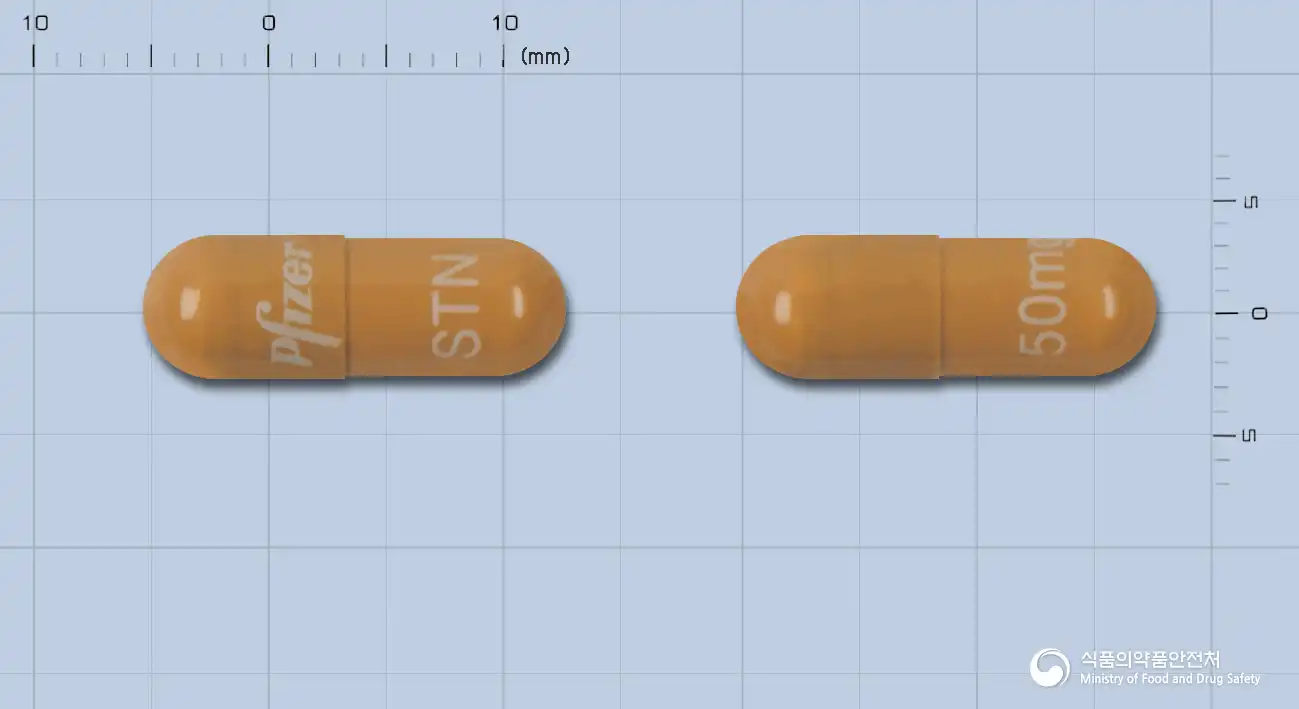
Yellow to orange granules in brown hard capsules
28 capsules/bottle
Even with the same ingredient, strength, dosage form and how it is taken can differ.
Viewing nowSunitinib Malate 66.8mg
Hard capsule · Prescription medication
Pfizer Korea, Co., Ltd.
Sunitinib Malate 16.7mg
Hard capsule · Prescription medication
Pfizer Korea Co., Ltd.
Sunitinib Malate 33.4mg
Hard capsule · Prescription medication
Pfizer Korea Ltd.
Even with the same ingredient, the dose and directions can differ by strength and dosage form. Talk to a doctor or pharmacist before switching from a medication you are already taking.
No questions yet.
For anything that needs medical judgment, consult a doctor or pharmacist.
This drug information is based on data provided by the Korea Ministry of Food and Drug Safety.
Consult a doctor or pharmacist for accurate dosage, administration, and usage instructions.