
 한국어
 English
 日本語
 中文(简体)
 Viewing now
Actiq Buccal Tablet 800 Micrograms (Fentanyl Citrate)
Fentanyl Citrate 1.2568mg
Prescription medication
Hyundai Pharmaceutical Co., Ltd.
MFDS item code 200605330 · Approved 2006.05.24 · Insurance code 642000800
Relief of breakthrough pain in opioid-tolerant adult cancer patients
This drug is used to relieve breakthrough pain that patients with cancer who are currently taking opioid analgesics may experience.
The blister packaging must be opened with scissors immediately before use. The patient should place 1 tablet in the mouth between the cheek and lower gum, then use the applicator to move the tablet from one side to the other occasionally. This medicine must be sucked, not chewed. If 1 tablet of this medicine is chewed and swallowed, the peak plasma concentration and bioavailability may be lower than when it is taken as directed. This medicine should be taken over 15 minutes. If the administration time is shorter or longer, efficacy may be lower than that reported in clinical trials. If the effects of the opioid become excessive before 1 tablet has been fully administered, remove the medicine immediately and reduce the dose for subsequent administration. A dose that provides adequate pain relief and minimizes adverse reactions must be established for each individual patient. 1. Dose titration 1) Initiation of treatment The starting dose of this medicine for the treatment of breakthrough cancer pain is 200㎍. Patients should be prescribed the titration pack containing 6 tablets of 200㎍, thereby limiting the number of tablets of the product used at home during the titration period. Patients should not increase the dose before taking all of the prescribed tablets of this medicine. Patients must strictly follow these initial dosing instructions, and the dose should be changed until a dose is reached that provides adequate pain relief with a single administration for an episode of breakthrough cancer pain while minimizing adverse reactions. To determine whether dose adjustment has been adequate, patients should record the doses of this medicine taken for several episodes of breakthrough cancer pain and review them with their physician. 2) Redosing for a single episode of pain Until an adequate dose is reached, the patient may need to take an additional dose of this medicine for a single episode of pain. Redosing may begin 15 minutes after completion of the preceding tablet dose (30 minutes after the preceding tablet was started). While the patient is undergoing titration and taking individually titrated doses as adjunctive treatment, no more than 2 tablets should be administered for each episode of breakthrough cancer pain. 3) Dose escalation If, after administration of this medicine for several consecutive episodes of breakthrough pain, more than 1 tablet is needed for each episode of pain, consider increasing the dose by 1 step. During initial titration, it is recommended that 6 tablets of the new dose of this medicine be prescribed. Each new dose of this medicine used during the initial titration period should be evaluated over several episodes of breakthrough cancer pain (generally 1~2 days) to determine whether it provides adequate efficacy with tolerable adverse reactions. Adverse reactions tend to occur more frequently during the initial titration phase than after an effective dose has subsequently been established. 4) Maximum daily dose Once a successful dose has been identified (for example, treatment of each episode of pain with 1 tablet), the patient's daily dose should be limited to no more than 4 tablets. If the dose exceeds 4 tablets per day, the dose of the long-acting opioid used for persistent cancer pain should be readjusted. Initial dose titration process Start with 200㎍ (Do not dispense more than 6 tablets initially.) ↓ 1 - Take this medicine over 15 minutes. 2 - Wait an additional 15 minutes after taking it. 3 - If needed, take a second tablet over 15 minutes. 4 - Administer this medicine for several episodes of breakthrough pain. ↓ Does 1 tablet provide adequate relief? Yes No ↙ ↘ ↓ ↓ Effective dose established Increase the dose* by 1 step *The available dose range is 200㎍, 400㎍, 600㎍, 800㎍, 1200㎍, 1600㎍. 2. Dose adjustment Results from long-term studies of this medicine for the treatment of breakthrough cancer pain indicate that some patients require adjustment of both this medicine and the opioid analgesic taken regularly (at fixed intervals) to continue to obtain adequate relief from breakthrough cancer pain. In general, if administration of this medicine for several consecutive episodes of breakthrough pain has required more than 1 tablet for each episode, the dose should be increased. During adjustment to an appropriate dose, a small quantity (6 tablets) should be prescribed at each adjustment step. If a patient experiences breakthrough cancer pain more than 4 times per day, the physician should consider increasing the dose of the opioid taken regularly by the patient for persistent cancer pain. If pain is not adequately controlled, the possibility of hyperalgesia, tolerance, and progression of the underlying disease should be considered. 3. Discontinuation of this medicine Because it is not known at what dose opioid treatment can be stopped without the sudden appearance of withdrawal symptoms, gradual dose reduction is recommended for patients who need to discontinue opioid treatment.
This drug is a powerful opioid medication used for the relief of breakthrough pain in cancer patients. This drug should only be used in patients who are tolerant to opioids and should not be used in patients who have not taken opioids for an extended period. This drug is not suitable for the treatment of acute pain or postoperative pain. Administration of this drug should be managed by an expert experienced in cancer pain treatment. It should be stored in a safe place out of reach of children, and any remaining medication should be disposed of properly. Caution should be taken when this drug is taken together with central nervous system depressants, benzodiazepines, alcohol, etc. as serious side effects such as respiratory depression, sedation, and coma may occur. It is recommended not to administer this drug to patients who have taken MAO inhibitors within the last 14 days. Caution is needed in patients with respiratory depression, chronic pulmonary disease, head injury, heart disease, or impaired liver or kidney function. During the use of this drug, side effects such as weakness, headache, nausea, constipation, dizziness, and drowsiness may occur. There is a risk of both psychological and physical dependence, so dose adjustment and monitoring of the patient's condition is necessary. Caution is required when performing dangerous tasks such as driving or operating machinery while taking this drug. This drug is metabolized by specific enzymes in the liver, so when taken with medications that inhibit or induce these enzymes, dose adjustments may be necessary. Patients who are pregnant or breastfeeding should consult with a professional before using this drug. Elderly patients may be more sensitive to this drug, so careful dose adjustment is necessary. In cases of overdose, life-threatening conditions such as respiratory depression may occur, requiring immediate emergency care. This drug should only be used for the purpose of pain control in cancer patients and should be prescribed by healthcare professionals with specialized knowledge and experience. When storing, care should be taken regarding temperature and humidity, unused opened products should not be used, and access by children should be thoroughly blocked. Any remaining medication after taking should be disposed of safely to prevent contact with children or others.
Not everyone experiences these, and they can vary from person to person.
This drug should be stored in a tightly sealed container to protect it from air and moisture. The storage temperature should be maintained at room temperature between 15 and 30 degrees Celsius.
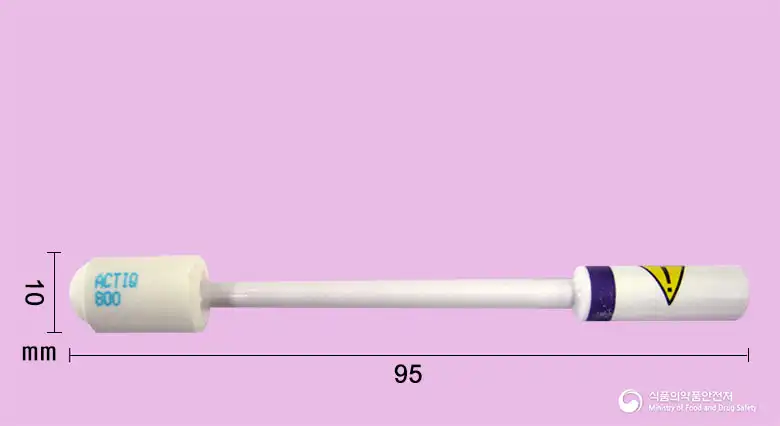
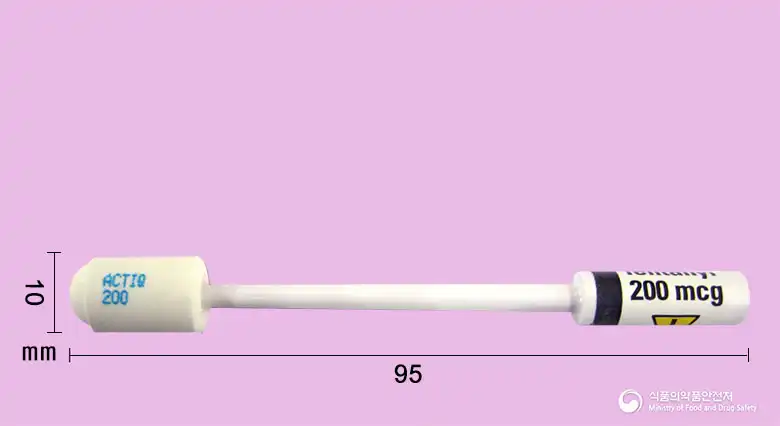
A white cylindrical buccal tablet attached to a white plastic support, with a flat bottom and a domed top.
30 tablets (3 tablets/PTP packaging x 10)
Even with the same ingredient, strength, dosage form and how it is taken can differ.
Viewing nowFentanyl Citrate 1.2568mg
Prescription medication
Hyundai Pharmaceutical Co., Ltd.
Fentanyl Citrate 0.0785mg
Solution · Prescription medication
Myungmoon Pharmaceutical Co., Ltd.
Fentanyl Citrate
Prescription medication
DaeWon Pharmaceutical Co., Ltd.
Fentanyl Citrate 78.5μg
Injections · Prescription medication
BC World Pharmaceutical Co., Ltd.
Fentanyl Citrate 0.0785mg
Prescription medication
Gujoo Pharmaceutical Co., Ltd.
Fentanyl Citrate 0.0785mg
Injections · Prescription medication
Hana Pharmaceutical Co., Ltd.
Fentanyl Citrate 78.5μg
Injections · Prescription medication
Halim Pharmaceuticals Co., Ltd.
Fentanyl Citrate 0.3142mg
Prescription medication
Hyundai Pharmaceutical Co., Ltd.
Even with the same ingredient, the dose and directions can differ by strength and dosage form. Talk to a doctor or pharmacist before switching from a medication you are already taking.
No questions yet.
For anything that needs medical judgment, consult a doctor or pharmacist.
This drug information is based on data provided by the Korea Ministry of Food and Drug Safety.
Consult a doctor or pharmacist for accurate dosage, administration, and usage instructions.