
 한국어
 English
 日本語
 中文(简体)
 Viewing now
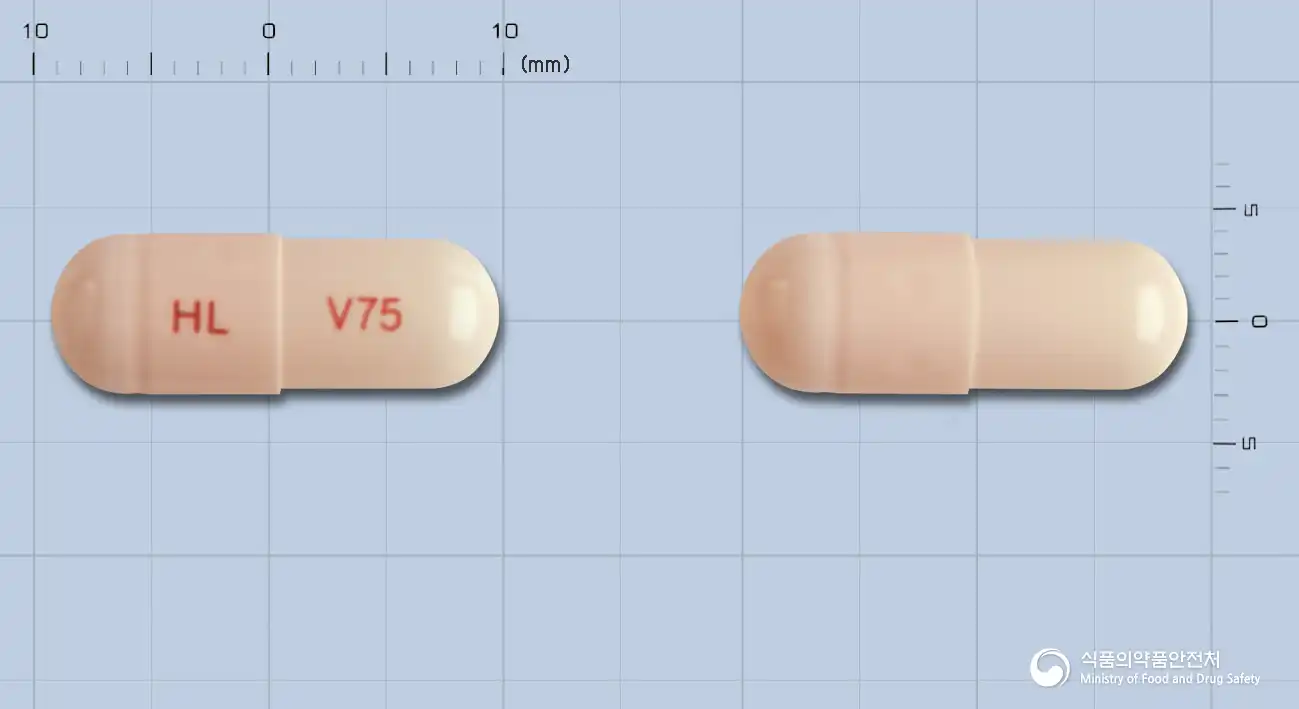
Venexa XR Sustained-Release Capsule 75 mg (Venlafaxine Hydrochloride)
Venlafaxine Hydrochloride 84.84mg
Prescription medication
Hanlim Pharmaceutical Co., Ltd.
MFDS item code 200500587 · Approved 2005.10.31 · Insurance code 645304070
Treatment of depression and anxiety disorders (generalized anxiety disorder, panic disorder, etc.)
This medication is used to alleviate symptoms of various mental health issues, including depression, generalized anxiety disorder, social phobia, and panic disorder.
The therapeutic dose of this medicine should be adjusted according to the patient's clinical condition, and the lowest effective dose should be administered whenever possible. Take this medicine with food, at a consistent time in the morning or evening if possible. Do not divide, crush, chew, or dissolve the capsule in water. Adults 1. Depression and generalized anxiety disorder The recommended starting dose is 75 mg of venlafaxine hydrochloride orally once daily. Depending on the patient, 37.5 mg once daily may be administered for 4∼7 days after starting treatment to allow the patient to adjust to the medicine before increasing to 75 mg daily. If further clinical improvement is needed after 2 weeks of treatment, the dose may be increased to 150 mg daily. If necessary, the dose may be increased to a maximum of 225 mg daily. Dose increases should be no more than 75 mg daily and should be made at intervals of at least 4 days. Patients with depression who are currently taking an immediate-release tablet containing this medicine may be switched to this medicine, with the dose kept as close as possible to the tablet dose. For example, a patient taking 37.5 mg of the immediate-release tablet containing this medicine twice daily may take 75 mg of this medicine once daily. Individual dose adjustment may be necessary when switching. 2. Social anxiety disorder The recommended dose is 75 mg of venlafaxine hydrochloride orally once daily. There is no evidence of additional benefit from increasing the dose. 3. Panic disorder The recommended starting dose is 37.5 mg of venlafaxine hydrochloride once daily for 7 days. In clinical trials conducted in outpatients with panic disorder to evaluate the efficacy of this medicine, patients received an initial dose of 37.5 mg once daily for 7 days, followed by an increase to 75 mg once daily, with further increases of 75 mg at consecutive 1-week intervals, up to 225 mg daily. Although the dose-response relationship for the efficacy of this medicine in patients with panic disorder has not been clearly established, some patients who do not respond to 75 mg/day may benefit from increasing the dose to a maximum of 225 mg daily. If the dose is increased, increases should be no more than 75 mg daily as needed and should be made at intervals of at least 7 days. 4. Administration in special populations 1) Patients with hepatic impairment In patients with hepatic impairment, the clearance of venlafaxine and O-desmethylvenlafaxine (ODV) is reduced and their half-lives are prolonged; therefore, the dose should be reduced by 50% in patients with moderate hepatic impairment. Because drug clearance varies considerably among patients with cirrhosis, individual dose adjustment is necessary. 2) Patients with renal impairment In patients with renal impairment (GFR=10∼70 mL/min), clearance of this medicine is reduced and the half-lives of venlafaxine and ODV are increased compared with those in healthy individuals. Therefore, the total daily dose should be reduced by 25∼50%. For patients undergoing hemodialysis, the total daily dose should be reduced by 50%, and the medicine should be administered after hemodialysis is completed. Because drug clearance varies considerably among patients with renal impairment, individual dose adjustment is necessary. 5. Maintenance/continuation/long-term treatment The physician should periodically evaluate the efficacy of long-term treatment with this medicine for each patient. Although clinical trial evidence is lacking regarding how long this medicine should be administered to patients with depression, generalized anxiety disorder, social anxiety disorder, or panic disorder, it is generally agreed that acute depression requires continued drug therapy for several months or longer. 6. Discontinuation of treatment with this medicine When discontinuing this medicine after administration for more than 1 week, gradually reduce the dose over several days to minimize withdrawal symptoms. In patients who have received this medicine for more than 6 weeks, the dose should be gradually reduced over at least 2 weeks. Although withdrawal symptoms associated with this medicine have not been comprehensively evaluated, adverse reactions reported in 3% or more of patients during dose reduction and after discontinuation in retrospective surveys, and occurring at least twice as often as in the placebo group, included hypomania, anxiety, agitation, nervousness, confusion, insomnia or sleep disturbance, fatigue, somnolence, paresthesia, dizziness, headache, sweating, dry mouth, loss of appetite, diarrhea, nausea, and vomiting. These withdrawal symptoms were mild and resolved without treatment. The time required for dose reduction may vary depending on the dose, duration of treatment, and patient. 7. Switching from MAO inhibitors used to treat psychiatric disorders When discontinuing an MAO inhibitor used to treat psychiatric disorders and starting treatment with this medicine, an interval of at least 14 days should be allowed. Conversely, when starting an MAO inhibitor to treat psychiatric disorders, at least 7 days should have elapsed after discontinuation of this medicine. 8. Other MAO inhibitors, such as linezolid or methylene blue Patients receiving linezolid or intravenous methylene blue should not start treatment with this medicine because of the increased risk of serotonin syndrome. For patients requiring treatment for a more urgent psychiatric condition, including hospitalization, other interventions should be considered. It may be necessary to urgently administer linezolid or intravenous methylene blue to a patient already receiving this medicine. If no alternative to linezolid or intravenous methylene blue is available and, for a specific patient, the benefits of treatment with linezolid or intravenous methylene blue are judged to outweigh the risk of serotonin syndrome, this medicine may be discontinued immediately and linezolid or intravenous methylene blue administered. Patients should be monitored for symptoms of serotonin syndrome for 7 days after administration of linezolid or intravenous methylene blue, or until 24 hours after the last dose, whichever occurs first. Treatment with this medicine may be resumed 24 hours after the last dose of linezolid or intravenous methylene blue. The risk associated with administration of methylene blue by a non-intravenous route (oral tablet or local injection) or intravenous administration of this medicine at a dose of 1mg/kg or less is unclear. Nevertheless, clinicians should be aware of the potential for emergency symptoms of serotonin syndrome with these uses.
As this medication affects the central nervous system, alcohol consumption should be avoided during treatment. Taking it with alcohol can increase the central nervous system depressant effects and may be dangerous. Due to the risk of overdose while taking this medication, healthcare providers should prescribe only the minimum necessary dose for safety. Particularly, young adults aged 18-24 and pediatric patients may have an increased risk of suicidal thoughts or behaviors while taking this medication, requiring careful monitoring. This medication is not approved for use in patients under 18 years old. This medication can raise blood pressure, so blood pressure should be monitored regularly during treatment, and dosage adjustments or discontinuation should be considered if blood pressure becomes persistently elevated. Taking it alongside other serotonergic agents can lead to a serious side effect known as serotonin syndrome; therefore, caution is necessary for co-administration. Particularly, it is contraindicated to be taken with MAO inhibitors. Patients with hypersensitivity to this medication, those currently taking MAO inhibitors, pregnant or potentially pregnant women, nursing mothers, and patients under 18 should not be administered this medication. While taking this medication, psychiatric symptoms such as worsening depression, anxiety, aggression, or suicidal thoughts may occur, so patients and caregivers should closely monitor for such changes and consult a physician immediately. Patients with a history of seizures may experience seizures while taking this medication, so caution is necessary, and immediate medical attention should be sought if a rash or allergic reaction occurs. For patients with impaired kidney or liver function, metabolism of this medication may slow, and lower doses are recommended. Sudden discontinuation of this medication may result in withdrawal symptoms such as dizziness, anxiety, and sleep disturbances, so dosage should be gradually reduced according to a physician's instructions. This medication can cause sexual dysfunction, and in some patients, these symptoms may persist. Caution is required when driving or operating hazardous machinery, particularly at the start of treatment, as drowsiness or dizziness may occur. Patients with heart disease or those who have recently experienced myocardial infarction should use this medication with caution, as there is a risk of cardiovascular side effects such as arrhythmias. This medication can interact with several other drugs, so patients taking other medications must inform their physician or pharmacist, especially concerning lithium, diazepam, cimetidine, haloperidol, and CYP450 enzyme inhibitors. Common adverse reactions include nausea, dizziness, insomnia, increased nervousness, drowsiness, sweating, and elevated blood pressure, and serious adverse reactions must be reported to medical personnel immediately.
Not everyone experiences these, and they can vary from person to person.
This medication should be stored in a tightly sealed container to prevent exposure to air and moisture. It is also important to store it at a cool temperature below 25 degrees to maintain its effectiveness.
A peach-colored capsule containing white-gray spherical granules.
30 capsules/bottle, 100 capsules/bottle, 100 capsules/box [(10 capsules/PTP packaging × 10)]
Even with the same ingredient, strength, dosage form and how it is taken can differ.
Viewing nowVenlafaxine Hydrochloride 84.84mg
Prescription medication
Hanlim Pharmaceutical Co., Ltd.
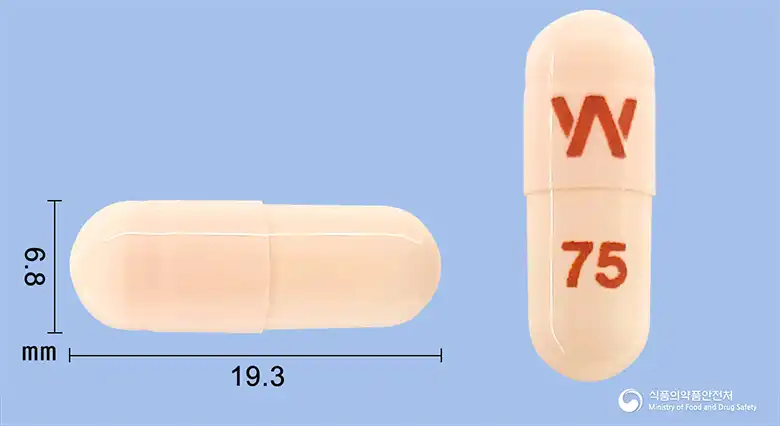
Venlafaxine Hydrochloride 84.85mg
Prescription medication
Viatris Korea Co., Ltd.
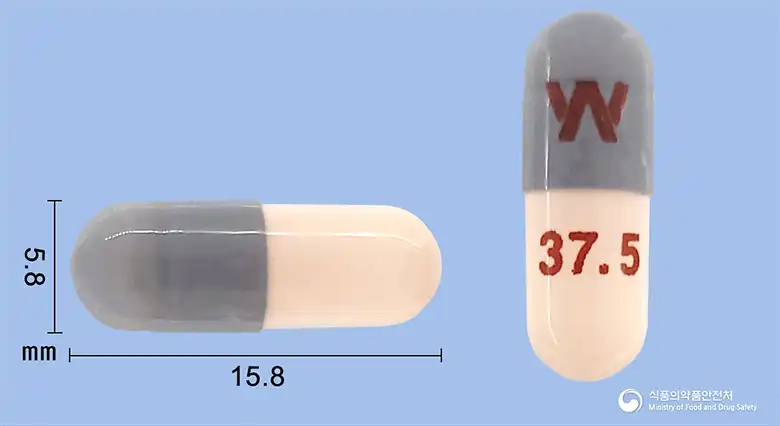
Venlafaxine Hydrochloride 42.43mg
Prescription medication
Viatriss Korea Co., Ltd.
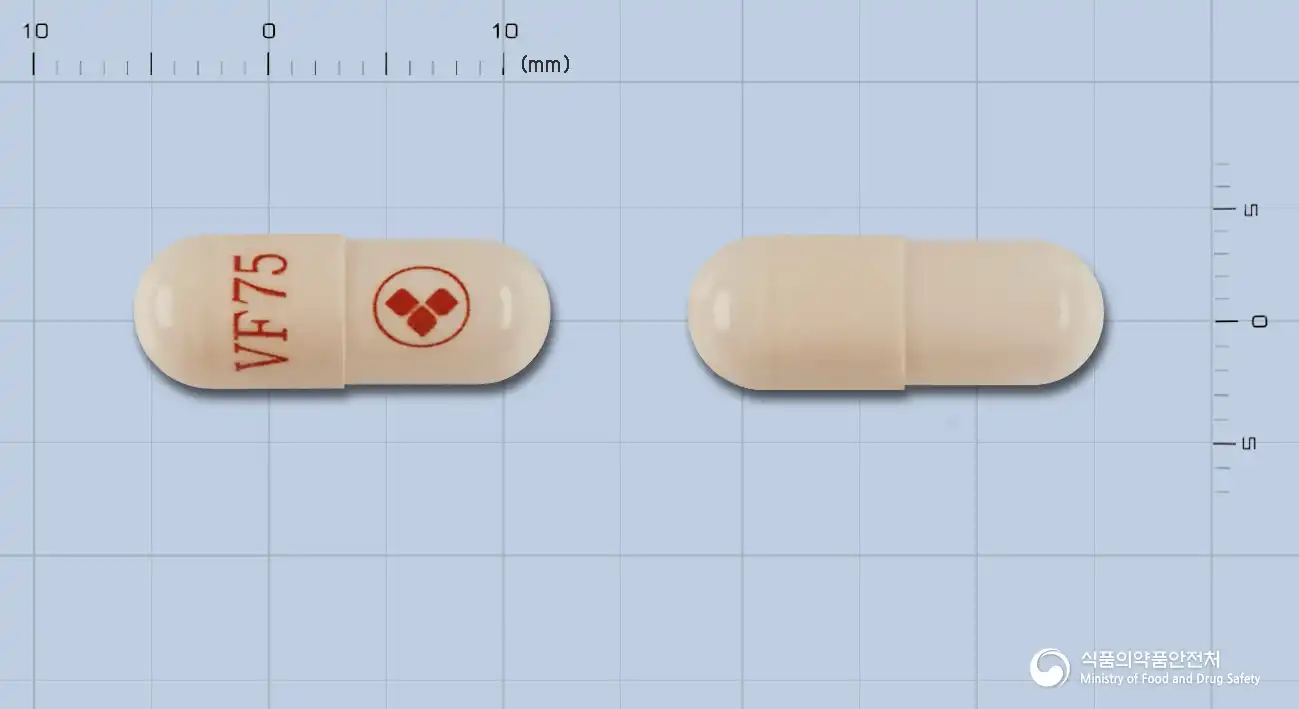
Venlafaxine Hydrochloride 84.85mg
Prescription medication
Myungin Pharmaceutical Co., Ltd.
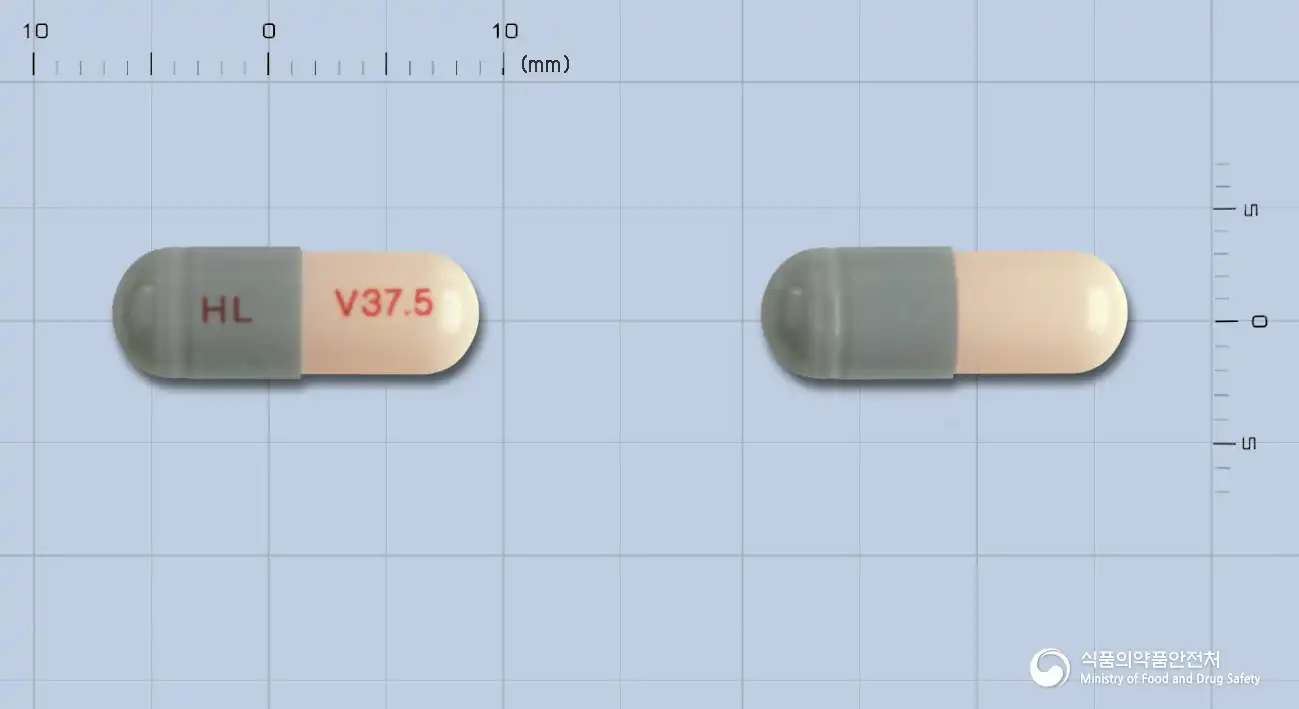
Venlafaxine Hydrochloride 42.42mg
Prescription medication
Hanhim Pharmaceutical Co., Ltd.
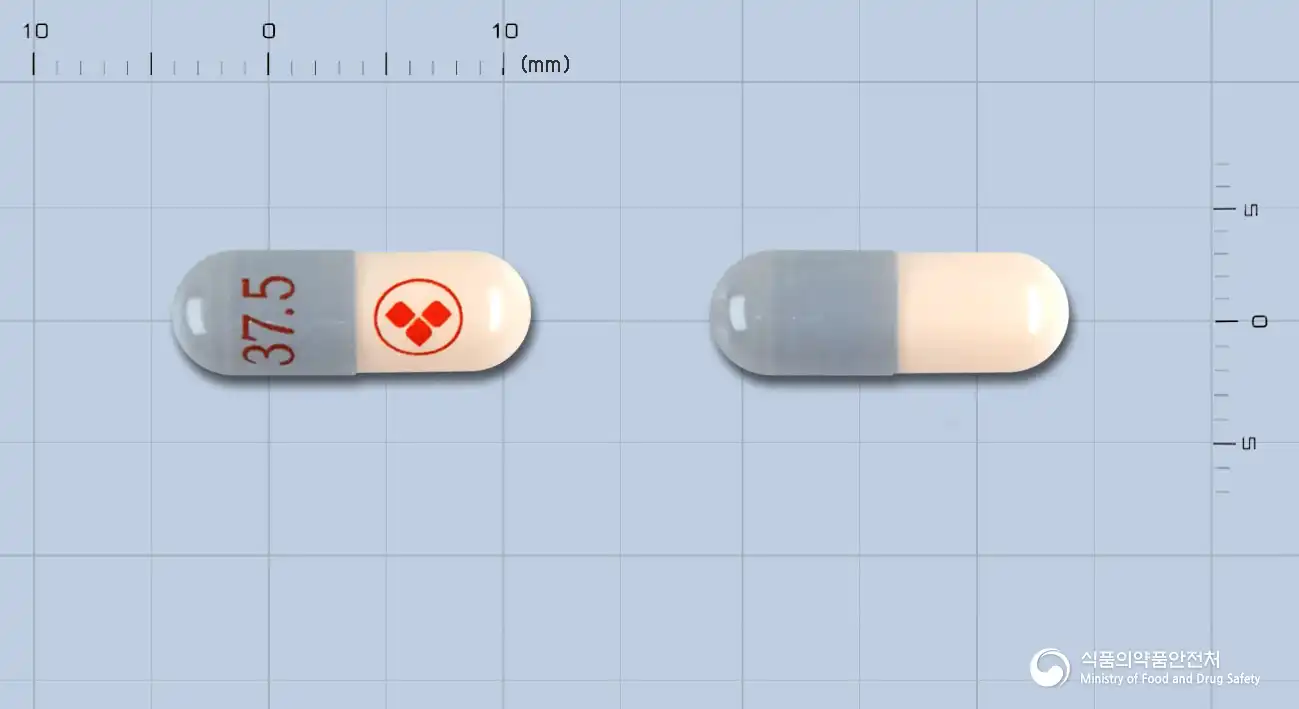
Venlafaxine Hydrochloride 42.425mg
Hard capsule · Prescription medication
Myungjin Pharmaceutical Co., Ltd.
Even with the same ingredient, the dose and directions can differ by strength and dosage form. Talk to a doctor or pharmacist before switching from a medication you are already taking.
No questions yet.
For anything that needs medical judgment, consult a doctor or pharmacist.
This drug information is based on data provided by the Korea Ministry of Food and Drug Safety.
Consult a doctor or pharmacist for accurate dosage, administration, and usage instructions.