
 한국어
 English
 日本語
 中文(简体)
 Viewing now
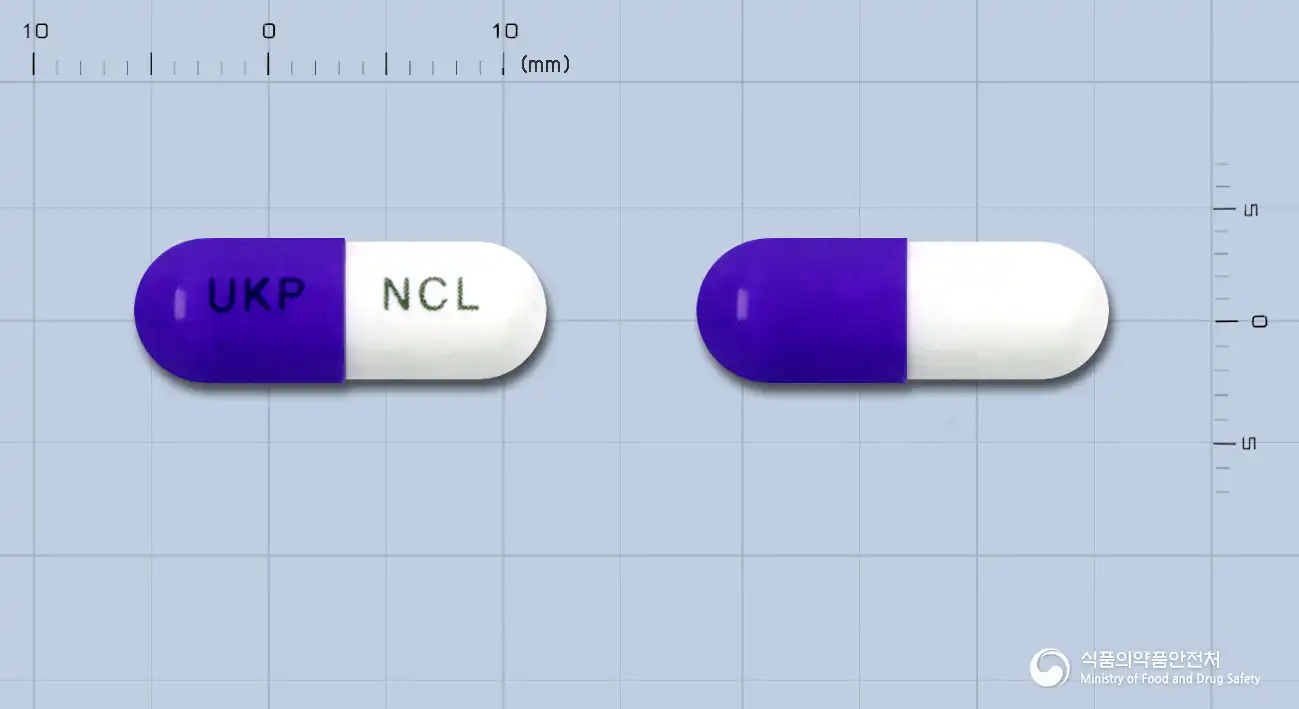
Nuclera Capsule (Cefaclor Hydrate)
Cefaclor Hydrate 250mg
Hard capsule · Prescription medication
Korea Union Pharm Co., Ltd.
MFDS item code 200301172 · Notified 2003.08.28 · Insurance code 665500370
Treatment of respiratory and ear infections, urinary tract infections, and skin and soft tissue infections
This medication acts effectively against various bacteria including Streptococcus pneumoniae, Influenza bacillus, and Staphylococcus. It is used for the treatment of respiratory infections such as otitis media, pneumonia, pharyngitis, tonsillitis, and bronchitis. It is also effective for urinary tract infections such as pyelonephritis, cystitis, and gonococcal urethritis. This medication is utilized for the treatment of various infectious diseases including skin and soft tissue infections such as boils, abscesses, folliculitis, soft tissue infections, subcutaneous abscesses, and wound infections. It is very useful in preventing and treating multiple diseases caused by bacterial infections and aids in rapid recovery of patients.
○ Adults: Administer 250mg (potency) of cefaclor hydrate orally every 8 hours. For severe infections (e.g., pneumonia) and infections caused by less susceptible organisms, the dose may be doubled. For acute gonococcal urethritis, administer this medicine 3g with probenecid 1g as a single dose. ○ Patients with renal impairment: This medicine may be administered without changing the dose. Treatment of beta-hemolytic streptococcal infections should continue for at least 10 days.
○ Children: Administer 20mg (potency) per Kg of body weight per day in divided doses every 8 hours. ○ Children: For severe infections, otitis media, and infections caused by less susceptible organisms, 40mg (potency) per Kg of body weight per day may be administered. The maximum dose is 1g (potency) per day.
This drug is an antibiotic that kills specific bacteria by interfering with cell wall synthesis to treat infections. Before using this drug, it is essential to inform if there has been a history of severe allergic reactions or shock from this medicine or similar classes of antibiotics. Patients with atopy or those who frequently experience symptoms such as bronchial asthma, rashes, or hives should use this medication with caution. Patients with severely impaired renal function need dosage adjustments and regular checks while using this drug, and should report to healthcare providers if symptoms worsen. Patients with gastrointestinal diseases should be carefully monitored as symptoms like colitis may particularly occur. This medication can rarely exhibit severe allergic reactions, skin diseases, blood abnormalities, liver or kidney dysfunction, digestive issues, or central nervous system disorders, so it should be discontinued immediately if symptoms occur and medical assistance must be sought. It is important to administer only for the minimum necessary period after confirming the bacterial sensitivity to prevent antibiotic resistance. Discuss with healthcare providers if taking other medications that may interact, especially those affecting the kidneys, anticoagulants, or oral contraceptives. Pregnant or breastfeeding women should only take this medication with caution if necessary, and monitor the effects on the baby while breastfeeding. It should be avoided in neonates under one month of age as safety has not been established. Elderly patients may experience side effects more easily due to decreased bodily functions, hence careful monitoring of dosage and intervals is advised. It is essential to inform healthcare providers during testing as this medication may influence certain test results.
Not everyone experiences these, and they can vary from person to person.
This medication is sensitive to light, so it should be stored in a dark place, and the temperature should be maintained between 1 and 30 degrees Celsius at room temperature for safe storage. Storage in this manner can help maintain the drug's efficacy.
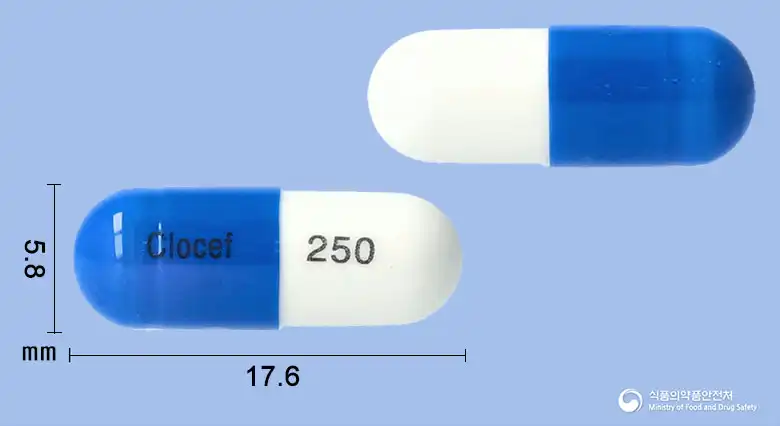
A hard capsule with a purple upper part and a white lower part containing a light yellow powder
30 capsules/bottle, 100 capsules/bottle
Even with the same ingredient, strength, dosage form and how it is taken can differ.
Viewing nowCefaclor Hydrate 250mg
Hard capsule · Prescription medication
Korea Union Pharm Co., Ltd.
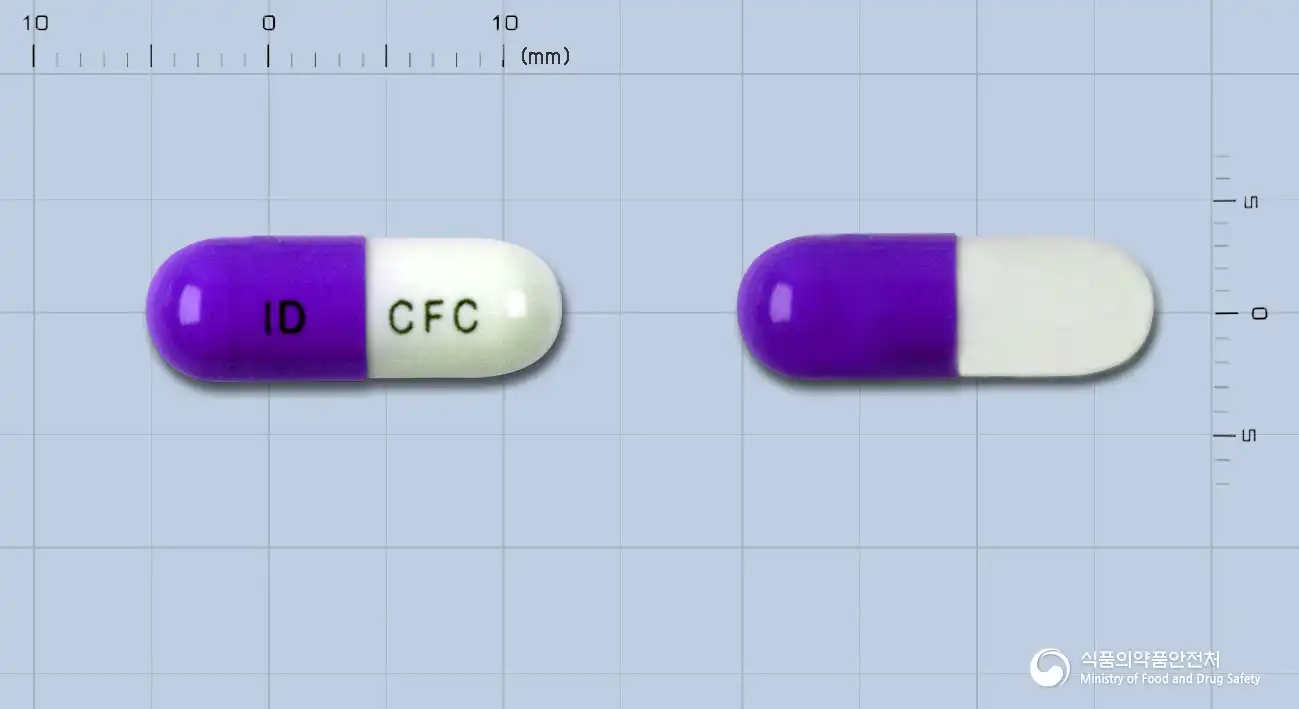
Cefaclor Hydrate 250mg
Hard capsule · Prescription medication
Ildong Pharmaceutical Co., Ltd.
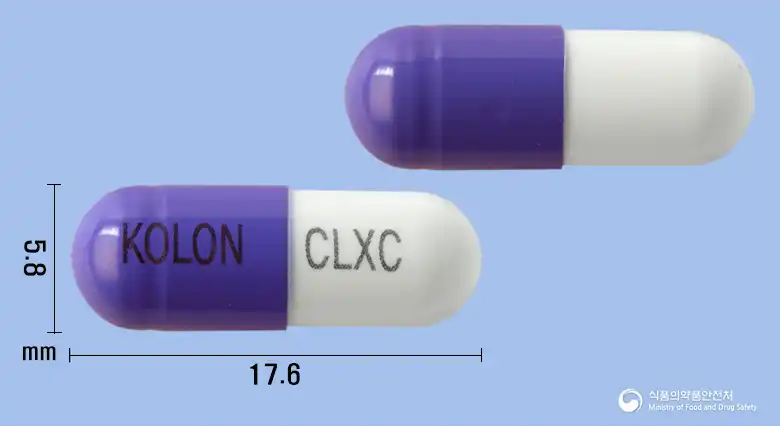
Cefaclor Hydrate 250mg
Hard capsule · Prescription medication
Kolon Pharmaceutical Co., Ltd.
Cefaclor Hydrate 3.75g
Syrup · Prescription medication
Youngjin Pharmaceutical Co., Ltd.
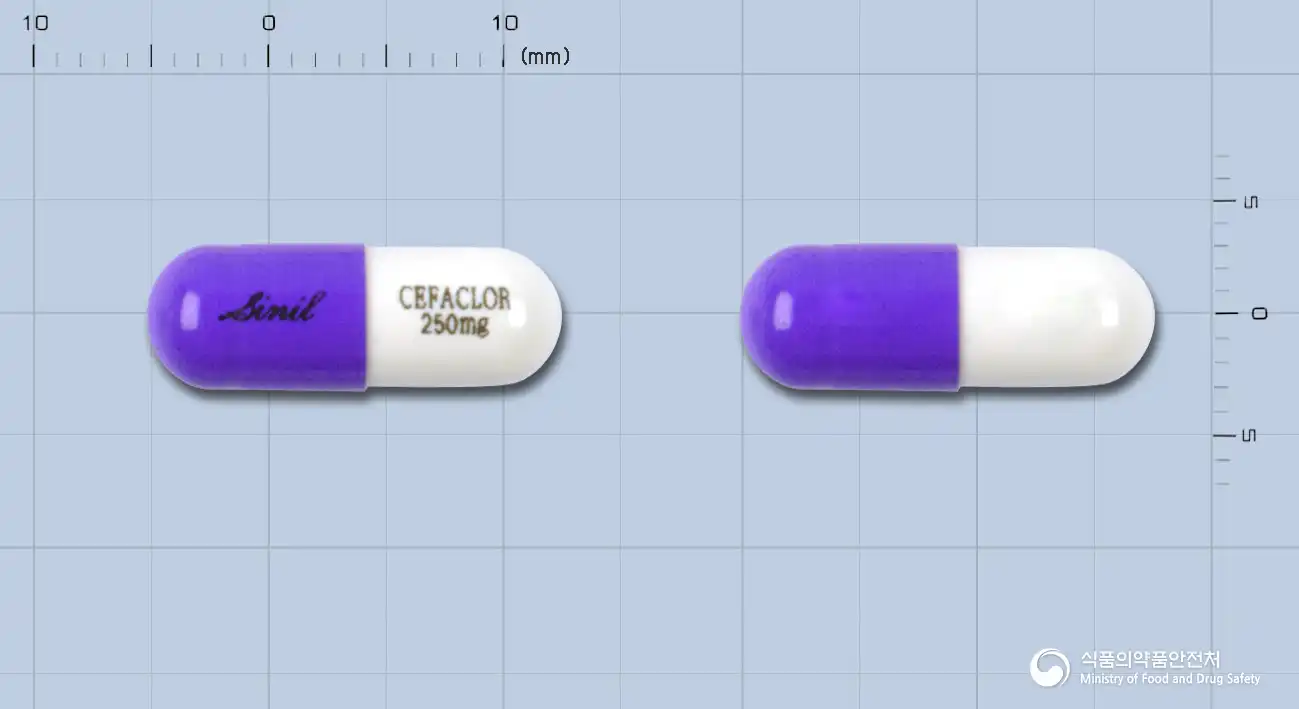
Cefaclor Hydrate 250mg
Hard capsule · Prescription medication
Shinil Pharmaceutical Co., Ltd.
Cefaclor Hydrate 250mg
Hard capsule · Prescription medication
Hanmi Pharmaceutical Co., Ltd.
Cefaclor Hydrate 2.5g
Syrup · Prescription medication
Hanmi Pharmaceutical Co., Ltd.
Cefaclor Hydrate 3.75g
Syrup · Prescription medication
Shinpoong Pharmaceutical Co., Ltd.
Even with the same ingredient, the dose and directions can differ by strength and dosage form. Talk to a doctor or pharmacist before switching from a medication you are already taking.
No questions yet.
For anything that needs medical judgment, consult a doctor or pharmacist.
This drug information is based on data provided by the Korea Ministry of Food and Drug Safety.
Consult a doctor or pharmacist for accurate dosage, administration, and usage instructions.