
 한국어
 English
 日本語
 中文(简体)
 Viewing now
Pactib 320 mg (Gemifloxacin Mesylate)
Gemifloxacin Mesylate 426.39mg
Tablet · Prescription medication
LG Chem, Ltd.
MFDS item code 200202740 · Approved 2002.12.27 · Insurance code 668901110
Treatment of respiratory infections (including pneumonia), ear, nose, and throat infections, and urinary tract infections
This medication is used to treat various bacterial infections, including respiratory diseases such as pneumonia, acute exacerbations of chronic bronchitis, sinusitis, and otitis media, as well as acute pyelonephritis and urinary tract infections. It is particularly effective against several gram-positive and gram-negative bacteria, including multidrug-resistant organisms and resistant strains, specific bacteria, and anaerobes. However, as a fluoroquinolone, it carries a significant risk of serious adverse reactions and should only be used in special circumstances. It is suitable as a treatment option when conventional therapies are ineffective. Overall, this medication aids in treating severe bacterial infections and contributes to the recovery of the patient's health.
<For domestic use> Usually, adults are given 320 mg of gemifloxacin per dose orally, with or without food. 1. Acute exacerbation of chronic respiratory disease (chronic bronchitis): Administer 320 mg once daily for 5 days. 2. Community-acquired pneumonia: Administer 320 mg once daily for 7 days; in severe pneumonia, treatment may be continued for up to 14 days depending on symptoms. 3. Sinusitis: Administer 320 mg once daily for 5 to 7 days. 4. Otitis media (excluding preoperative use for chronic cholesteatomatous otitis media and chronic otitis media with bony extension): Administer 320 mg once daily for 7 days. 5. Patients with renal impairment 1) No dosage adjustment is required for patients with mild or moderate renal impairment (creatinine clearance ≥ 40 mL/min). 2) Reduce the dose to 160 mg once daily for patients with severe renal impairment (creatinine clearance < 40 mL/min), patients receiving hemodialysis, and patients receiving peritoneal dialysis. 6. Elderly patients and patients with hepatic impairment: No dosage adjustment is required. <For export> For all indications, administer 1 tablet (320 mg) once daily orally, with or without food. 1. Acute exacerbation of chronic respiratory disease (chronic bronchitis): Administer 320 mg once daily for 5 days. 2. Community-acquired pneumonia: Administer 320 mg once daily for 7 days; in severe pneumonia, treatment may be continued for up to 14 days depending on symptoms. 3. Sinusitis: Administer 320 mg once daily for 5 to 7 days. 4. Otitis media (excluding preoperative use for chronic cholesteatomatous otitis media and chronic otitis media with bony extension): Administer 320 mg once daily for 7 days. 5. Uncomplicated urinary tract infection: Administer 320 mg once daily for 3 days. 6. Complicated urinary tract infection, acute pyelonephritis: Administer 320 mg once daily for 10 days. 7. Patients with renal impairment 1) No dosage adjustment is required for patients with mild or moderate renal impairment (creatinine clearance ≥ 40 mL/min). 2) Reduce the dose to 160 mg once daily for patients with severe renal impairment (creatinine clearance < 40 mL/min), patients receiving hemodialysis, and patients receiving peritoneal dialysis. 8. Elderly patients and patients with hepatic impairment: No dosage adjustment is required.
This medication can cause serious tendon problems such as tendonitis or tendon rupture, so it should be discontinued immediately if such symptoms occur. Caution is necessary as it may affect peripheral neuropathy or the central nervous system, leading to symptoms such as neuralgia, confusion, and seizures. Patients with myasthenia gravis may experience worsening symptoms when taking this medication, and it is advisable to avoid its use. This medication is used to treat specific bacterial infections, but should only be employed when no other treatment options are available. Elderly patients, patients with impaired renal function, and those taking corticosteroids are at increased risk of tendon rupture and should be careful. Pregnant or breastfeeding women, and growing children or adolescents should not take this medication. If sudden allergic reactions such as skin rashes, hives, or breathing difficulties occur during treatment, consult medical personnel immediately. It is advisable to consume sufficient fluids while taking this medication and to avoid strong sunlight or UV exposure. When taking this medication with others, absorption may be reduced, so antacids or iron supplements should not be taken within 3 hours before or after this medication. Diabetic patients taking blood sugar control medication should closely monitor blood sugar changes, and report any hypoglycemic symptoms to healthcare providers immediately. During treatment with this medication, if central nervous system symptoms such as vision disturbances, severe headaches, dizziness, or seizures occur, avoid driving or operating machinery and consult a doctor immediately. In the event of overdose, vomiting should be induced or the drug removed through gastric lavage, and the patient's condition should be closely monitored for appropriate treatment.
Not everyone experiences these, and they can vary from person to person.
This medication may be sensitive to air or moisture, so it should be stored in a tightly closed container. It is advisable to maintain a storage temperature between 1 to 30 degrees Celsius.
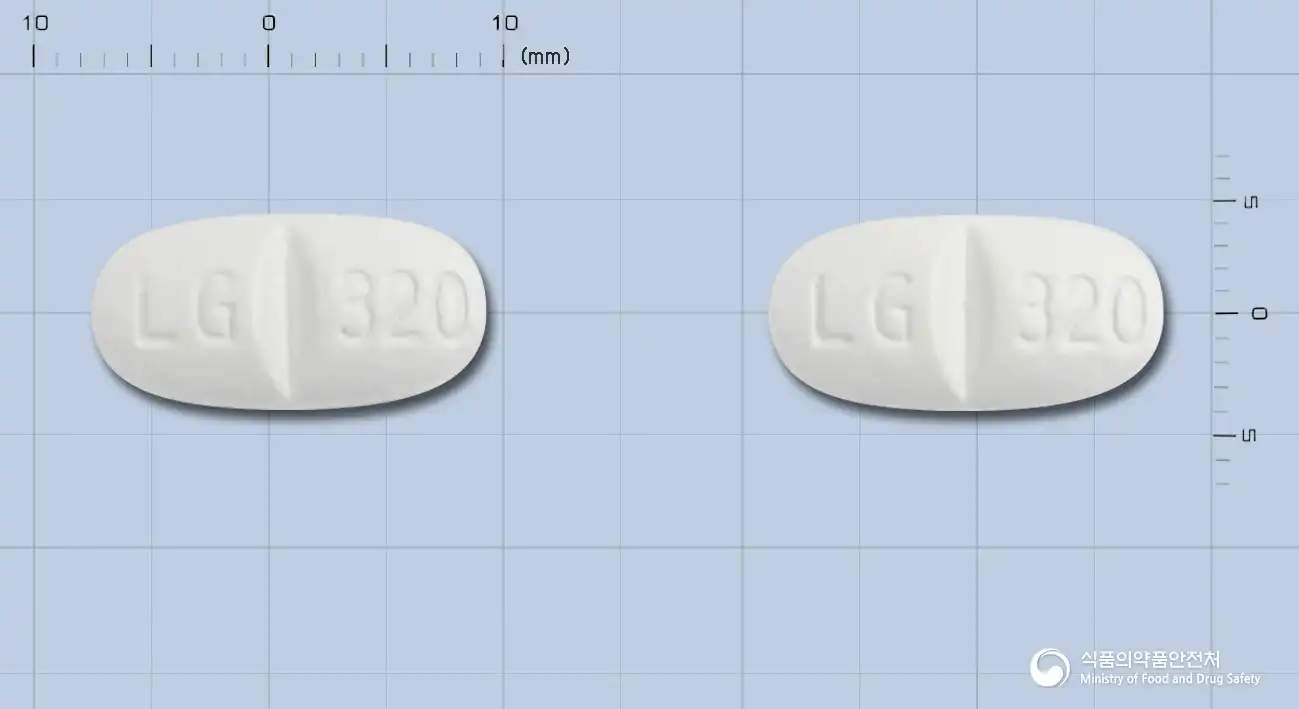
White or nearly white oval film-coated tablet
5 tablets (5 tablets/PTP packaging x 1), 30 tablets (5 tablets/PTP packaging x 6)
Even with the same ingredient, strength, dosage form and how it is taken can differ.
Even with the same ingredient, the dose and directions can differ by strength and dosage form. Talk to a doctor or pharmacist before switching from a medication you are already taking.
No questions yet.
For anything that needs medical judgment, consult a doctor or pharmacist.
This drug information is based on data provided by the Korea Ministry of Food and Drug Safety.
Consult a doctor or pharmacist for accurate dosage, administration, and usage instructions.