
 한국어
 English
 日本語
 中文(简体)
 Viewing now
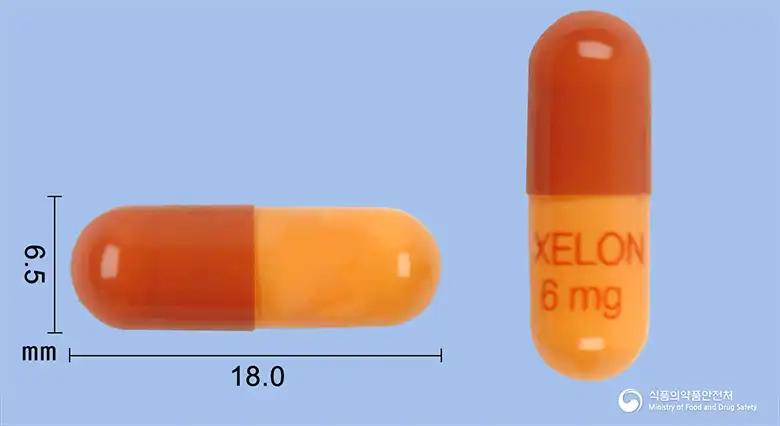
Exelon Capsule 6.0 mg (Rivastigmine Tartrate)
Rivastigmine Tartarate 9.6mg
Hard capsule · Prescription medication
Novartis Korea Co., Ltd.
MFDS item code 200008772 · Approved 2000.08.31 · Insurance code 653600800
Treatment of symptoms of mild to moderate Alzheimer-type and Parkinson's disease-associated dementia
This medication is used for the treatment of mild to moderate Alzheimer's-type dementia symptoms and Parkinson's disease-related dementia symptoms.
Administration: Rivastigmine is administered orally twice daily, in the morning and evening with meals. ○ Adults: 1. Treatment of mild to moderate dementia of the Alzheimer’s type The initial dose is 3 mg of rivastigmine per day, and the dose should be increased at intervals of at least 2 weeks for each patient to the maximum tolerated dose or the maximum recommended dose of 12 mg per day. Because this medicine showed greater efficacy at doses of 6 mg per day and higher in clinical trials, a target dose range of 6~12 mg per day is recommended for most patients. Recommended dose titration schedule Administer 1.5 mg per dose twice daily for at least 2 weeks. If well tolerated, the dose may be increased to 3 mg per dose twice daily. Subsequent increases may be made to 4.5 mg per dose twice daily and, if well tolerated, after at least 2 weeks, to 6 mg per dose twice daily. If adverse reactions (e.g., nausea, vomiting, abdominal pain, or decreased appetite) or weight loss are observed, one or more doses may be omitted. However, if the adverse reactions or weight loss persist, reduce the daily dose to the previous dose that was well tolerated. 2. Treatment of mild to moderate dementia associated with Parkinson’s disease In controlled clinical trials in patients with dementia associated with Parkinson’s disease, rivastigmine was administered at 3~12 mg per day in two divided doses (1.5~6 mg per dose twice daily). The initial dose is 1.5 mg per dose twice daily. Depending on the patient’s tolerability, subsequent doses may be increased successively at intervals of at least 4 weeks to 3 mg per dose twice daily, then 4.5 mg per dose twice daily, and then 6 mg per dose twice daily. If adverse reactions (e.g., nausea, vomiting, abdominal pain, or decreased appetite), weight gain, or extrapyramidal symptoms (e.g., tremor) are observed during treatment, temporarily withholding one or more doses may reduce these symptoms. If adverse reactions persist, temporarily reduce the daily dose to the previous well-tolerated dose or consider discontinuing treatment. 3. Maximum recommended dose Administer 6 mg per dose orally twice daily. 4. Restarting treatment The frequency and severity of adverse reactions generally increase at higher doses. If treatment is interrupted for more than 3 days, restart at the lowest daily dose and titrate as described above. ○ Patients with hepatic or renal impairment: 1. Exposure is increased in patients with moderate renal impairment and mild to moderate hepatic impairment, and more adverse reactions may occur. Therefore, take particular care when titrating the dose according to individual tolerability. 2. Do not administer to patients with severe hepatic impairment, as no studies have been conducted in these patients.
This medication has not been tested in children, and it is not recommended for pediatric use.
This medication should not be administered to certain patients. For example, patients allergic to any component of this medication, those with severe liver impairment, and those who have had skin allergic reactions when using this medication's patch formulation should avoid it. Additionally, patients with heart diseases, peptic ulcers, asthma, urinary retention, seizures, or extrapyramidal disorders should use this medication with caution. Such patients should be administered under a doctor's supervision. Gastrointestinal symptoms such as nausea, vomiting, and diarrhea may frequently occur while taking this medication, particularly at the initiation or when adjusting the dosage, so caution is required. If symptoms are severe or persist, consult a physician. Furthermore, neurological symptoms such as dizziness, drowsiness, headache, tremors, fatigue, weakness, and weight loss may occur, so caution is advised when driving or operating machinery. This medication may affect heart rate, so patients with heart disease or arrhythmias should be particularly careful, and if heart-related symptoms arise, immediate consultation with healthcare professionals is necessary. Pregnant or breastfeeding women should use this medication only when absolutely necessary and under a physician's assessment, as its safety has not been adequately established. It is advisable to avoid this medication while breastfeeding. This medication is not recommended for children, and overdose may result in severe vomiting, bradycardia, confusion, seizures, among others, so dosage should be strictly adhered to. Additionally, this medication may interact with other drugs, so if you are taking any other medications, it is essential to inform your physician or pharmacist, especially when used with anesthetics, heart medicines, or other cholinergic agents. Finally, this medication should be kept out of reach of children and should not be transferred to another container for safety.
Not everyone experiences these, and they can vary from person to person.
This medication should be stored in a tightly sealed container to prevent exposure to air or light. It is also recommended to store it at room temperature, away from extreme heat or cold.
Hard gelatin capsule: red top, orange bottom, containing a grayish-white to pale yellow powder
28 capsules (two PTP packages of 14 capsules)
Even with the same ingredient, strength, dosage form and how it is taken can differ.
Viewing nowRivastigmine Tartarate 9.6mg
Hard capsule · Prescription medication
Novartis Korea Co., Ltd.
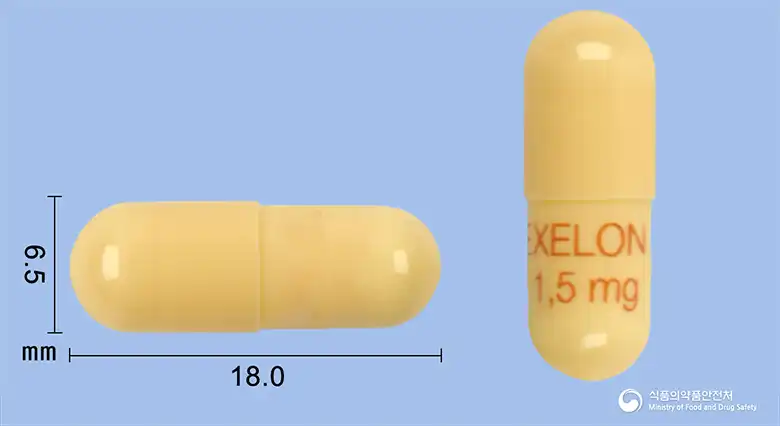
Rivastigmine Tartarate 2.4mg
Hard capsule · Prescription medication
Novartis Korea Co., Ltd.
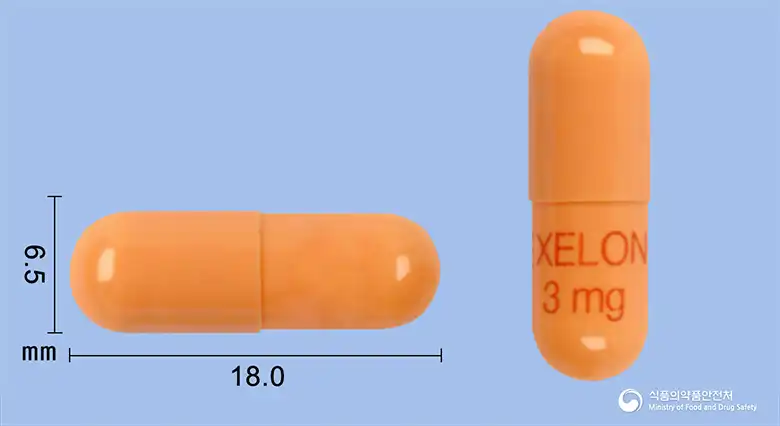
Rivastigmine Tartarate 4.8mg
Hard capsule · Prescription medication
Novartis Korea Co., Ltd.
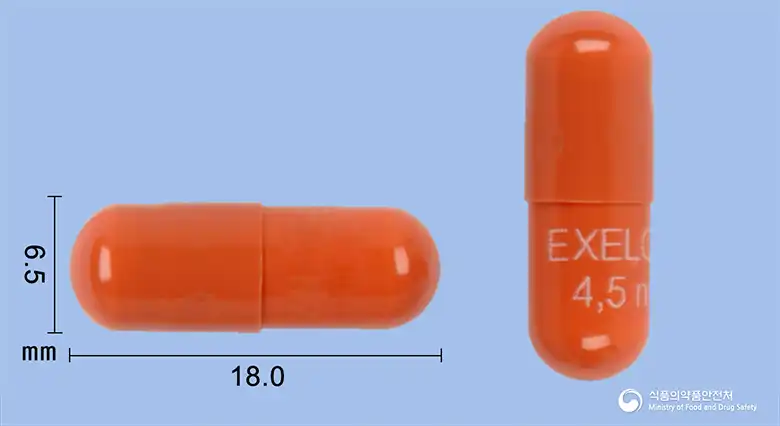
Rivastigmine Tartarate 7.2mg
Hard capsule · Prescription medication
Novartis Korea Co., Ltd.
Rivastigmine Tartarate
Prescription medication
Korea Sandos Co., Ltd.
Rivastigmine Tartarate
Prescription medication
Korea Sandose Co., Ltd.
Rivastigmine Tartarate
Prescription medication
Korea Sandos Co., Ltd.
Rivastigmine Tartarate
Prescription medication
Korea Sandos Co., Ltd.
Even with the same ingredient, the dose and directions can differ by strength and dosage form. Talk to a doctor or pharmacist before switching from a medication you are already taking.
No questions yet.
For anything that needs medical judgment, consult a doctor or pharmacist.
This drug information is based on data provided by the Korea Ministry of Food and Drug Safety.
Consult a doctor or pharmacist for accurate dosage, administration, and usage instructions.