
 한국어
 English
 日本語
 中文(简体)
 Viewing now
Excel Capsule 25mg (Milnacipran Hydrochloride)
Milnacipran Hydrochloride 25mg
Hard capsule · Prescription medication
Bukwang Pharm Co., Ltd.
MFDS item code 200001931 · Approved 2000.05.01 · Insurance code 642201840
Treatment of depression and fibromyalgia
This medication is used in the treatment of depression and fibromyalgia.
The therapeutic dose of this medicine should be adjusted according to the patient's clinical condition, and the minimum effective dose should be administered whenever possible. Adults - Depression Start with 25 mg of milnacipran hydrochloride daily and gradually increase the dose to 50 mg per dose twice daily, in the morning and evening, by oral administration. It is preferable to take this medicine with meals. Determine the duration of treatment based on symptoms; treatment for at least several months (usually 6 months) is required to prevent the risk of depression relapse. As with other antidepressants, the efficacy of this medicine becomes apparent only after 1~3 weeks of administration. If this medicine is discontinued, gradually reduce the dose. Concomitant use of a sedative or anxiolytic during initial treatment may prevent anxiety symptoms or their worsening. However, anxiolytics cannot be considered to necessarily prevent suicide attempts. Adults - Treatment of fibromyalgia The recommended dose of this medicine is 50 mg per dose twice daily (100 mg daily). Based on efficacy and tolerability in individual patients, the dose may be increased as follows. Administer 12.5 mg once daily as the starting dose, then increase to 12.5 mg twice daily (25 mg daily) on days 2~3, and to 25 mg twice daily (50 mg daily) on days 4~7. From day 7 onward, increase the dose to 50 mg twice daily (100 mg daily). Depending on patient response, the dose may be increased to 100 mg twice daily (200 mg daily). In placebo-controlled trials of this medicine for the treatment of fibromyalgia, efficacy was not observed in long-term trials exceeding 3 months. Administration in specific populations - Older adults For the treatment of depression, administer 25 mg of milnacipran hydrochloride daily by mouth in 2∼3 divided doses. Up to 60 mg daily may be administered. Administration in specific populations - Patients with renal impairment Dose adjustment is required in patients with renal impairment. Reduce the dose from 50 mg to 25 mg according to the degree of worsening renal function. Creatinine clearance ≥ 60: 50 mg × 2 60>creatinine clearance≥30: 25 mg × 2 30>creatinine clearance≥10: 25 mg Discontinuation of treatment Based on current clinical experience, withdrawal symptoms have been observed upon discontinuation of this medicine, as with other serotonin-norepinephrine reuptake inhibitors (SNRIs) or selective serotonin reuptake inhibitors (SSRIs). Therefore, when discontinuing this medicine, rather than stopping it abruptly, gradually reduce the dose over at least 1∼2 weeks while carefully monitoring for these symptoms.
This drug is primarily used in the treatment of depression or fibromyalgia. Close observation is essential when taking this drug, as there may be an increased risk of suicidal thoughts or behaviors, especially in children and adolescents under 18 years of age and young adults. There is a risk of a serious side effect known as serotonin syndrome, so caution should be taken not to combine this drug with certain other medications. Blood pressure and heart rate may increase, so patients with hypertension or heart disease should regularly monitor their blood pressure and heart rate before and during treatment. This drug should not be administered to specific patients, such as those allergic to this drug, those who are on certain drug combinations, pregnant or breastfeeding women, individuals under 18 years of age, and patients with uncontrolled hypertension. Patients with renal failure or a history of prostate enlargement, angle-closure glaucoma, epilepsy, etc., should use this drug cautiously, and monitoring for urinary disturbances or the possibility of seizures is necessary. In the early stages of treatment, symptoms such as dizziness, anxiety, nausea, headache, and palpitations may occur, and if these symptoms are severe or persistent, the patient should consult a doctor. Abruptly stopping the medication can lead to withdrawal symptoms such as dizziness, anxiety, and sensory disturbances, so the dosage should be gradually reduced according to the physician's instructions. Women who are pregnant or may become pregnant should avoid using this medication, and breastfeeding women should also refrain from taking it. In the case of overdose, symptoms such as vomiting, difficulty breathing, and tachycardia may occur, so immediate medical attention should be sought for appropriate treatment. This drug should be kept out of reach of children, and it is advisable not to transfer it to another container. During treatment, alcohol consumption should be avoided, and caution should be exercised when engaging in activities that require attention, such as driving or operating machinery.
Not everyone experiences these, and they can vary from person to person.
This medication may be sensitive to air and moisture, so it must be stored in a sealed container. It is important to maintain a storage temperature between 1 and 30 degrees Celsius to ensure the drug's efficacy is preserved over time.
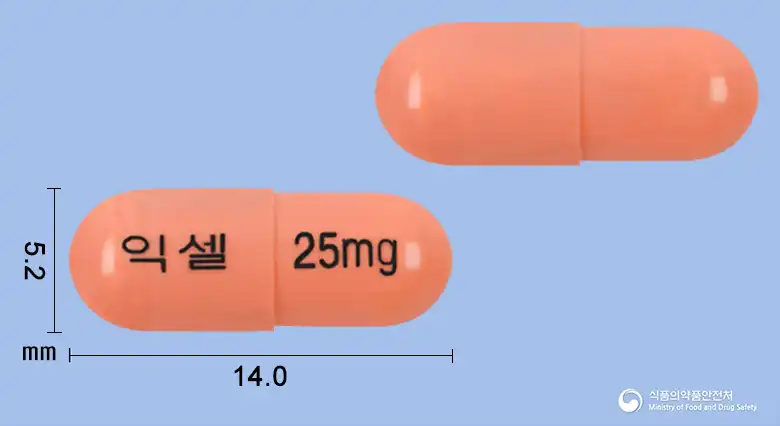
An opaque hard capsule filled with a white to light yellow powder with a pink color on the upper and lower parts.
56 capsules (14 capsules/PTPX4), 300 capsules/bottle
Even with the same ingredient, strength, dosage form and how it is taken can differ.
Viewing nowMilnacipran Hydrochloride 25mg
Hard capsule · Prescription medication
Bukwang Pharm Co., Ltd.

Milnacipran Hydrochloride 50mg
Hard capsule · Prescription medication
Bukwang Pharmaceutical Co., Ltd.
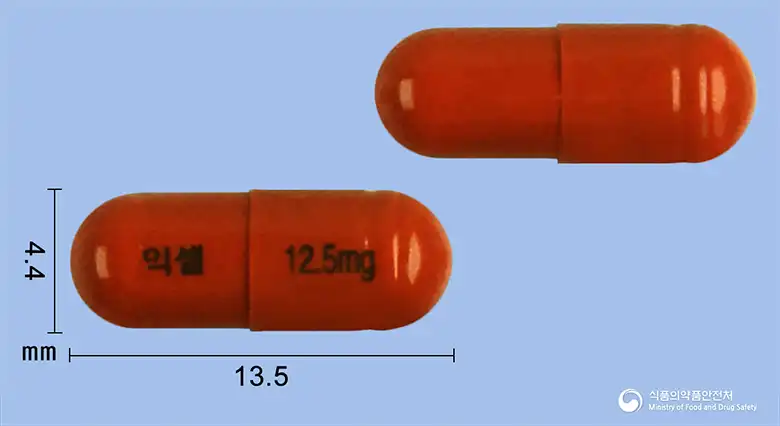
Milnacipran Hydrochloride 12.5mg
Hard capsule · Prescription medication
Bukwang Pharmaceutical Co., Ltd.
Even with the same ingredient, the dose and directions can differ by strength and dosage form. Talk to a doctor or pharmacist before switching from a medication you are already taking.
No questions yet.
For anything that needs medical judgment, consult a doctor or pharmacist.
This drug information is based on data provided by the Korea Ministry of Food and Drug Safety.
Consult a doctor or pharmacist for accurate dosage, administration, and usage instructions.