
 한국어
 English
 日本語
 中文(简体)
Summary
- Main use
- Treatment and prevention of malaria (e.g., P. vivax), and suppressive treatment
- Who uses it
- Adults · Children
- Adult dosage
- 1. Treatment of malaria 1) Standard regimen The recommended total treatment dose is 20~25mg/kg of mefloquine. Therefore, patients weighing 45kg or more should take 1,250~1,500mg (5~6 tablets) of mefloquine. The recommended total treatment dose may be taken all at once or divided into 2~3 doses as follows. * Dividing the total treatment dose into 2~3 doses taken every 6~8 hours may reduce the incidence and severity of adverse reactions. If a patient vomits within 30 minutes after taking this drug, administer the full recommended dose again. If vomiting occurs 30~60 minutes after administration, give an additional half dose. In patients with severe acute malaria, this drug may be given after intravenous quinine for 2~3 days or longer as initial treatment. Administering this drug at least 12 hours after the final dose of quinine can substantially prevent adverse reactions due to interactions between the two drugs. 2. Prophylaxis The recommended dose for prophylaxis is 5mg/kg of mefloquine once weekly. Prophylaxis should begin at least 1 week before exposure to a malaria-endemic environment. If this is not possible, adults weighing 45kg or more should receive 250mg (1 tablet) of mefloquine once daily for 3 days, followed by 250mg (1 tablet) once weekly. Continue for 4 weeks after leaving the malaria-endemic area. 3. Standby treatment This drug may be used as emergency standby treatment for travelers with suspected malaria who cannot obtain immediate medical care. For self-treatment, start with approximately 15mg/kg of mefloquine (3 tablets of this drug for patients weighing 45kg or more). If professional medical care will not be available within 24 hours and no severe adverse reactions have occurred, take the second portion of the total treatment dose 6~8 hours later (2 tablets for patients weighing 45kg or more). Patients weighing 60kg or more should take 1 additional tablet 6~8 hours after the second portion. (See the recommended total treatment dose for the standard treatment regimen)
- Children's dosage
- Treatment of malaria, recommended total treatment dose and divided-dose regimen <20kg**: 1/4 tablet / 2.5~3kg; 1 tablet / 10~12kg 20~30kg: 2~3 tablets; 2 tablets or 2+1 tablets 30~45kg: 3~4 tablets; 2+1 tablets or 2+2 tablets 45~60kg: 5 tablets; 3 tablets+2 tablets >60kg***: 6 tablets; 3 tablets+2 tablets+1 tablet Prophylaxis, recommended total treatment dose Adults and children ≥45kg: 1 tablet Adults and children <45kg, ≤20kg: 1/4 tablet Adults and children <45kg, 20~30kg: 1/2 tablet Adults and children <45kg, 30~45kg: 3/4 tablet ** There is insufficient treatment experience with this drug in infants younger than 3 months or weighing less than 5 kg. There is insufficient experience with use of this drug in infants younger than 3 months or weighing less than 5kg.
Ingredients
- Importer
- DKSH Korea Ltd.
Efficacy & effects
Treatment and prevention of malaria (e.g., P. vivax), and suppressive treatment
- Malaria
View approved original textHide original text
This medication is used for the treatment of infections caused by various forms of malaria, including P. vivax, complicated malaria, and P. falciparum resistant to other drugs. It is also effective for malaria prevention and standby treatment. Therefore, it helps in the comprehensive management and prevention of malaria.
Dosage and Administration
Adult dosage
1. Treatment of malaria 1) Standard regimen The recommended total treatment dose is 20~25mg/kg of mefloquine. Therefore, patients weighing 45kg or more should take 1,250~1,500mg (5~6 tablets) of mefloquine. The recommended total treatment dose may be taken all at once or divided into 2~3 doses as follows. * Dividing the total treatment dose into 2~3 doses taken every 6~8 hours may reduce the incidence and severity of adverse reactions. If a patient vomits within 30 minutes after taking this drug, administer the full recommended dose again. If vomiting occurs 30~60 minutes after administration, give an additional half dose. In patients with severe acute malaria, this drug may be given after intravenous quinine for 2~3 days or longer as initial treatment. Administering this drug at least 12 hours after the final dose of quinine can substantially prevent adverse reactions due to interactions between the two drugs. 2. Prophylaxis The recommended dose for prophylaxis is 5mg/kg of mefloquine once weekly. Prophylaxis should begin at least 1 week before exposure to a malaria-endemic environment. If this is not possible, adults weighing 45kg or more should receive 250mg (1 tablet) of mefloquine once daily for 3 days, followed by 250mg (1 tablet) once weekly. Continue for 4 weeks after leaving the malaria-endemic area. 3. Standby treatment This drug may be used as emergency standby treatment for travelers with suspected malaria who cannot obtain immediate medical care. For self-treatment, start with approximately 15mg/kg of mefloquine (3 tablets of this drug for patients weighing 45kg or more). If professional medical care will not be available within 24 hours and no severe adverse reactions have occurred, take the second portion of the total treatment dose 6~8 hours later (2 tablets for patients weighing 45kg or more). Patients weighing 60kg or more should take 1 additional tablet 6~8 hours after the second portion. (See the recommended total treatment dose for the standard treatment regimen)
Children's dosage
Treatment of malaria, recommended total treatment dose and divided-dose regimen <20kg**: 1/4 tablet / 2.5~3kg; 1 tablet / 10~12kg 20~30kg: 2~3 tablets; 2 tablets or 2+1 tablets 30~45kg: 3~4 tablets; 2+1 tablets or 2+2 tablets 45~60kg: 5 tablets; 3 tablets+2 tablets >60kg***: 6 tablets; 3 tablets+2 tablets+1 tablet Prophylaxis, recommended total treatment dose Adults and children ≥45kg: 1 tablet Adults and children <45kg, ≤20kg: 1/4 tablet Adults and children <45kg, 20~30kg: 1/2 tablet Adults and children <45kg, 30~45kg: 3/4 tablet ** There is insufficient treatment experience with this drug in infants younger than 3 months or weighing less than 5 kg. There is insufficient experience with use of this drug in infants younger than 3 months or weighing less than 5kg.
Precautions
This medication should not be used in certain patients. For example, it is contraindicated in individuals allergic to this drug or related medications, those with a history of mental disorders or seizures, renal failure patients, those taking halofantrine, individuals with lactose intolerance, those with severe liver dysfunction, and those with a history of prolonged QT syndrome. Pregnant women, patients with a history of epilepsy, those with impaired renal function, and patients with cardiac conduction disease should use this medication cautiously. Specifically, patients with cardiac conduction disease should be monitored closely for changes in heart rhythm during the administration of this drug. Mild side effects such as nausea, vomiting, and dizziness may occur when taking this medication, and neurological side effects may commonly occur. These reactions may persist for several weeks after administration, so dosage adjustments should be made following a physician's instructions if symptoms arise. Activities requiring concentration and coordination, such as driving or operating machinery, should be avoided for 3 weeks during and after taking this medication. Furthermore, since this medication can cause neurological side effects, patients should consult healthcare professionals immediately if symptoms such as anxiety, depression, or confusion occur. This medication can interact with other drugs, so caution is necessary, particularly when taken with medications that can affect heart rhythm, anticonvulsants, or antidepressants. It may be required to discontinue this medication for a certain period before vaccination. In early pregnancy, this drug should only be administered cautiously when necessary, and women of childbearing potential are advised to use contraception for three months during and after treatment. It has not been reported to cause significant side effects in breastfeeding mothers and their infants. Safety has not been sufficiently established in infants under 3 months of age or weighing less than 5 kg, so use in this group is not recommended. In cases of overdose, careful observation of heart and neuropsychiatric status is important, as there are no specific antidotes, and symptomatic treatment should be provided. This medication is sensitive to moisture and should be kept in its original packaging until use, with precautions taken against humidity during storage.
Side effects
- Agranulocytosis
- aplastic anemia
- leukopenia
- leukocytosis
- thrombocytopenia
- mild skin reactions
- anaphylaxis
- loss of appetite
- abnormal dreams
- insomnia
Show 72 moreCollapse
- anxiety
- depression
- restlessness
- agitation
- mood changes
- panic attacks
- confusion
- hallucinations
- aggression
- bipolar disorder
- delusional disorder
- depersonalization
- mania
- psychotic disorder
- paranoia
- dizziness
- headache
- balance disorders
- drowsiness
- syncope
- seizures
- memory impairment
- peripheral sensory and motor neuropathy
- encephalopathy
- vision disorders
- blurred vision
- cataracts
- retinal disorders
- optic nerve disorders
- vertigo
- tinnitus
- hearing impairment
- tachycardia
- palpitations
- bradycardia
- irregular pulse
- extrasystole
- transient electrocardiogram disturbances
- heart block
- hypotension
- hypertension
- flushing
- dyspnea
- pneumonia
- nausea
- diarrhea
- abdominal pain
- vomiting
- dyspepsia
- liver disorders
- itching
- rash
- erythema
- urticaria
- hair loss
- hyperhidrosis
- erythema multiforme
- Stevens-Johnson syndrome
- muscle weakness
- muscle cramps
- myalgia
- arthralgia
- acute renal failure
- nephritis
- increased serum creatinine concentration
- edema
- chest pain
- asthenia
- malaise
- fatigue
- chills
- fever
Not everyone experiences these, and they can vary from person to person.
Storage
This medication should be stored in a tightly sealed container to protect it from air and moisture, ideally at room temperature between 1°C and 30°C. Storing it this way will help maintain the drug's effectiveness for a longer period.
Appearance and packaging
Appearance
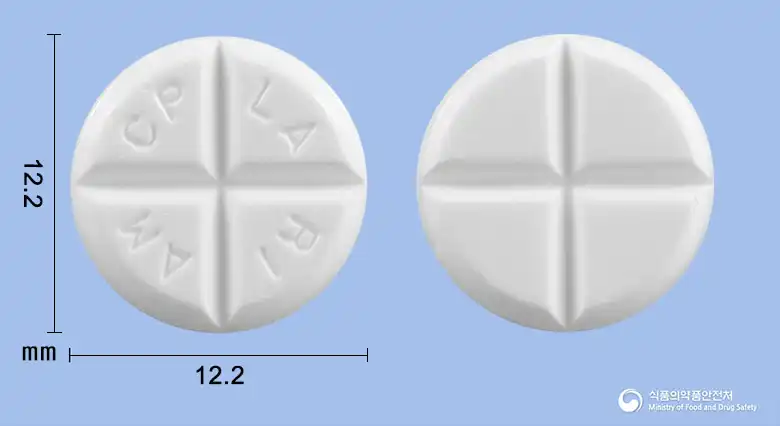
White or grayish-white round tablet.
Package unit
8 tablets (4 tablets/PTP packaging × 2)
Questions about this medicine
No questions yet.
For anything that needs medical judgment, consult a doctor or pharmacist.