
 한국어
 English
 日本語
 中文(简体)
 Viewing now
Sandimmun Neoral Soft Capsule 25 mg (Cyclosporine)
Cyclosporine 25mg
Soft capsule · Prescription medication
Novartis Korea Ltd.
MFDS item code 199403112 · Notified 1994.12.30 · Insurance code 653600550
Prevention and treatment of transplant complications; treatment of immune disorders (such as psoriasis) and aplastic anemia
This drug is primarily used to prevent and treat transplant rejection in patients undergoing organ and bone marrow transplants. It is especially helpful in preventing and treating rejection and graft-versus-host disease (GVHD) in recipients of various organ transplants, such as kidneys, livers, hearts, lungs, and pancreases. It can also benefit patients with severe psoriasis and rheumatoid arthritis when other immunosuppressive treatments are ineffective or inappropriate. In the case of patients with nephrotic syndrome, it is used to induce and maintain remission in those who are steroid-dependent or resistant, and it is also used to treat severe aplastic anemia. Thus, it is effectively employed for various immunological disorders and post-transplant complications.
1. Organ transplantation 1) Initial dose: 10 ∼ 15 mg/kg of body weight per day, administered in 2 divided doses, starting 12 hours before surgery. 2) Maintenance dose: The same as the initial dose for 1 ∼ 2 weeks after surgery, then gradually reduce according to blood concentrations to 2 ∼ 6 mg/kg of body weight per day, administered in 2 divided doses. The total daily dose of this drug must always be administered in 2 divided doses. 3) Concomitant therapy: A lower dose (e.g., initial oral dose: 3 ∼ 6 mg/kg of body weight in 2 divided doses) may be used when treating patients with concomitant corticosteroid therapy or triple or quadruple immunosuppressive therapy. 2. Bone marrow transplantation 1) The first dose should be administered one day before surgery, preferably by intravenous injection (see Dosage and Administration for Injection). 2) Administer 12.5 ∼ 15 mg/kg of body weight per day in 2 divided doses on the day before surgery. As a maintenance dose, administer approximately 12.5 mg/kg of body weight per day for 3 ∼ 6 months (preferably 6 months) after transplantation before reducing the dose to 0 (zero) by 1 year after transplantation. 3) Higher oral doses or intravenous injection may be required in patients with malabsorption or gastrointestinal disorders. The total daily dose of this drug must be administered in 2 divided doses. 4) GVHD may occur after discontinuation of this drug, but generally responds well to re-administration. Use a low dose to treat chronic, mild GVHD. 3. Psoriasis 1) The initial dose is 2.5 mg/kg of body weight per day in 2 divided doses. If there is no improvement after 4 weeks, the dose may be increased by 0.5 ~ 1 mg/kg of body weight per day each month, up to 5 mg/kg of body weight per day. 2) Discontinue treatment if there is no improvement in affected areas after 4 weeks of treatment at 5 mg/kg of body weight per day, or if the effective dose does not meet the safety information described below. 3) The initial dose for patients requiring rapid symptom improvement is 5 mg/kg of body weight per day. Adjust the maintenance dose individually to the minimum effective dose, not exceeding 5 mg/kg of body weight per day. 4) If symptom improvement is maintained for 6 months, gradually reduce the dose of this drug, although the risk of relapse after discontinuation is very high. 4. Nephrotic syndrome 1) To induce remission, adults are recommended to receive 5 mg/kg per day in 2 divided doses. However, in patients with impaired renal function, the initial dose should not exceed 2.5 mg/kg per day (maximum serum creatinine level: adults >200 μmol/L). 2) Patients who do not respond adequately to this drug (mainly steroid-resistant patients) should receive it in combination with low-dose oral steroids. Discontinue this drug if there is no improvement after 3 months. 3) Adjust the dose individually according to safety (mainly serum creatinine) and efficacy (proteinuria). 4) However, do not exceed 5mg/kg/ day in adults; gradually reduce the dose and use the minimum effective dose as the maintenance dose. 5. Rheumatoid arthritis 1) The recommended dose for the first 6 weeks of treatment is 3 mg/kg of body weight per day, administered orally in 2 divided doses. After 6 weeks, if symptom improvement is insufficient, the dose may be increased to 5 mg/kg of body weight per day only in patients whose serum creatinine has not increased by 30 % or more; treatment may continue for up to 12 weeks. 2) Discontinue treatment if there is no symptom improvement after 12 weeks at the maximum daily dose, or if the treatment does not meet the requirements described in ‘*Safety Information’. Adjust the maintenance dose individually to the minimum effective dose, not exceeding the maximum dose. 6. Aplastic anemia Usually, administer 6 mg/kg of body weight per day in 2 divided doses. Measure the trough blood concentration and, if it is 200 ng/mL (in serum) or higher, reduce the dose to 4 mg/kg of body weight per day. 7. Switching from conventional oral cyclosporine to a microemulsion formulation 1) Exposure may increase when switching from conventional oral cyclosporine to this drug; therefore, observe the following: Initially, administer this drug at the same dose as the conventional formulation. Monitor total blood trough concentrations for the first 4 ~ 7 days after switching, and clinical safety parameters such as serum creatinine and blood pressure for the first 2 months after switching. Adjust the dose accordingly if the blood concentration is outside the therapeutic range or if any safety parameter is abnormal. 2) Switching from conventional oral cyclosporine to another oral cyclosporine product should be done under a physician’s supervision and requires caution. After switching to the new formulation, monitor the patient to ensure that blood cyclosporine concentrations reach the previous levels. 8. Precautions for administration 1) The total daily dose of this drug must always be administered in 2 divided doses. 2) The distinctive odor when opening the blister packaging is normal and does not indicate any problem. Swallow the capsules whole.
4. Nephrotic syndrome Children 1 year and older: To induce remission, a dose of 6 mg/kg per day divided into 2 doses is recommended. However, in patients with renal function below the threshold, the initial dose should not exceed 2.5 mg/kg per day (maximum serum creatinine level: children >140 μmol/L). 4) Do not exceed 6mg/kg/day in children; gradually reduce the dose and use the minimum effective dose as the maintenance dose.
This medication should not be administered to certain patients. For example, patients who are allergic or hypersensitive to this drug or its components, patients with kidney disease or uncontrolled infections, or those with malignancies should not use this medication. Additionally, it should not be administered to patients with more than 50% renal dysfunction, those with increased uric acid or hyperkalemia, rheumatoid arthritis patients under 18 years of age, pregnant women or those of childbearing potential, and breastfeeding women. The drug should be administered cautiously to elderly patients or infants under 24 months of age, and regular monitoring of renal function, liver function, and blood pressure should be conducted. While taking this medication, various side effects such as renal dysfunction, hypertension, tremors, diarrhea, nausea, vomiting, anorexia, hypertrichosis, etc., may occur, so immediate consultation with healthcare professionals is required if any unusual symptoms arise. Due to its immunosuppressive action, the risk of infection may increase, and prompt treatment should be sought if any signs of infection appear. Additionally, as this drug can interact with several medications, it is essential to inform healthcare professionals of any other medications being taken, particularly if they are nephrotoxic or potassium-sparing agents. In cases of pregnancy or breastfeeding, the use of this medication may pose risks to the fetus or infant, thus it should be avoided, and healthcare professionals should be consulted if necessary. Regular monitoring of blood levels of this drug is crucial to maintain appropriate dosing, and overdose may lead to renal dysfunction, so exact dosages must be adhered to. Finally, caution should be taken to avoid excessive exposure to ultraviolet radiation while taking this drug, and neurological symptoms should be monitored when driving or operating machinery.
Not everyone experiences these, and they can vary from person to person.
This medication should be stored in a tightly closed container to prevent air or moisture infiltration and should be kept in a cool place below 25 degrees Celsius. Storing it this way helps maintain the drug's efficacy and prevent degradation.
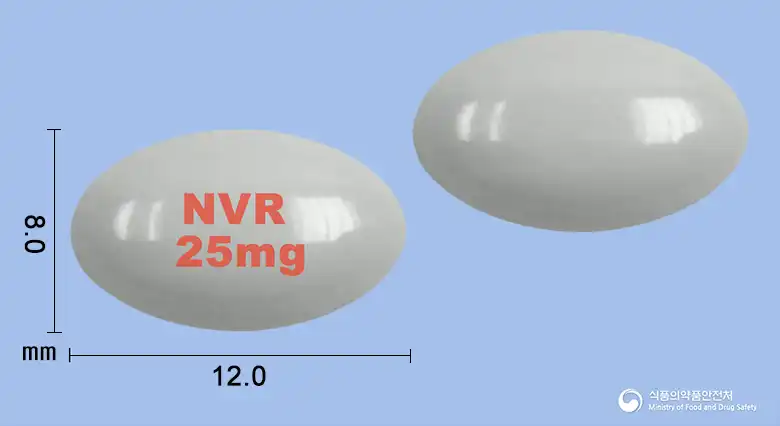
This medication is contained in a bluish-gray oval soft capsule that contains a light yellow-light brown microemulsion with an oil or alcohol smell.
50 capsules (5 capsules/PTP packaging X 10)
Even with the same ingredient, strength, dosage form and how it is taken can differ.
Viewing nowCyclosporine 25mg
Soft capsule · Prescription medication
Novartis Korea Ltd.
Cyclosporine 25mg
Soft capsule · Prescription medication
Hanmi Pharmaceutical Co., Ltd.
Cyclosporine 100mg
Soft capsule · Prescription medication
Hanmi Pharmaceutical Co., Ltd.
Cyclosporine 250mg
Injections · Prescription medication
Jongkundang Co., Ltd.
Cyclosporine 250mg
Injections · Prescription medication
Novartis Korea Co., Ltd.
Cyclosporine 100mg
Soft capsule · Prescription medication
Novartis Korea Ltd.
Cyclosporine 10g
Prescription medication
Novartis Korea Co., Ltd.
Cyclosporine 0.5mg
Solution · Prescription medication
AbbVie Korea Co., Ltd.
Even with the same ingredient, the dose and directions can differ by strength and dosage form. Talk to a doctor or pharmacist before switching from a medication you are already taking.
No questions yet.
For anything that needs medical judgment, consult a doctor or pharmacist.
This drug information is based on data provided by the Korea Ministry of Food and Drug Safety.
Consult a doctor or pharmacist for accurate dosage, administration, and usage instructions.