
 한국어
 English
 日本語
 中文(简体)
Dosage form image
Viewing nowSguimin Injection (Pyridostigmine Bromide)
Pyridostigmine Bromide 5mg
Injections · Prescription medication
BC World Pharma Co., Ltd.
MFDS item code 199401437 · Notified 1994.01.31 · Insurance code 653101061
This product's status changed to Expired on 2025.10.01. It may no longer be sold, so consult a doctor or pharmacist before taking it.
Reversal of nondepolarizing neuromuscular blockade; treatment of myasthenia gravis
This medication is primarily used for the treatment of myasthenia gravis. Additionally, when administered as an injection, it can serve as a reversal agent or antagonist for non-depolarizing muscle relaxants, helping to rapidly restore muscle tone. The tablet form is effective for improving symptoms of myasthenia gravis, while the injection is used to quickly reverse the effects of muscle relaxants. An appropriate method of administration is chosen based on the patient's condition to enhance therapeutic effectiveness.
1. Reversal or antagonism of nondepolarizing muscle relaxants before or after surgery: Usually, inject 10-20㎎ (0.1-0.25㎎ per kg of body weight) of pyridostigmine bromide. When this medicine is administered intravenously, it is preferable to administer atropine sulfate 0.6-1.2㎎ or glycopyrrolate (in an amount that can produce an effect similar to atropine) immediately before or at the same time as this medicine to reduce adverse effects such as bradycardia or excessive secretions. 2. 1) For use before or after surgery and during or after delivery in myasthenic crisis: Administer intramuscularly or by slow intravenous injection an amount equivalent to 1/30 of the oral dose (2-6㎎). 2) For use during labor to maintain adequate muscle tone in the pregnant patient or to protect the newborn immediately after delivery: Inject 1 hour before the second stage of labor.
When a newborn born to a mother with symptoms of myasthenia gravis has respiratory distress, difficulty swallowing, or temporary difficulty feeding: Inject an amount equivalent to 0.05-0.15㎎ per kg of body weight intramuscularly.
This medication is provided in the form of an ampoule injection and care must be taken when opening the container, as glass shards may be present. Special caution should be exercised when used in children or the elderly. This medication should not be used in certain patients, such as those allergic to this drug or similar medications, those with gastrointestinal or urinary obstruction or stenosis, patients with bronchial asthma, iritis, hyperthyroidism, myotonia, Parkinson's syndrome, those in shock post-surgery or with cardiovascular disease, and patients receiving certain muscle relaxants. Patients with renal impairment, peptic ulcers, those who have undergone gastrointestinal surgery, diabetes, liver damage, heart failure, recent myocardial infarction, arrhythmia, bradycardia, or hypotension should use this medication cautiously and should have regular liver function tests. Overdosage can lead to symptoms such as respiratory muscle paralysis, abdominal pain, diarrhea, sweating, and pinpoint pupils, and in such cases, immediate discontinuation and appropriate treatment should be sought. Various side effects may occur, including diarrhea, nausea, vomiting, abdominal pain, tearing, sweating, increased bronchial secretion, abdominal cramps, vasomotor congestion, increased peristalsis, muscle cramping, fasciculations, weakness, skin rashes, thrombophlebitis, and bradycardia. In myasthenia gravis patients, symptoms may worsen, so careful monitoring is needed.
Not everyone experiences these, and they can vary from person to person.
This medication should be stored in a container that blocks light, and it is recommended to keep it at room temperature between 1 to 30 degrees Celsius. Proper storage will ensure that the medication's components remain unchanged and its effectiveness is well maintained.
A colorless and transparent liquid contained in a brown ampoule.
For domestic use - 50 ampoules/box [(1 milliliter/ampoule)], for export - 10 ampoules/box [(1 milliliter/ampoule)]
Even with the same ingredient, strength, dosage form and how it is taken can differ.
Pyridostigmine Bromide 5mg
Injections · Prescription medication
BC World Pharma Co., Ltd.
Pyridostigmine Bromide 5mg
Prescription medication
Myeong Moon Pharmaceutical Co., Ltd.
Pyridostigmine Bromide 5mg
Prescription medication
Samchundang Pharm. Co., Ltd.
Pyridostigmine Bromide 5mg
Prescription medication
Iyeon Pharmaceutical Co., Ltd.
Pyridostigmine Bromide
Prescription medication
Hana Pharmaceutical Co., Ltd.
Pyridostigmine Bromide 5mg
Prescription medication
Hana Pharmaceutical Co., Ltd.
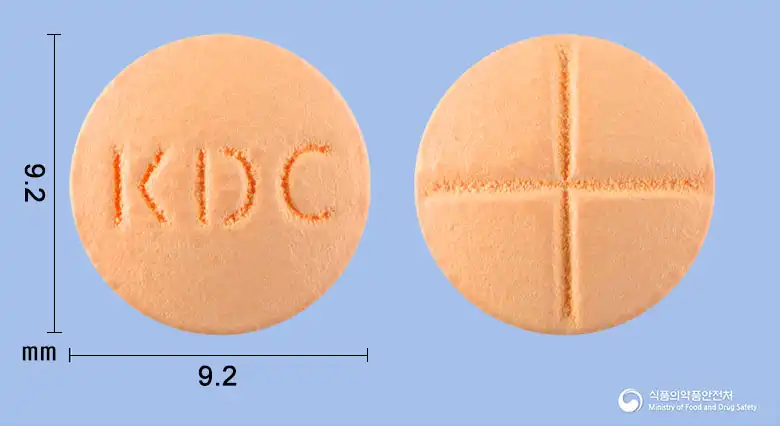
Pyridostigmine Bromide 60mg
Tablet · Prescription medication
Korea Goryeo Pharmaceutical Co., Ltd.
Even with the same ingredient, the dose and directions can differ by strength and dosage form. Talk to a doctor or pharmacist before switching from a medication you are already taking.
No questions yet.
For anything that needs medical judgment, consult a doctor or pharmacist.
This drug information is based on data provided by the Korea Ministry of Food and Drug Safety.
Consult a doctor or pharmacist for accurate dosage, administration, and usage instructions.