
 한국어
 English
 日本語
 中文(简体)
Summary
- Main use
- Treatment of osteoporosis, Paget's disease, and heterotopic ossification
- Who takes it
- Adults
- Adult dose
- In general, administer orally once daily; if gastrointestinal discomfort occurs, the dose may be divided. To maximize absorption, avoid taking the following two types of products within 2 hours before or after administration: - Food, especially milk or dairy products with high calcium content - Vitamin products containing minerals or antacids containing high concentrations of calcium, zinc, iron, magnesium, or aluminum ○ Paget's disease 1) Initial treatment (1) Administer 5∼10mg/kg body weight of etidronate disodium orally once daily. Do not continue treatment for more than 6 months. (2) Administer 10~20mg/kg body weight orally once daily in the following cases. Do not continue treatment for more than 3 months. - When low-dose treatment is ineffective - When rapid suppression of bone turnover is needed, particularly when irreversible neurologic complications may occur - When elevated cardiac output needs to be reduced (3) Do not exceed 20mg/kg body weight daily. 2) Retreatment After a drug-free period of at least 90 days, retreat using the same regimen as for initial treatment, with careful monitoring. ○ Heterotopic ossification 1) Patients undergoing total hip replacement: Administer 20mg/kg body weight of this medicine orally once daily for 3 months after surgery. 2) Patients with spinal cord injury: Administer 20mg/kg body weight of this medicine orally once daily. ○ Osteoporosis 1) Administer 200mg of this medicine orally once daily, 2 hours after a meal. In severe cases (patients with marked bone loss, pain at rest due to osteoporosis, or very severe pain during activity in daily life), administer 400mg orally once daily, 2 hours after a meal. 2) Treat for 2 weeks, then discontinue for 10∼12 weeks; repeat this cycle intermittently. 3) Do not exceed 400mg daily. Adjust the dose as appropriate according to age and symptoms.
Ingredients
- Manufacturer
- Chodang Pharmaceutical Industry Co., Ltd.
Efficacy & effects
Treatment of osteoporosis, Paget's disease, and heterotopic ossification
- Paget's disease
- abnormal ossification
- osteoporosis
View approved original textHide original text
This medication helps relieve pain in patients with Paget's disease, increases mobility, and normalizes the bone tissue in affected areas by reducing the number of osteoclasts and osteoblasts. It also aids in improving bone metabolism by decreasing serum alkaline phosphatase levels and urinary hydroxyproline levels, while reducing the infiltration of radioactive isotopes into the lesion areas, thereby lowering the activity of bone lesions. Consequently, this reduces the risk of fractures due to Paget's disease and alleviates any abnormal increases in cardiac output and skin temperature. This medication is also used to treat abnormal ossification caused by spinal injury or hip injuries. Finally, it contributes to maintaining bone strength and preventing fractures in patients with osteoporosis. This medication is used for the treatment of Paget's disease, abnormal ossification, and osteoporosis.
How to take
Adult dose
In general, administer orally once daily; if gastrointestinal discomfort occurs, the dose may be divided. To maximize absorption, avoid taking the following two types of products within 2 hours before or after administration: - Food, especially milk or dairy products with high calcium content - Vitamin products containing minerals or antacids containing high concentrations of calcium, zinc, iron, magnesium, or aluminum ○ Paget's disease 1) Initial treatment (1) Administer 5∼10mg/kg body weight of etidronate disodium orally once daily. Do not continue treatment for more than 6 months. (2) Administer 10~20mg/kg body weight orally once daily in the following cases. Do not continue treatment for more than 3 months. - When low-dose treatment is ineffective - When rapid suppression of bone turnover is needed, particularly when irreversible neurologic complications may occur - When elevated cardiac output needs to be reduced (3) Do not exceed 20mg/kg body weight daily. 2) Retreatment After a drug-free period of at least 90 days, retreat using the same regimen as for initial treatment, with careful monitoring. ○ Heterotopic ossification 1) Patients undergoing total hip replacement: Administer 20mg/kg body weight of this medicine orally once daily for 3 months after surgery. 2) Patients with spinal cord injury: Administer 20mg/kg body weight of this medicine orally once daily. ○ Osteoporosis 1) Administer 200mg of this medicine orally once daily, 2 hours after a meal. In severe cases (patients with marked bone loss, pain at rest due to osteoporosis, or very severe pain during activity in daily life), administer 400mg orally once daily, 2 hours after a meal. 2) Treat for 2 weeks, then discontinue for 10∼12 weeks; repeat this cycle intermittently. 3) Do not exceed 400mg daily. Adjust the dose as appropriate according to age and symptoms.
Precautions
This medication should not be used in certain patients. For example, it should not be administered to individuals who have an allergy to this drug, patients with severe renal impairment, those with osteomalacia, pregnant or potentially pregnant women, breastfeeding women, children under the age of 12, and patients with acute gastroenteritis. Caution should be exercised when administering this medication to patients with mild renal impairment or those with a history of peptic ulcers or enteritis, as gastrointestinal adverse effects may worsen. Taking this medication may cause various side effects in the gastrointestinal tract, including abdominal discomfort, dry mouth, dyspepsia, esophagitis, glossitis, diarrhea, nausea, vomiting, abdominal pain, loss of appetite, heartburn, constipation, stomatitis, gastritis, and pancreatitis. If symptoms of peptic ulcers such as stomach pain, vomiting, or vomiting blood occur, the medication should be discontinued immediately, and medical attention should be sought. Allergic reactions such as skin rash, urticaria, angioedema, and in severe cases, Stevens-Johnson syndrome may occur rarely, so if such symptoms arise, the medication should be discontinued. Liver dysfunction may occur rarely, and liver enzyme levels may rise on blood tests, so regular monitoring is needed. Urinary side effects reported include frequent urination, difficulty urinating, and elevated waste product levels in the blood. Central nervous system effects may include dizziness, insomnia, confusion, sensory disturbances, neuritis, memory loss, depression, hallucinations, tremors, and headaches, though these are rare. Blood-related side effects may cause decreased blood cell counts or rarely leukemia, so regular blood tests are important. Musculoskeletal effects may lead to leg cramps, arthritis, fractures, arthralgia, and osteomalacia, especially in patients with Paget's disease where bone pain may increase or recur. Other reported effects include hyperphosphatemia, hair loss, edema, facial flushing, heat sensation, excessive sweating, fatigue, tinnitus, chest pain, exacerbation of asthma, fever, and burning sensations in the tongue and throat. Adequate nutrition intake is crucial while taking this medication. Particularly, sufficient calcium and vitamin D should be consumed; deficiencies may alter the drug's response, requiring careful monitoring. High doses may lead to diarrhea and inflammation in the small intestine or colon, so if these symptoms occur, medication should be stopped. Since this medication is primarily excreted through the kidneys, patients with impaired renal function should undergo regular kidney function tests, and dosage adjustments may be necessary. Additionally, if there is a history of kidney stones, calcium levels should be measured regularly. In patients with Paget's disease, the response to this medication may be delayed or effects may persist even after discontinuation, so dosages should not be arbitrarily increased or re-administered without at least a 90-day washout period. This medication may inhibit bone remodeling and delay bone calcification processes, therefore, fracture patients, especially those with iliac fractures, should halt or postpone treatment until callus formation is complete. In spinal injury patients or those undergoing hip replacement surgery, initiating the treatment immediately or shortly after surgery when symptoms of ossification begin may be effective. If a spinal cord injury patient is undergoing a bone graft for spinal fixation, this medication may delay bone union, so it should be discontinued if fixation is necessary. During treatment with this medication, if dental surgery or invasive dental procedures are needed, there is a risk of osteonecrosis of the jaw, so the treatment plan should be discussed with a dentist. Furthermore, if chronic ear infections or pain occur during the course of treatment, the possibility of external auditory canal osteonecrosis should be considered. When used with warfarin, the blood coagulation time may be prolonged, hence regular prothrombin time testing is required. Combinations with corticosteroids, phosphates, calcitonin, diuretics, or mitramycin may enhance effects. The safety of this medication has not been established in pregnant or breastfeeding women, and animal studies have shown skeletal abnormalities in fetuses. It is not used in children as it may affect bone growth and exhibit symptoms similar to rickets. In elderly patients, dosage should be carefully determined considering liver, kidney, and heart function decline, other diseases, and concomitant medications because adverse reactions may occur more easily due to reduced kidney function. This medication may interfere with the binding of the drug to bones during bone imaging diagnostics, thus potentially affecting imaging results, necessitating caution during tests. Overdose may lead to vomiting, diarrhea, ulcers, electrolyte imbalances, hypocalcemia, and abnormal sensations in the fingertips, which require gastric lavage and calcium supplementation.
Side effects
Abdominal discomfort, dry mouth, indigestion, esophagitis, glossitis, diarrhea, loose stools, nausea, vomiting, abdominal pain, loss of appetite, heartburn, constipation, stomatitis, gastritis, pancreatitis, erythema multiforme, allergy, urticaria, angioedema, Stevens-Johnson syndrome, maculopapular rash, maculopapular rash, follicular rash, pruritus, elevated ALP, elevated AST, elevated ALT, elevated γ-GTP, elevated LDH, polyuria, dysuria, elevated BUN, elevated creatinine, dizziness, insomnia, confusion, paresthesia, peripheral neuropathy, amnesia, depression, hallucination, tremor, headache, pancytopenia, agranulocytosis, leukopenia, leukemia, leg cramps, arthritis, fractures, arthralgia, osteomalacia, hyperphosphatemia, hair loss, edema, facial flushing, heat sensation, sweating, fatigue, tinnitus, chest pain, exacerbation of asthma, fever, burning sensation of the tongue and throat, necrosis of the external auditory canal, vomiting, diarrhea, ulcer, electrolyte imbalance, hypocalcemia, paresthesia of the fingertips
Not everyone experiences these, and they can vary from person to person.
Storage
This medication is sensitive to air and moisture, thus it should be stored in a tightly closed container. Additionally, it is recommended to keep it at room temperature, avoiding extremes of hot or cold.
Appearance and packaging
Appearance
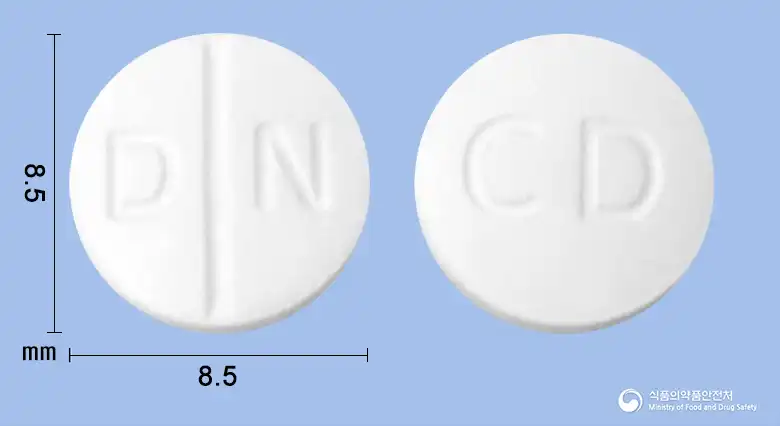
It is a white round tablet.
Package unit
30, 120 tablets/bottle
Questions about this medicine
No questions yet.
For anything that needs medical judgment, consult a doctor or pharmacist.