
 한국어
한국어 English
 日本語
日本語 中文(简体)
 Viewing now
International Cimetidine Tablets
Cimetidine 200mg
Tablet · Prescription medication
International Pharmaceutical Co., Ltd.
MFDS item code 197800085 · Notified 1978.11.21 · Insurance code 643700540
Treatment of gastrointestinal diseases such as gastric and duodenal ulcers and gastroesophageal reflux disease, improvement of gastric mucosal lesions
This medication is used for stomach and duodenal ulcers, gastroesophageal reflux disease, recurrent ulcers, anastomotic ulcers, and Zollinger-Ellison syndrome. It is also effective in improving lesions such as gastric mucosal erosions, bleeding, redness, and swelling, thus aiding in the treatment of acute exacerbations of acute and chronic gastritis. It helps relieve symptoms and promote healing by suppressing gastric acid secretion or protecting the mucosa in these conditions. Patients will find that consistent use will help improve gastrointestinal health.
For cimetidine, take 400 mg orally twice daily (in the morning and at bedtime) or 800 mg orally once daily (at bedtime). Additionally, 300 mg can be administered orally four times daily (after meals and at bedtime). The dose may be increased to 400 mg four times daily (after meals and at bedtime) for a total of 1.6 g. However, to improve gastric mucosal lesions (erosions, bleeding, redness, swelling) in the following conditions: acute gastritis, exacerbations of chronic gastritis.
Administer 20-40 mg per kg of body weight daily in divided oral doses.
When using the glass ampoule injection, great care must be taken as glass fragments may mix in when cutting the container. Extra caution is particularly necessary when used for children or the elderly. Patients who have hypersensitivity to this medication or a history thereof, patients taking dofetilide, and those with lactose intolerance or related genetic disorders should not take this medication. Patients with impaired kidney or liver function, those with a history of drug hypersensitivity, the elderly, children under 19 years old, and patients undergoing hemodialysis should use this medication with caution. This medication can mask the symptoms of gastric cancer, so it should be administered only after confirming that it is not malignant, and patients with Helicobacter pylori infection require bacterial eradication therapy. Various side effects may occur, including hematological disorders, liver dysfunction, kidney impairment, hypersensitivity reactions, endocrine and gastrointestinal symptoms, neurological issues, and skin reactions; therefore, immediate consultation with healthcare professionals is necessary upon symptom onset. Blood tests may be required, and in severe cases, discontinuation of administration may be necessary. This medication interacts with many other drugs, so when taken with warfarin, midazolam, diazepam, propranolol, or multiple other medications, dosage adjustments or drug holidays may be needed. Women who are pregnant or could become pregnant should carefully weigh the benefits and risks of this medication, and nursing mothers should discontinue breastfeeding while using it. In children and the elderly, the blood concentration may increase due to decreased kidney function, necessitating dosage adjustments and extended intervals between doses. In cases of overdose, serious side effects such as respiratory depression may occur, requiring immediate emergency treatment. When used as an injection, rapid intravenous injection should be avoided, and it should be administered slowly to reduce the risk of side effects. This medication should be stored out of the reach of children, and changing the container is not advisable due to quality maintenance.
Urticaria, severe swelling (edema), chest tightness, difficulty breathing, cold sweat, pallor, diffuse rash, dyspnea, shock, anaphylactic-like reactions, severe rashes with high fever, blisters, skin peeling, pain in oral/ocular mucosa, Stevens-Johnson syndrome, toxic epidermal necrolysis (Lyell's syndrome), epidermal necrosis, erythema multiforme, exfoliative dermatitis, generalized exfoliative erythroderma, skin or eyes turning yellow (jaundice),
Not everyone experiences these, and they can vary from person to person.
This medication should be stored in a sealed container to prevent exposure to air or light. This prevents the degradation of the active ingredients and ensures safe use.
Blue film-coated tablet
100 tablets/bottle
Even with the same ingredient, strength, dosage form and how it is taken can differ.
Viewing nowCimetidine 200mg
Tablet · Prescription medication
International Pharmaceutical Co., Ltd.
Cimetidine 200mg
Tablet · Prescription medication
Ildong Pharmaceutical Co., Ltd.
Cimetidine 100mg
Prescription medication
(Company) Yuhan Corporation

Cimetidine 200mg
Tablet · Prescription medication
Donghwa Pharmaceutical Co., Ltd.

Cimetidine 200mg
Tablet · Prescription medication
Bukwang Pharmaceutical Co., Ltd.
Cimetidine 200mg
Tablet · Prescription medication
Bionex Co., Ltd.

Cimetidine 300mg
Tablet · Prescription medication
Bukwang Pharmaceuticals Co., Ltd.
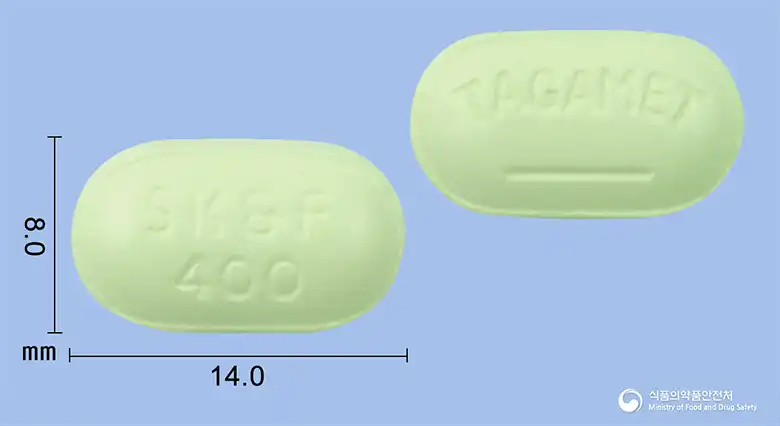
Cimetidine 400mg
Tablet · Prescription medication
(Stock Company) Yuhan Corporation
Even with the same ingredient, the dose and directions can differ by strength and dosage form. Talk to a doctor or pharmacist before switching from a medication you are already taking.
No questions yet.
For anything that needs medical judgment, consult a doctor or pharmacist.
This drug information is based on data provided by the Korea Ministry of Food and Drug Safety.
Consult a doctor or pharmacist for accurate dosage, administration, and usage instructions.