


The shoulder joint has the widest range of motion in the body. Therefore, when shoulder function and shape deteriorate with age, daily life becomes significantly disrupted. The rotator cuff, the four muscle groups surrounding the upper shoulder, are responsible for raising the arm. With age, tendons weaken and muscle mass decreases. This accumulation of microscopic damage also reduces muscle elasticity.
The joint capsule surrounding the shoulder also thickens or stiffens, restricting its range of motion. In severe cases, this can lead to frozen shoulder, also known as adhesive capsulitis. Sometimes, calcium deposits in the tendons attached to the shoulder can cause severe pain and inflammation.
These changes make it harder for us to raise our arms overhead as we age. Reaching items on high shelves, hanging clothes on hangers, and combing our hair can be uncomfortable. Rotating our arms behind our backs can also become increasingly difficult, making it difficult to dress or undress, put on a bra, or reach for objects behind us. When we get up from bed or a chair, we often have to lift our arms, which can make it difficult to support our weight. Maintaining our arms above shoulder height can also make it difficult to hang pictures on walls or work on ceilings.
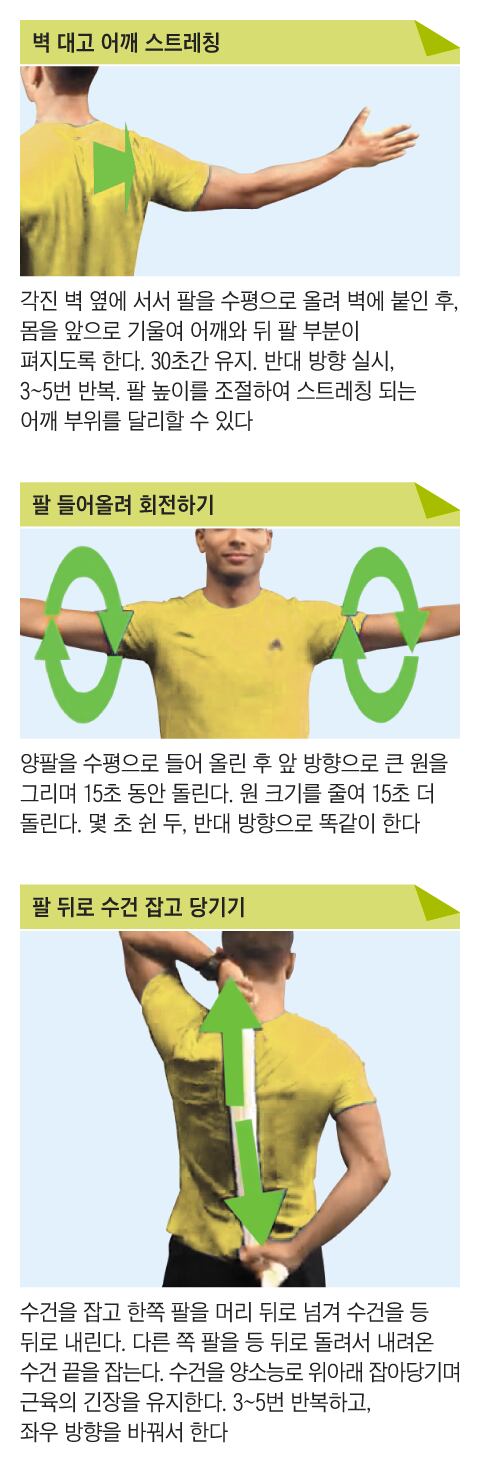
Difficulty performing these movements is a problem caused by aging of the shoulder. Early recognition of its severity and appropriate management and exercise are essential to restore shoulder function. To maintain proper shoulder function and movement, regular stretching and exercise are crucial (see graphic). These exercises maintain shoulder flexibility, strengthen muscles, and increase joint stability, helping you maintain optimal shoulder function until you're 99. If you experience pain while performing shoulder exercises or stretches, discontinue the exercise and consult a specialist.
==============
What I do the most is
This is a shoulder stretch.
Stretching against the wall
They say it's very good for dry shoulders.
Try it often
