


As you get older, food starts to taste bland.
This is because your sense of taste has changed and become dulled. A diminished sense of taste can lead to reduced food intake, which can lead to weight loss or malnutrition in old age.
Taste is detected by taste buds located on the surface of the tongue. These receptors send signals to the gustatory center of the brain, allowing us to perceive flavor. There are approximately 8,000 of these taste receptors in the mouth. As we age, the number of taste buds gradually declines, reaching a 50% decrease compared to youth. Saliva production also decreases, leading to dry mouth and making it even more difficult to taste food.
In particular, your sense of taste for salty and sweet tastes decreases. You tend to eat saltier foods and prefer stronger seasonings. This leads to excessive salt and sugar intake, which can lead to high blood pressure and diabetes.
To maintain your palate and enjoy food for a long time, even after you're 99, brush your teeth regularly and gently brush your tongue to prevent white plaque buildup. Chewing your food for a long time helps increase saliva production. Since sourness remains relatively well with age, adding acidic flavors like vinegar and lemon to your food can help preserve flavor without increasing salt or sugar.
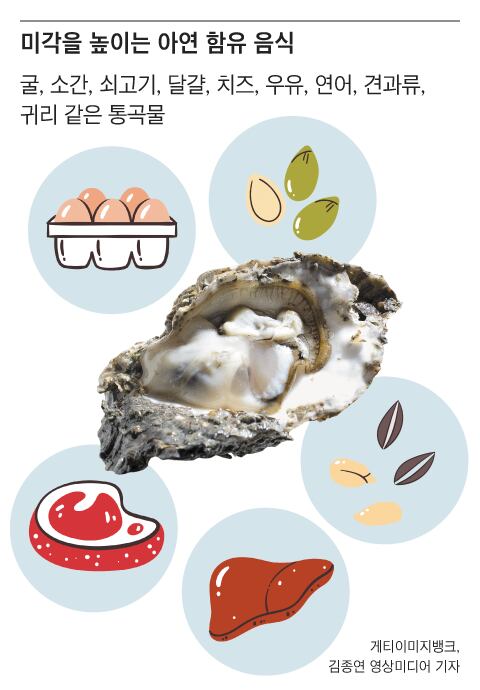
Zinc has a taste-enhancing effect, making it effective in preventing loss of taste. As we age, it's recommended to frequently consume zinc-rich foods like oysters, beef, and eggs (see graphic). Zinc absorption is enhanced when taken with vitamin C. If your sense of taste changes after taking medication, or if the smell or taste of your favorite foods is different from what you expected, consult your doctor.
=============
At some point, when I eat at my parents' house,
I think it's more salty than before.
As you get older, your sense of taste changes.
I guess it feels bland
Then, if you eat food that is a bit bland, you can season it.
Is it saltier than regular food?

