
 한국어
한국어 English
 日本語
日本語 中文(简体)
 Viewing now
Aqipta Tablets 60 mg (Atozepant Dihydrate)
Atogepant Monohydrate 61.8mg
Tablet · Prescription medication
AbbVie Korea Co., Ltd.
MFDS item code 202303151 · Approved 2023.11.15
Effectiveness in migraine prevention
This medicine is used for the prevention of recurrent migraines in adults. If individuals with frequent migraines take this medication, it can help reduce the frequency of attacks and alleviate the severity of symptoms. Regular intake can help reduce discomfort caused by migraines in daily life. It is used to improve quality of life by preventing migraines in advance.
The recommended dose for adults is 60 mg of Atozepant, taken orally once a day. It can be taken regardless of meals, and the tablet should be swallowed whole without chewing or dividing. If the dose is missed, it should be taken as soon as possible. However, if it is close to the time for the next scheduled dose, the missed dose should be skipped, and the prescribed dose for the next day should be taken. The efficacy of this medication for the acute treatment of migraines has not been established. Dose adjustments are necessary in the following situations: 1) If this medication is used in combination with other medications, the dosage of Atozepant should be adjusted as follows (refer to precautions ‘5. Interactions’): Concurrent medications group: Recommended once-daily dosage of this medication (Atozepant). 2) Severe renal impairment: The recommended dose for patients with severe renal impairment (creatinine clearance [CLcr] of 15-29 mL/min) and end-stage renal disease (ESRD) patients (CLcr < 15 mL/min) is 10 mg once daily. For ESRD patients receiving intermittent dialysis, it is preferable to take this medication after dialysis.
This medication should not be used by individuals who are allergic to its active ingredients or additives, as it may cause serious allergic reactions such as anaphylaxis or respiratory distress. Also, it is not safe for patients with severely impaired liver function. Caution should be exercised while using this medication due to the potential for hypersensitivity reactions, which may manifest as rashes, itching, hives, or facial swelling. If such symptoms occur, it is essential to stop using the medication immediately and seek medical attention. Patients with severely impaired kidney function or end-stage renal disease should also use this medication cautiously. Common side effects of this medication include nausea, constipation, fatigue, and drowsiness, which are mostly mild. Rarely, there may be an elevation in liver enzyme levels, necessitating regular monitoring. This medication is only for use in migraine patients and should not be taken in excess of the prescribed dose. Those with liver or kidney dysfunction may have abnormal drug metabolism and excretion and should use the medication cautiously. Initial use may cause drowsiness or fatigue; therefore, it is advisable to avoid driving or operating machinery. This medication may interact with certain other drugs, particularly strong liver enzyme inhibitors or inducers, possibly requiring dose adjustments. Women who are pregnant are advised not to use this medication, and breastfeeding women should consult with a physician as it may be excreted in breast milk. Its safety and efficacy for children under 18 have not been established, and it is not recommended for use in this population. The elderly should exercise increased caution due to a higher likelihood of impaired liver, kidney, or heart function. In case of overdose, as no specific antidote is available, visit a hospital immediately for vital sign monitoring and necessary treatment. This medication should be kept out of reach of children and stored in its original container at room temperature, avoiding transfer to other containers.
Nausea, constipation, fatigue, drowsiness, dizziness, reduced appetite, diarrhea, upper respiratory tract infections, nasopharyngitis, urinary tract infections, sinusitis, elevated serum creatinine phosphokinase levels, weight loss, increased ALT/AST levels.
Not everyone experiences these, and they can vary from person to person.
This medication should be stored in a tightly closed container to protect it from air and moisture. It is advisable to maintain storage temperatures between 1 and 30 degrees Celsius.
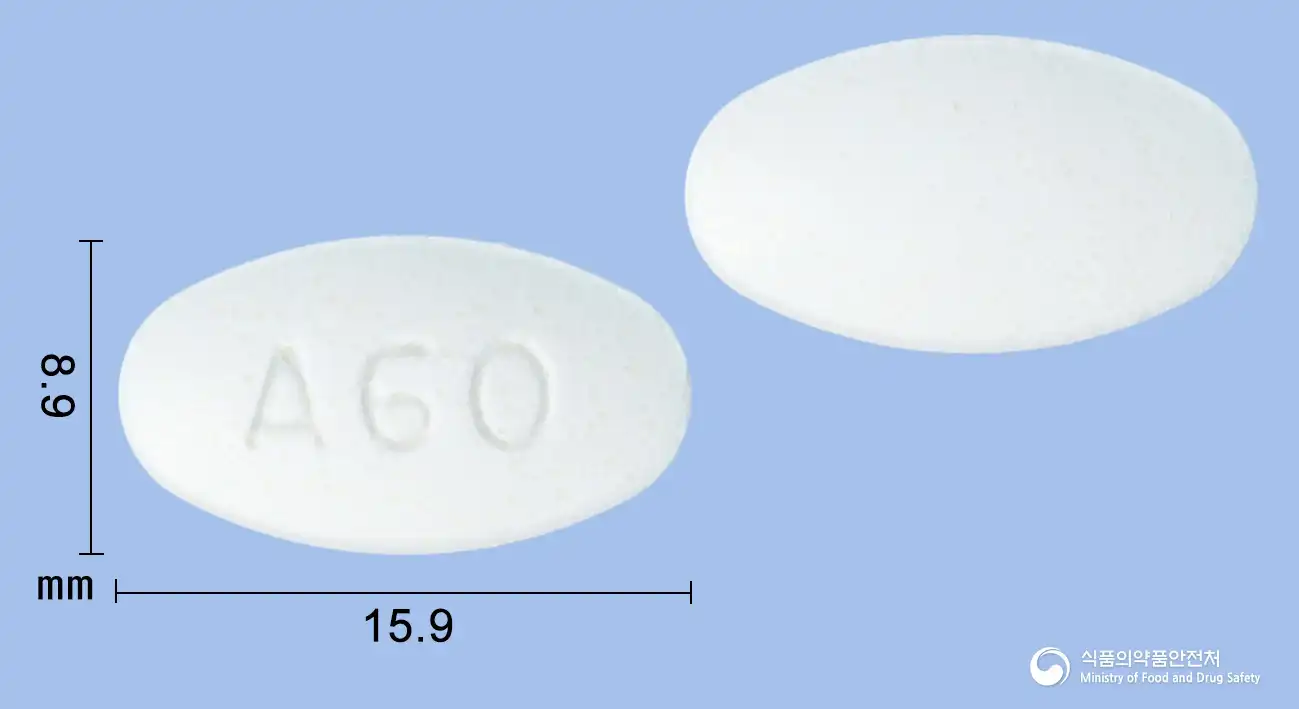
Biconvex oval tablets that are white to off-white with “A60” engraved on one side.
28 tablets/box [(7 tablets/PTP X 4)]
Even with the same ingredient, strength, dosage form and how it is taken can differ.
Even with the same ingredient, the dose and directions can differ by strength and dosage form. Talk to a doctor or pharmacist before switching from a medication you are already taking.
No questions yet.
For anything that needs medical judgment, consult a doctor or pharmacist.
This drug information is based on data provided by the Korea Ministry of Food and Drug Safety.
Consult a doctor or pharmacist for accurate dosage, administration, and usage instructions.