
 한국어
 English
 日本語
 中文(简体)
 Viewing nowCombination
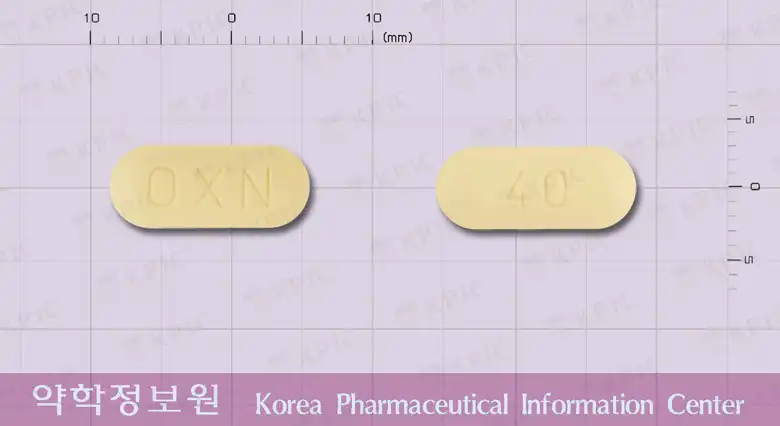
Tajins Tablet 40/20mg
Oxycodone Hydrochloride 42mg · Naloxone Hydrochloride Dihydrate 21.8mg
Tablet · Prescription medication · Combination
Korea Mundi Pharma Co., Ltd.
MFDS item code 201104437 · Approved 2011.07.18 · Insurance code 678000210
Relief of moderate to severe pain requiring opioid analgesics
This medication is used to relieve moderate to severe pain that requires narcotic analgesia. It effectively controls pain when the intensity is high and helps improve the quality of life of patients.
This medicine should be swallowed whole without chewing or crushing. Due to the controlled-release properties of this formulation, it is effective when administered every 12 hours. In most patients, dosing times are set symmetrically at 12-hour intervals (the same times in the morning and evening), but for some patients, an asymmetric dosing interval may be appropriate depending on their pain pattern. Patients who have not previously taken opioid analgesics: The usual initial dose for these patients is one Targin Prolonged-Release Tablet 10mg/5mg every 12 hours. Targin Prolonged-Release Tablet 5mg/2.5mg is used when initiating opioid analgesic therapy or adjusting an individual's dose. In patients receiving opioid analgesics, treatment may be initiated at a higher dose depending on their previous opioid analgesic experience. The maximum daily dose of this medicine is limited to 160mg/80mg (oxycodone hydrochloride 160mg + naloxone hydrochloride 80mg). This maximum daily dose applies to patients who have been stably maintained on a daily dose of Targin Prolonged-Release Tablet and for whom a dose increase is needed. For patients who require a higher dose, consider supplementing with prolonged-release oxycodone at the same dosing intervals, taking into account that the maximum daily dose of prolonged-release oxycodone is 400mg. Oxycodone doses exceeding 40 mg per dose or 80 mg per day should be used only in patients tolerant to opioid analgesics, and sufficient caution should be exercised in such cases. Patients should be informed that use of oxycodone exceeding 40 mg per dose or 80 mg per day in patients who are not tolerant to opioid analgesics may cause serious adverse reactions, including death. The single dose of the “rescue medication” used to treat breakthrough pain should be approximately 1/6 of the daily oxycodone dose. If more than 2 doses of “rescue medication” are needed per day, this generally indicates that the dose of this medicine needs to be increased. Adjust the dose using 5mg/2.5mg or 10mg/5mg (twice daily) every 1∼2 days until a stable dose is reached. This medicine is administered twice daily at a fixed dose and at fixed intervals (every 12 hours). In most patients, symmetrical dosing at fixed intervals (the same dose in the morning and evening) is appropriate, but asymmetric dosing may be beneficial for some patients depending on their pain pattern. In general, select the lowest dose that provides analgesia. For the treatment of non-cancer pain, a dose up to oxycodone hydrochloride/naloxone hydrochloride 40/20mg per day (this medicine 20/10mg twice daily) is generally sufficient, although a higher dose may be required. This medicine is taken twice daily at the prescribed times and doses. The prolonged-release tablets may be taken with plenty of water, with or without food. This medicine should be swallowed whole without chewing or crushing. Adjust the dose in elderly patients according to pain intensity and patient sensitivity. Use this medicine with caution in patients with mild hepatic impairment. This medicine must not be administered to patients with moderate to severe hepatic impairment. Use this medicine with caution in patients with renal impairment.
Pediatric patients under 18 years: The safety and efficacy of this medicine have not been established in pediatric patients under 18 years; therefore, its use is not recommended in this age group.
This medication is designed as an extended-release tablet, which means that the drug is released slowly. Therefore, it should be swallowed whole and not chewed or crushed; otherwise, too much drug may be released suddenly, posing a risk. This drug is not suitable for treating withdrawal symptoms and has a significant risk of respiratory suppression, so caution is advised. Preventing drug dependence and abuse is extremely important. Taking this medication with central nervous system depressants or alcohol can lead to severe sedation, respiratory suppression, coma, or even death; therefore, co-administration with these drugs should only occur under special circumstances with close observation of the patient. This medication should not be administered to patients with certain conditions, those who are pregnant or breastfeeding, or those with severe liver or lung dysfunction. Patients with compromised respiratory function, those with head trauma, low blood pressure, elderly patients, etc., should use this drug with caution, and dosage should be reduced, with close monitoring of their status. This medication can lead to tolerance and physical dependence, so it should be tapered gradually when discontinuing after prolonged use, as sudden discontinuation can trigger withdrawal symptoms. Drowsiness or sudden sleep attacks may occur; therefore, driving or operating machinery should be avoided, and it should not be taken with alcohol or other sedatives. This medication is affected by liver and kidney function, so dosage adjustment may be necessary for patients with liver or kidney impairments. In the event of overdose, severe symptoms may occur such as respiratory depression, coma, or low blood pressure, so immediate medical attention is required, and naloxone, an opioid antagonist, may be used as an antidote. This drug is not to be used in children, pregnant women, or nursing mothers, and its safety and efficacy in children under the age of 18 have not been established. When storing, keep it out of reach of children, and it should be stored in its original container; moving it to another container can increase the risk of misuse and decrease quality. While taking this medication, consult with a doctor regarding interactions with other drugs, especially when combined with central nervous system depressants, antidepressants, antibiotics, etc.
Hypersensitivity, decreased appetite, insomnia, abnormal behavior, anxiety, confusion, depression, decreased libido, irritability, restlessness, drug dependence, euphoria, hallucinations, nightmares, aggressiveness, dizziness, headache, drowsiness, seizures, attention deficit, dysgeusia, speech disorder, syncope, tremor, hypersomnia, sensory impairment, sedation, visual impairment, vertigo, angina, palpitations, tachycardia, facial flushing, hypotension, hypertension, respiratory distress, rhinorrhea, cough, yawning, respiratory depression, central sleep apnea syndrome, abdominal pain, constipation, diarrhea, dry mouth, indigestion, vomiting, nausea, bloating, abdominal distension, belching, increased liver enzymes, biliary colic, pruritus, rash, hyperhidrosis, muscle cramps, muscle spasms, myalgia, urgency of micturition, urinary retention, erectile dysfunction, weakness, fatigue, chest pain, chills, drug withdrawal syndrome, lethargy, pain, peripheral edema, thirst, weight loss, weight gain, trauma-related injury, herpes simplex, anaphylaxis, dehydration, increased appetite, mood fluctuations, personality changes, decreased activity, hyperactivity, agitation, perceptual disturbances, impaired concentration, migraine, hypertonicity, involuntary muscle contractions, sensory reduction, sensory abnormalities, hyperalgesia, miosis, auditory damage, vasodilation, hiccups, dysphagia, intestinal obstruction, gastric inflammation, bloody stools, gingival bleeding, dental caries, cholestasis, sphincter of Oddi dysfunction, dry skin, urticaria, urinary difficulties, hypogonadism, amenorrhea, edema, drug tolerance, neonatal drug withdrawal syndrome, accidental injury, chest pain, facial edema, discomfort, throat pain, allergic reaction, mydriasis, tolerance, migraine, syncope, ST depression, supraventricular tachycardia, dysphagia, abdominal fullness, lymphadenopathy, dehydration, edema, hyponatremia, peripheral edema, inappropriate secretion of antidiuretic hormone syndrome, thirst, abnormal gait, agitation, amnesia, depersonalization, depression, emotional instability, hyperactivity, hypotonia, discomfort, seizure, language abnormalities, confusion, tinnitus, tension headache, involuntary muscle contractions, withdrawal symptoms, tension, increased coughing, pharyngitis, voice changes, respiratory depression, snowballing, amenorrhea, decreased libido, urination disorders, hematuria, polyuria, urinary retention, urination disorders
Not everyone experiences these, and they can vary from person to person.
This drug is sensitive to light, so it should be stored in a special container that does not allow light in. Additionally, to maintain the effectiveness of the medication, it is important to store it in a cool place below 25 degrees Celsius.
Yellow, bilaterally convex, rectangular, film-coated extended-release tablet
56 tablets (14 tablets/PTP packaging x 4)
Even with the same ingredient, strength, dosage form and how it is taken can differ.
Viewing nowCombinationOxycodone Hydrochloride 42mg · Naloxone Hydrochloride Dihydrate 21.8mg
Tablet · Prescription medication · Combination
Korea Mundi Pharma Co., Ltd.
 Combination
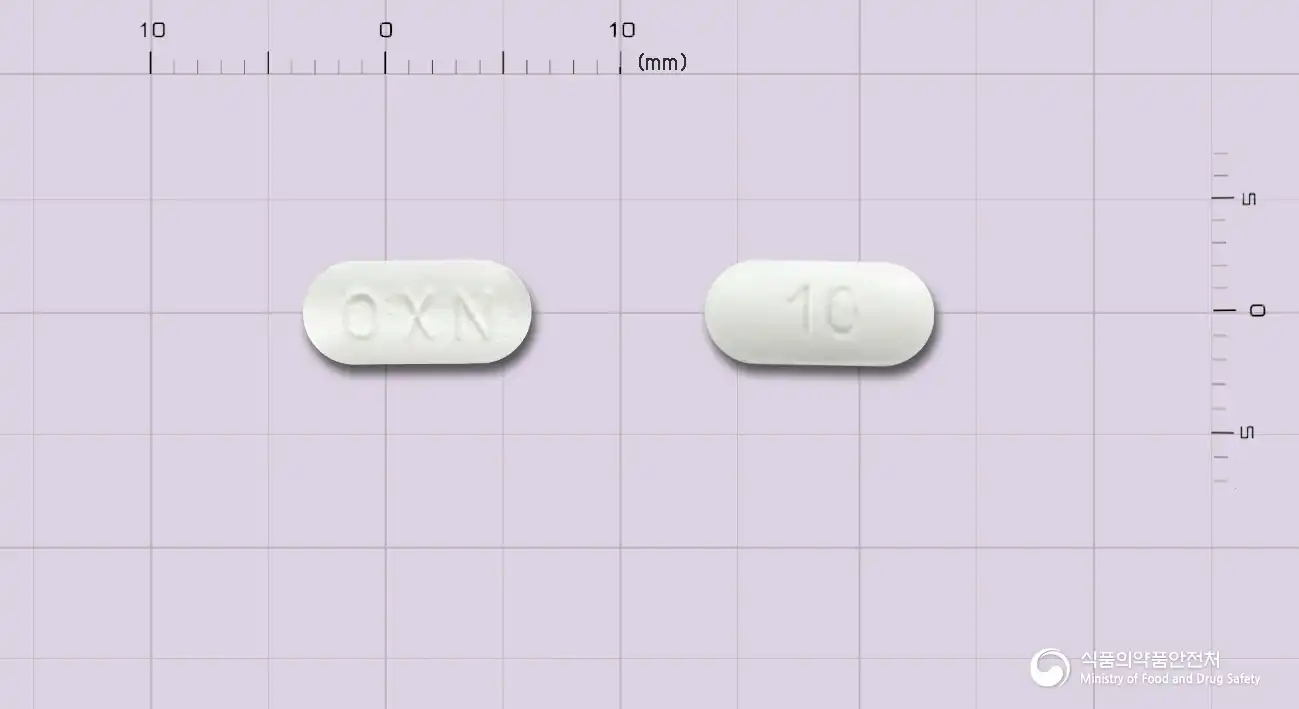
Oxycodone Hydrochloride 10.5mg · Naloxone Hydrochloride Dihydrate 5.45mg
Tablet · Prescription medication · Combination
Korea Mundipharma Co., Ltd.
 Combination
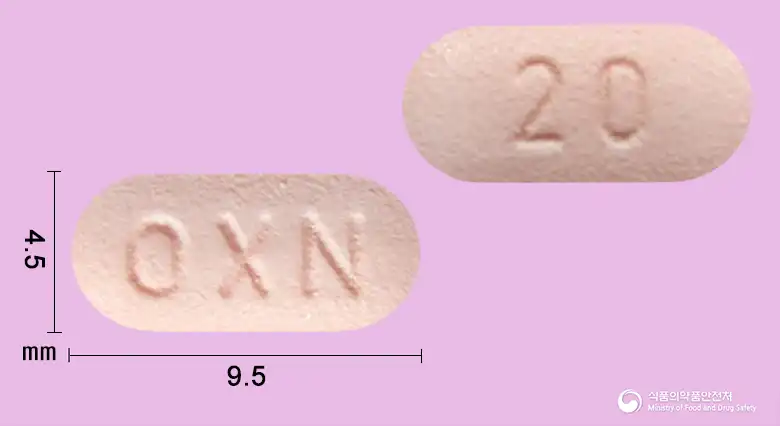
Oxycodone Hydrochloride 21mg · Naloxone Hydrochloride Dihydrate 10.9mg
Tablet · Prescription medication · Combination
Hansung Mundipharma Co., Ltd.
 Combination
Oxycodone Hydrochloride 5.25mg · Naloxone Hydrochloride Dihydrate 2.73mg
Tablet · Prescription medication · Combination
Korea Mundipharma Co., Ltd.
 Combination
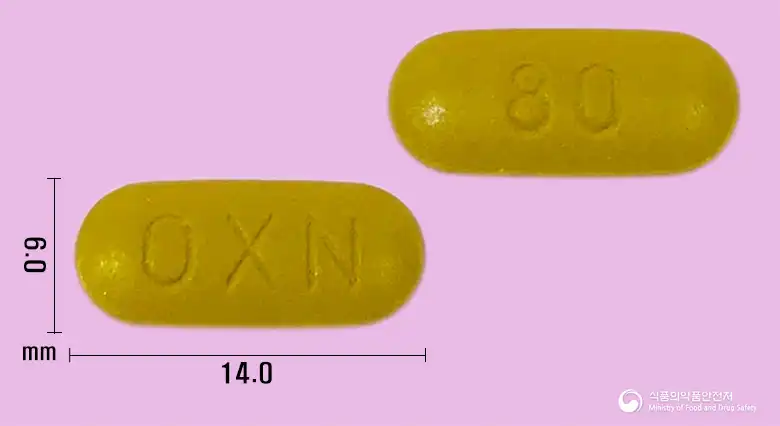
Oxycodone Hydrochloride 84mg · Naloxone Hydrochloride Dihydrate 43.6mg
Tablet · Prescription medication · Combination
Korea Mundi Pharma Co., Ltd.
Even with the same ingredient, the dose and directions can differ by strength and dosage form. Talk to a doctor or pharmacist before switching from a medication you are already taking.
No questions yet.
For anything that needs medical judgment, consult a doctor or pharmacist.
This drug information is based on data provided by the Korea Ministry of Food and Drug Safety.
Consult a doctor or pharmacist for accurate dosage, administration, and usage instructions.