
 한국어
한국어 English
 日本語
日本語 中文(简体)
 Viewing now
Acilin Capsule 250 mg (Amoxicillin Hydrate)
Amoxicillin Hydrate
Hard capsule · Prescription medication
(Company) Boryung
MFDS item code 197500272 · Notified 1975.09.08 · Insurance code 641902940
Treatment of infections such as streptococcal infections
This medication is effective against various bacteria including streptococci, pneumococci, staphylococci, gonococci, influenza bacilli, Escherichia coli, and Proteus mirabilis. It can treat skin and soft tissue infections such as furuncles, carbuncles, cellulitis, impetigo, and pyoderma. It is also used for upper respiratory infections such as tonsillitis, otitis media, and sinusitis, as well as lower respiratory infections like pneumonia, bronchitis, and lung abscesses. It is effective in treating various internal infections such as pyelonephritis and cystitis, as well as osteomyelitis, intrauterine infections, peritonitis, and liver abscesses. It is widely used for these various infectious diseases to improve symptoms caused by bacterial infections.
Adults and children weighing 20 Kg or more should be orally administered 250 to 500mg (potency) of amoxicillin three times a day.
Children weighing less than 20 Kg should be orally administered 20 to 40mg (potency) per Kg of body weight, divided into three doses daily.
This medication should not be administered to certain patients. Patients who have previously experienced a severe allergic reaction to this medication or have hypersensitivity to penicillin antibiotics should not use it. Caution is also required for patients with infectious mononucleosis or lymphocytic lymphoma. This medication should be used with caution in patients with allergic tendencies or severely impaired kidney function, elderly patients, and patients with poor general health. Additionally, patients with heart failure or urinary tract diseases need to be careful as well. This medication, although rare, can cause serious allergic reactions such as shock. If symptoms such as oral discomfort, dizziness, or wheezing occur, use should be discontinued immediately. Allergic symptoms such as skin rash, hives, or joint pain may appear, and in those cases, the medication should be stopped and appropriate treatment sought. Gastrointestinal symptoms such as nausea, vomiting, abdominal pain, and diarrhea may occur, and in severe cases, colitis may develop, necessitating cessation of administration if symptoms are present. Hematological abnormalities may occur such as reduced blood cell counts or prolonged bleeding times, so the medication should be stopped if any abnormal symptoms are observed. Psychiatric symptoms such as anxiety, insomnia, or confusion may occur rarely, and if aseptic meningitis symptoms appear, administration should be stopped immediately. Skin may show itching or severe dermatitis, such as Stevens-Johnson syndrome, which requires careful observation for any abnormal symptoms. Serious kidney issues, such as impaired liver function or acute renal failure, may occur rarely, so regular examinations are necessary. Secondary infections caused by fungi or bacteria may occur during the administration of this medication, so caution is required. During high-dose administration, it is important to ensure sufficient fluid intake to prevent kidney damage. This medication may interact with allopurinol, probenecid, oral contraceptives, and certain antibiotics, so caution is necessary when taken together. Women who are pregnant or may become pregnant should carefully consider the benefits and risks of taking this medication, and caution is needed during breastfeeding as well. The safety of this medication in children, especially low birth weight infants and neonates, has not been established, so caution is required in its use. Elderly patients may exhibit abnormal reactions more readily due to decreased bodily functions, thus dosage and intervals require adjustment and close observation. It may affect clinical test results, so it is necessary to inform the medical staff of this medication when undergoing tests. Overdose may lead to renal failure, so the prescribed dosage should be strictly adhered to. In the injectable form, intrathecal administration is prohibited, and contact with the skin should be avoided.
Hives, shock, severe swelling (edema), chest tightness, difficulty breathing, cold sweat, pallor, severe allergic reactions, severe rash, blisters, desquamation of the skin, pain in mucous membranes of mouth/eyes, severe skin adverse reactions, shortness of breath or difficulty breathing, asthma attacks, respiratory abnormalities accompanied by cough and fever, yellowing of skin or eyes (jaundice), general lethargy, liver abnormalities (jaundice), sudden and very severe headache,
Not everyone experiences these, and they can vary from person to person.
This medication should be stored away from direct sunlight, in a cool room temperature. Additionally, it is important to store it in a tightly sealed container to prevent air or moisture from entering.
(Upper part) dark red, (Lower part) light yellow capsule form
500 capsules/bottle
Even with the same ingredient, strength, dosage form and how it is taken can differ.
Viewing nowAmoxicillin Hydrate
Hard capsule · Prescription medication
(Company) Boryung

Amoxicillin Hydrate 250mg
Hard capsule · Prescription medication
Yuhan Corporation

Amoxicillin Hydrate 250mg
Hard capsule · Prescription medication
Dongwha Pharmaceutical Co., Ltd.

Amoxicillin Hydrate
Hard capsule · Prescription medication
(Boryung Pharmaceutical Co., Ltd.)
Amoxicillin Hydrate 3.23g
Syrup · Prescription medication
Donghwa Pharmaceutical Co., Ltd.
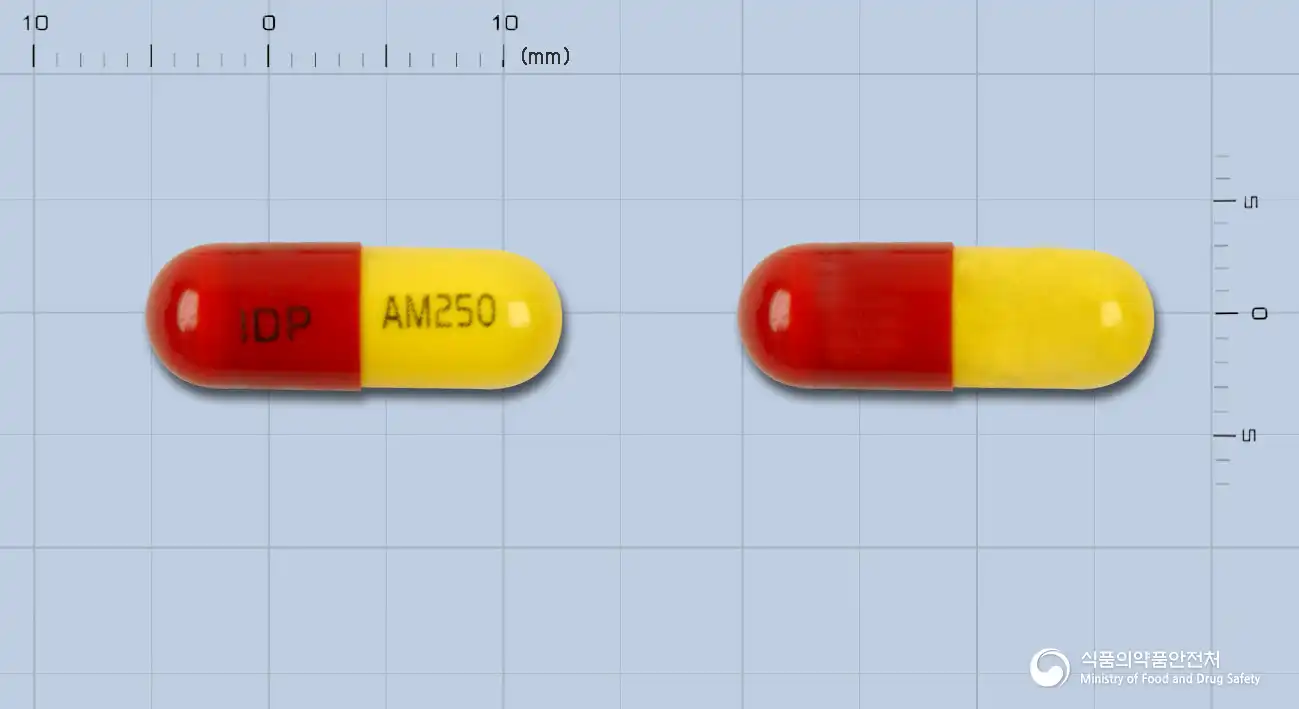
Amoxicillin Hydrate 250mg
Hard capsule · Prescription medication
Ildong Pharmaceutical Co., Ltd.

Amoxicillin Hydrate 500mg
Hard capsule · Prescription medication
Jongkundang Co., Ltd.

Amoxicillin Hydrate 500mg
Hard capsule · Prescription medication
Dongwha Pharmaceutical Co., Ltd.
Even with the same ingredient, the dose and directions can differ by strength and dosage form. Talk to a doctor or pharmacist before switching from a medication you are already taking.
No questions yet.
For anything that needs medical judgment, consult a doctor or pharmacist.
This drug information is based on data provided by the Korea Ministry of Food and Drug Safety.
Consult a doctor or pharmacist for accurate dosage, administration, and usage instructions.