
 한국어
한국어 English
 日本語
日本語 中文(简体)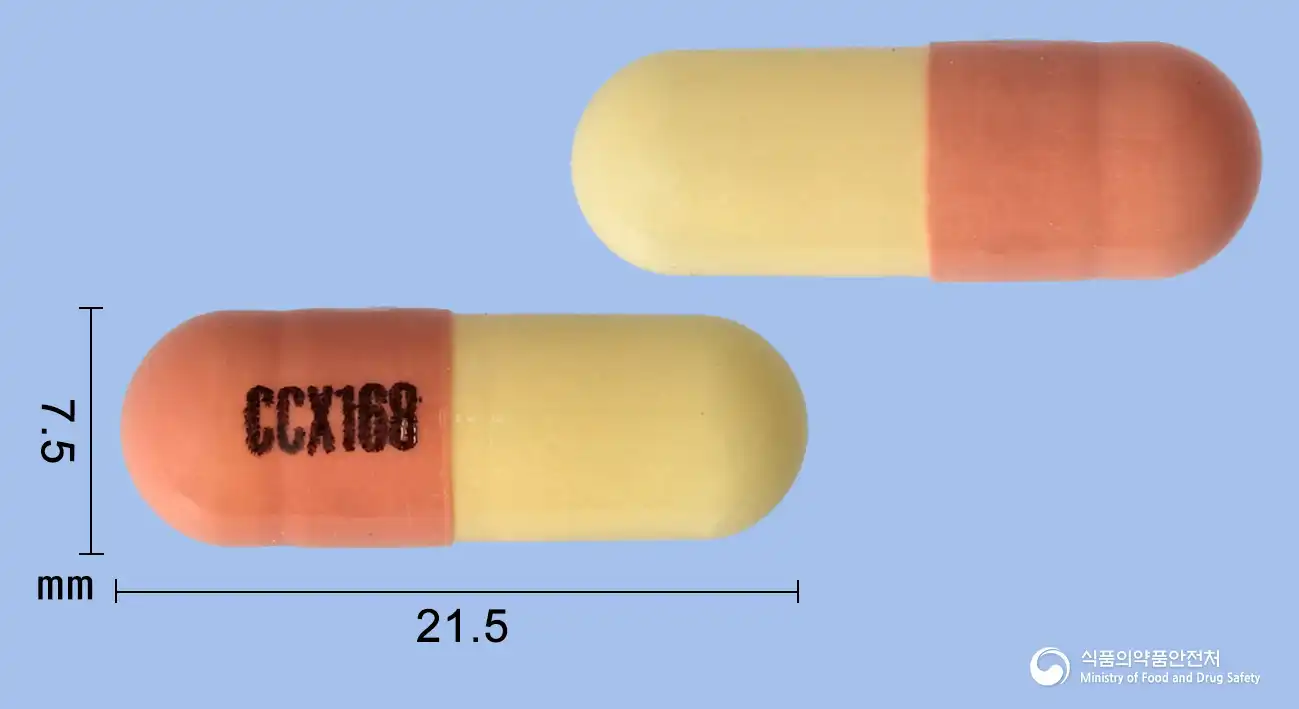
Summary
- Main use
- Treatment of active severe granulomatosis with polyangiitis and microscopic polyangiitis
- Who uses it
- Adults
- Adult dosage
- This medication should be taken orally with food, and the capsules should not be broken, chewed, or opened; swallow the whole capsule with water. The recommended dosage is 30 mg of this medication (3 capsules of 10 mg hard capsule) taken orally twice a day, in the morning and evening with food. If it is necessary to use in combination with a strong CYP3A4 inhibitor, the dose should be reduced to 30 mg taken orally once a day. In case of missed dose, wait until the next scheduled dose.
Ingredients
- Importer
- (주)메디팁
Efficacy & effects
Treatment of active severe granulomatosis with polyangiitis and microscopic polyangiitis
- Active severe granulomatosis with polyangiitis
- microscopic polyangiitis
View approved original textHide original text
This medication is used for treating adult patients with active severe granulomatosis with polyangiitis (GPA) and microscopic polyangiitis (MPA). It is usually administered in combination with rituximab therapy or cyclophosphamide therapy to enhance effectiveness. This helps reduce inflammation and vascular damage, thereby improving symptoms. Therefore, it plays an important role in effectively managing and treating the patient's condition.
Dosage and Administration
Adult dosage
This medication should be taken orally with food, and the capsules should not be broken, chewed, or opened; swallow the whole capsule with water. The recommended dosage is 30 mg of this medication (3 capsules of 10 mg hard capsule) taken orally twice a day, in the morning and evening with food. If it is necessary to use in combination with a strong CYP3A4 inhibitor, the dose should be reduced to 30 mg taken orally once a day. In case of missed dose, wait until the next scheduled dose.
Precautions
This medication should not be administered to patients with hypersensitivity to the active ingredient or additives. When taking this medication, common side effects may include nausea, headache, decreased white blood cell count, upper respiratory infections, diarrhea, vomiting, and nasopharyngitis. Serious side effects reported include liver function abnormalities and pneumonia, thus particular attention should be paid to liver health. If liver function abnormalities are suspected, liver enzymes and bilirubin levels should be monitored regularly, and this medication should be avoided in patients with severe liver disease. Patients with low white blood cell counts should not initiate this medication and should have their white blood cell counts regularly checked through blood tests during treatment. As there is an increased risk of infections, any symptoms of infection or bleeding, bruising, etc. should be immediately reported to healthcare professionals. This medication may interact with certain antibiotics or drugs that affect liver metabolic enzymes, so if other medications are being taken, this must be disclosed to a doctor or pharmacist. Use of this medication is not recommended for women who are pregnant or planning to become pregnant, and caution is advised during breastfeeding. The safety and efficacy in children under 18 years have not been established, so its use is not recommended. Although special dose adjustments are not required for the elderly, caution is necessary in patients with severely impaired liver or kidney function. While this medication does not affect driving or machine operation abilities, caution should be taken in case of side effects. In case of overdose, immediate consultation with healthcare professionals is necessary for appropriate treatment based on symptoms. This medication contains components that may cause gastrointestinal disturbances and diarrhea, so patients with sensitive stomachs should exercise caution. Lastly, store out of reach of children, and keep the medication in its original container to prevent quality degradation or misuse.
Side effects and when to seek care immediately
Serious side effects
Liver function abnormalities (including hepatitis, cholestatic hepatitis, hepatocellular damage), pneumonia, angioedema
Mild side effects
- Nausea
- headache
- upper respiratory infection
- diarrhea
- vomiting
- nasopharyngitis
- decreased white blood cell count
- abdominal pain
- increased serum creatine phosphokinase
- malaise
Not everyone experiences these, and they can vary from person to person.
Storage
This medication must be stored in a tightly closed container to protect it from air and moisture. The optimal storage temperature is between 1 degree and 30 degrees Celsius at room temperature. This helps maintain the drug's efficacy and safety for a long time.
Appearance and packaging
Appearance
Capsule consisting of an opaque white to off-white waxy solid, with a black printed opaque bright orange upper part marked 'CCX168' and an opaque yellow lower part, featuring a transparent band in the center.
Package unit
180 capsules/bottle, 30 capsules/bottle
Questions about this medicine
No questions yet.
For anything that needs medical judgment, consult a doctor or pharmacist.