
 한국어
 English
 日本語
 中文(简体)
 Viewing now
Zeposia Capsule 0.92 mg (Ozanimod Hydrochloride)
Ozanimod Hydrochloride 1mg
Hard capsule · Prescription medication
(Ltd.) Korea BMS Pharmaceutical
MFDS item code 202300675 · Approved 2023.02.23 · Insurance code 658700760
Treatment of moderately to severely active ulcerative colitis in adults
This medication is used in the treatment of moderate to severe active ulcerative colitis in adults who have not responded adequately to conventional therapies such as corticosteroids or immunosuppressants, or who experienced an initial response that has subsequently diminished, and for whom the medication cannot be used due to adverse effects. This drug serves as an effective treatment option for these patients, helping to improve symptoms and manage the disease.
The recommended dose of this drug is 0.92 mg orally once daily. The dose-escalation regimen from day 1 through day 7 of treatment with this drug is as follows. Days 1–4: 0.23mg once daily Days 5–7: 0.46mg once daily Day 8 onward: 0.92mg once daily The capsules must be swallowed whole and may be taken with or without food.
The safety and efficacy of this drug have not been established in children under 18 years of age.
This medication should not be administered to certain patients. For instance, it should be avoided in patients who are allergic to this drug or its components, who have experienced a heart attack or stroke within the past six months, who have cardiac conduction problems without a pacemaker, who have severe sleep apnea, who are taking monoamine oxidase inhibitors, or who are pregnant or of childbearing potential without appropriate contraception. During the use of this medication, various side effects may occur. Common side effects include peripheral edema, infection, elevated liver enzyme levels, headache, and hypertension, while rare but serious issues such as liver damage, decreased heart rate, reduced lymphocyte count in the blood, and macular edema may arise. This medication can temporarily decrease heart rate, thus patients with heart disease or heart rate issues require special attention from the physician. Patients with impaired liver function may be at higher risk for liver damage and should have regular liver function tests. Additionally, this drug may affect the immune system, increasing the risk of infection; thus, treatment should be postponed or discontinued if infections occur, and careful observation for infections should be undertaken during treatment. It is advisable not to use this medication concurrently with other immunosuppressants or chemotherapy agents, and it may interact with specific drugs; therefore, it is crucial to inform healthcare professionals of any other medications being taken. Women who are pregnant or planning to become pregnant should employ effective contraception for three months during and following treatment with this drug due to potential risks to the fetus, and consult a physician if pregnancy occurs. Before taking this drug, it is recommended to verify vaccination status for varicella and receive vaccinations as necessary. Furthermore, due to the risk of skin cancer, sun exposure should be minimized, and skin conditions should be monitored regularly. Immediately seek eye care if changes in vision occur, and if neurological symptoms arise, treatment should be stopped and medical assistance sought immediately. In the case of overdose, there is no specific antidote; instead, symptomatic treatment and supportive therapy should be received.
Not everyone experiences these, and they can vary from person to person.
This medication should be stored in a tightly closed container to protect it from air and moisture. It is suitable to keep it at room temperature between 1 and 30 degrees Celsius. Proper storage ensures the safety of the medication's efficacy.
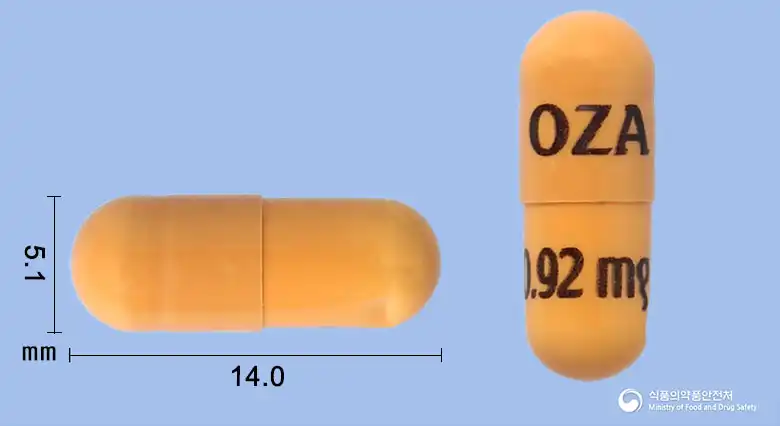
An orange opaque capsule containing a white to pale yellow powder.
Blister - 7 capsules/blister, Blister - 4 blisters/box
Even with the same ingredient, strength, dosage form and how it is taken can differ.
Viewing nowOzanimod Hydrochloride 1mg
Hard capsule · Prescription medication
(Ltd.) Korea BMS Pharmaceutical
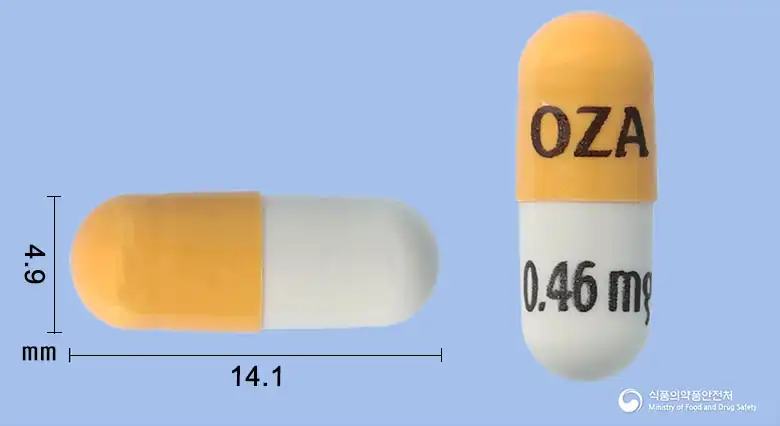
Ozanimod Hydrochloride 0.5mg
Hard capsule · Prescription medication
Korea BMS Pharmaceutical Co., Ltd.
Even with the same ingredient, the dose and directions can differ by strength and dosage form. Talk to a doctor or pharmacist before switching from a medication you are already taking.
No questions yet.
For anything that needs medical judgment, consult a doctor or pharmacist.
This drug information is based on data provided by the Korea Ministry of Food and Drug Safety.
Consult a doctor or pharmacist for accurate dosage, administration, and usage instructions.