
 한국어
 English
 日本語
 中文(简体)
 Viewing now
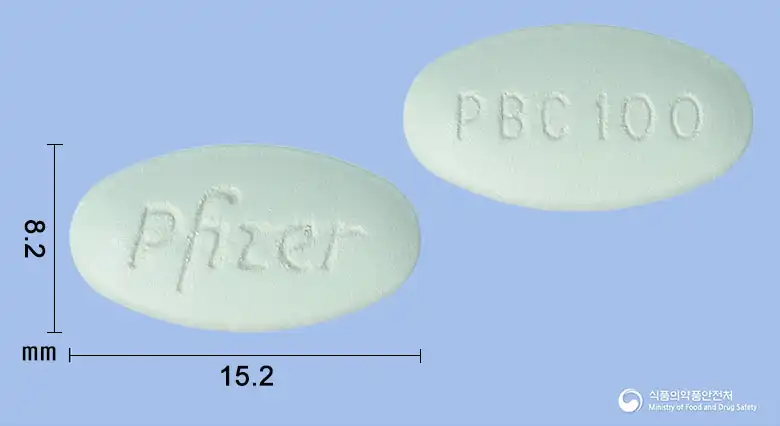
Ibrance 100 mg Tablets (Palbociclib)
Palbociclib 100mg
Tablet · Prescription medication
Pfizer Korea Co., Ltd.
MFDS item code 202200688 · Approved 2022.02.14 · Insurance code 648903720
Combination therapy for HR-positive, HER2-negative advanced or metastatic breast cancer
This drug is used for the treatment of HR-positive and HER2-negative advanced or metastatic breast cancer. Particularly in female patients, it is combined with aromatase inhibitors as a first-line endocrine therapy, or, when the disease progresses after endocrine therapy, it is combined with fulvestrant to enhance treatment efficacy. This helps effectively manage the progression of breast cancer and improve symptoms.
The recommended dose of this medicine is one 125 mg tablet once daily by mouth for 21 consecutive days, followed by 7 days off treatment, in a 28-day cycle. It may be taken with or without food. If concomitant use with a strong CYP3A inhibitor is necessary, reduce the dose to 75 mg once daily. In patients with severe hepatic impairment (Child-Pugh C), administer 75 mg once daily for 3 weeks, followed by 1 week off treatment.
This drug may decrease the number of neutrophils, a type of white blood cell; therefore, blood tests to monitor neutrophil counts must be periodically conducted before and during treatment. This drug can be harmful to the fetus during pregnancy, so women who are pregnant or may become pregnant should not use this medication, and effective contraception must be implemented during treatment and for at least 3 weeks after the last dose. Serious lung conditions such as interstitial lung disease or pneumonia may occur during the use of this drug, so if symptoms like shortness of breath, cough, or fever appear, the healthcare provider must be notified immediately. Patients with a history of interstitial lung disease or symptoms of lung disease should use this drug with caution and require regular evaluations to prevent worsening of their condition. The risk of infection may increase while taking this drug; therefore, if symptoms like fever or infection appear, the healthcare provider must be informed immediately for appropriate treatment. Patients with severely impaired liver function may need dose adjustments, and patients with impaired kidney function should also be cautious, but those with mild to moderate renal impairment do not need dose adjustments. This drug can inhibit or affect certain enzymes (CYP3A), so care must be taken with drug interactions when taken with other medications affecting this enzyme, especially grapefruit or grapefruit juice should be avoided. Taking this medication with certain statins may increase the risk of muscle damage; therefore, if taking these medications together, consult with a healthcare provider. This drug is not recommended for breastfeeding women, and if breastfeeding, it is advised to stop breastfeeding during treatment and for at least 3 weeks after the last dose. The safety and efficacy of this drug in children have not been established; therefore, this drug should not be used in pediatric patients. Elderly patients can use this drug, but no specific dose adjustments are necessary compared to the general adult population. In case of overdose, there is no specific antidote; supportive care should be received, and appropriate measures should be taken at a medical institution. This drug should be stored out of reach of children and kept sealed in the original container for safety.
Neutropenia, infection, leukopenia, fatigue, nausea, alopecia, stomatitis, diarrhea, anemia, rash, asthenia, thrombocytopenia, vomiting, decreased appetite, dry skin, fever, dysgeusia, interstitial lung disease, pneumonia, hand-foot syndrome with erythema and sensory abnormalities, cutaneous lupus erythematosus, erythema multiforme, venous thromboembolism, increased serum creatinine, upper abdominal pain, constipation, dyspepsia, arthralgia, insomnia, pruritus, pulmonary inflammation, cough, pulmonary embolism, febrile neutropenia, pancytopenia, pneumonia, asthenia, nausea, abdominal pain, gastroesophageal reflux disease, gastric ulcer, gingival swelling, hepatitis, decreased appetite, myalgia, dorsal lumbar pain, flank pain, plantar fasciitis, headache, dizziness, sensory loss, peripheral neuropathy, peripheral sensory neuropathy, hyperhidrosis, increased C-reactive protein, abnormal blood calcium levels, vasculitis, tinnitus
Not everyone experiences these, and they can vary from person to person.
This drug should be stored in a tightly sealed container to prevent air or moisture ingress. It's recommended to maintain a storage temperature between 1 and 30 degrees Celsius. Avoid storing in excessively hot or cold places.
Green oval film-coated tablet
21 tablets/box [(7 tablets/blister x 3)]
Even with the same ingredient, strength, dosage form and how it is taken can differ.
Viewing nowPalbociclib 100mg
Tablet · Prescription medication
Pfizer Korea Co., Ltd.
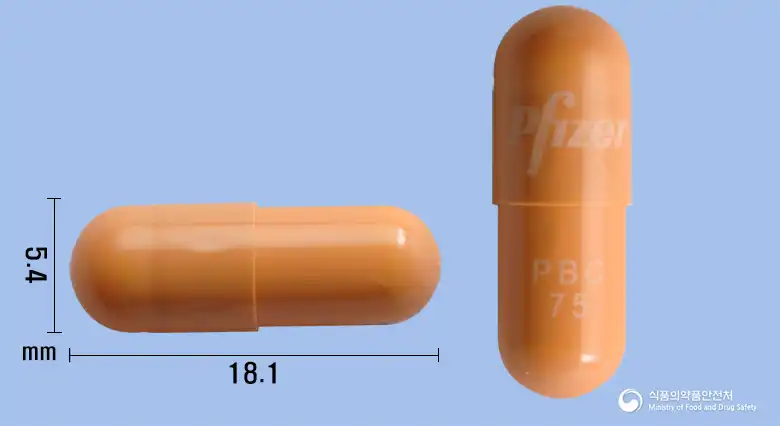
Palbociclib 75mg
Hard capsule · Prescription medication
Pfizer Pharmaceuticals Korea Co., Ltd.
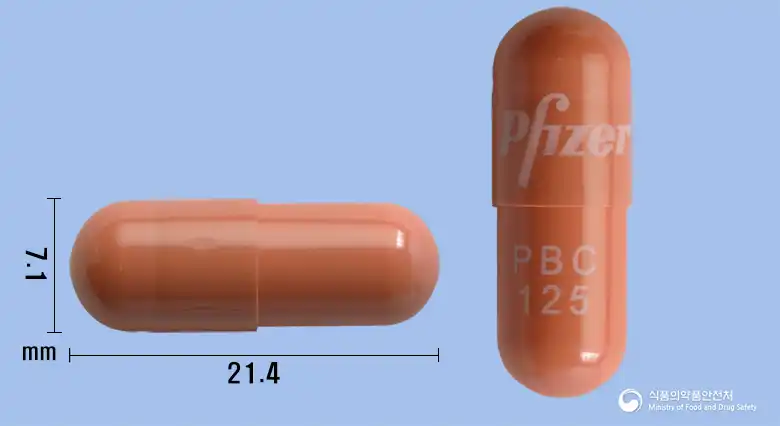
Palbociclib 125mg
Hard capsule · Prescription medication
Pfizer Pharmaceuticals Korea Co., Ltd.
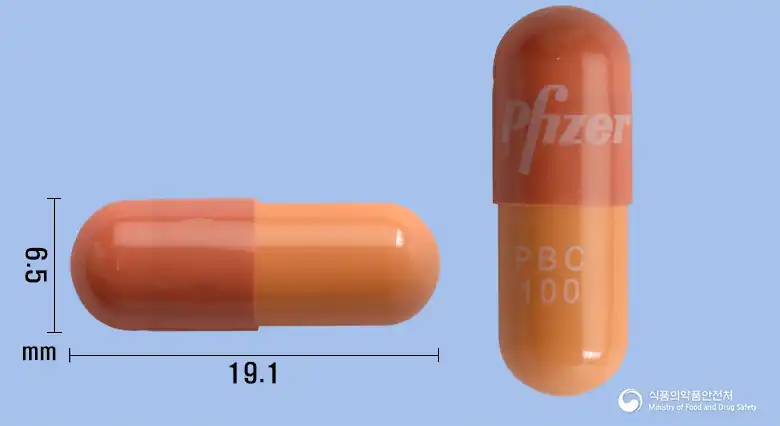
Palbociclib 100mg
Hard capsule · Prescription medication
Pfizer Korea, Co., Ltd.

Palbociclib 75mg
Tablet · Prescription medication
Pfizer Korea Ltd.
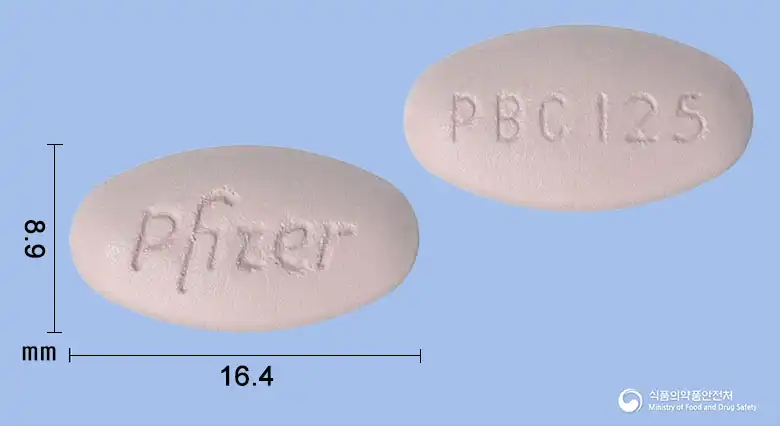
Palbociclib 125mg
Tablet · Prescription medication
Pfizer Pharmaceuticals Korea Co., Ltd.
Palbociclib 75mg
Prescription medication
Kwangdong Pharmaceutical Co., Ltd.
Palbociclib 100mg
Prescription medication
Kwangdong Pharmaceutical Co., Ltd.
Even with the same ingredient, the dose and directions can differ by strength and dosage form. Talk to a doctor or pharmacist before switching from a medication you are already taking.
No questions yet.
For anything that needs medical judgment, consult a doctor or pharmacist.
This drug information is based on data provided by the Korea Ministry of Food and Drug Safety.
Consult a doctor or pharmacist for accurate dosage, administration, and usage instructions.