
 한국어
 English
 日本語
 中文(简体)
 Viewing now
Sibinco Tablet 200 mg (Abrocitinib)
Abrocitinib 200mg
Tablet · Prescription medication
Pfizer Korea Co., Ltd.
MFDS item code 202107594 · Approved 2021.11.23 · Insurance code 648903640
Treatment of moderate-to-severe atopic dermatitis in patients aged 12 years and older
This medication is used in patients who have not appropriately responded to or are intolerant of existing therapies. It is prescribed cautiously to elderly patients over 65 years of age, those at high cardiovascular risk, and patients at risk of malignancies. It is also applicable for systemic therapy in adults suffering from moderate to severe atopic dermatitis and adolescents aged 12 years and older, effectively improving symptoms.
Treatment should be initiated and supervised by a healthcare professional experienced in the diagnosis and treatment of atopic dermatitis. 1. Recommended dosage The recommended starting dosage of this drug is 100 mg or 200 mg once daily, depending on individual patient characteristics. • A starting dosage of 100 mg once daily is recommended for patients with risk factors for adverse reactions to this drug or poor tolerability, including patients at increased risk of venous thromboembolism (VTE), major adverse cardiovascular events (MACE), or malignancy (see sections '1. Warnings,' '3. Adverse Reactions,' and '4. General Precautions'). If the patient does not respond adequately to 100 mg once daily, the dose may be increased to 200 mg once daily. • For most patients, the recommended starting dosage is 200 mg once daily; if the disease is controlled, the dose should be reduced to 100 mg once daily. If disease control is not maintained after dose reduction, restarting at 200 mg once daily may be considered. Some patients may experience a disease flare after dose reduction. Increased risk of disease flare after dose reduction is associated with a history of systemic treatment for atopic dermatitis and extensive disease affecting more than 50% of body surface area (BSA). The lowest effective maintenance dose of this drug should be considered. Discontinuation should be considered in patients who show no effect after 24 weeks. This drug may be used with or without topical corticosteroids. Topical calcineurin inhibitors may be used on sensitive areas, such as the face, neck, intertriginous areas, and genital area. 1) Initiation of treatment Treatment with this drug should not be initiated in patients with a platelet count below 150 × 103/mm3, an absolute lymphocyte count (ALC) below 0.5 × 10³/mm3, an absolute neutrophil count (ANC) below 1 × 10³/mm3, or a hemoglobin level below 8 g/dL. 2) Missed dose If a dose is missed and 12 hours or more remain until the next dose, take it as soon as possible. If less than 12 hours remain, skip the missed dose. Resume dosing at the scheduled time thereafter. 3) Interruption of treatment If a patient develops a serious infection, sepsis, or an opportunistic infection, consider interrupting treatment with this drug until the infection is controlled. Treatment interruption may be required to manage laboratory abnormalities, as shown in Table 2. 4) Drug interactions For patients receiving strong cytochrome P450 (CYP) 2C19 inhibitors (e.g., fluvoxamine, fluconazole, fluoxetine, ticlopidine), reduce the recommended starting dose of this drug by half to 100 mg or 50 mg once daily. Concomitant use of this drug with moderate or strong CYP2C19/CYP2C9 enzyme inducers (e.g., rifampicin, apalutamide, efavirenz, enzalutamide, phenytoin) is not recommended. 2. Method of administration 1) This drug is administered orally once daily at approximately the same time each day, with or without food. 2) For patients who experience nausea, taking the drug with food may improve nausea. 3) Tablets should be swallowed whole with water and should not be split, crushed, or chewed. Administration by these methods has not been studied in clinical trials. 3. Special populations 1) Renal impairment No dose adjustment is required in patients with mild renal impairment (e.g., estimated glomerular filtration rate [eGFR] 60 mL/min or higher and below 90 mL/min). For patients with moderate renal impairment (eGFR 30 mL/min or higher and below 60 mL/min), reduce the recommended dose of this drug by half to 100 mg or 50 mg once daily. For patients with severe renal impairment (eGFR below 30mL/min), the recommended starting dose of this drug is 50 mg once daily, and the maximum daily dose is 100 mg. This drug has not been studied in patients with end-stage renal disease (ESRD) receiving renal replacement therapy. 2) Hepatic impairment No dose adjustment is required in patients with mild (Child-Pugh A) or moderate (Child-Pugh B) hepatic impairment. This drug should not be used in patients with severe (Child-Pugh C) hepatic impairment.
This medication should not be used in patients with active systemic infections due to a significant risk of serious infections. Patients with a history of chronic infections or tuberculosis, or those who have lived in areas with a high risk of infections should carefully consider the risks and benefits before administration. During treatment, symptoms of infection should be monitored closely, and if a new infection occurs, treatment should begin immediately and the medication should be discontinued if necessary. Patients aged 65 years and older should only use this medication if they do not respond to existing treatments or do not have drug intolerance. There is a need for caution in patients over 50 years with cardiovascular risks, as this medication may increase mortality and the risk of cardiovascular adverse reactions. There may also be a risk of malignancies; therefore, it should be used cautiously in patients with risk factors, especially smokers or the elderly. Regular skin examinations are recommended due to the risk of skin cancer. Patients with risk factors for thrombosis, particularly pulmonary embolism and deep vein thrombosis, should be monitored carefully, and if symptoms appear, immediate evaluation and discontinuation of the medication is required. This medication should not be used in patients with hypersensitivity to it, tuberculosis, severe liver disease, or those who are pregnant or breastfeeding. Common side effects upon administration include nausea, headache, acne, and dizziness, and blood tests should regularly monitor platelet counts and immune cell levels. This medication can affect liver function and lipid levels, so regular blood tests and monitoring are necessary. Caution is advised when driving or operating machinery if dizziness occurs. There is a potential for drug interactions; if other medications are being taken, consultation with healthcare professionals is essential. Women who are pregnant or breastfeeding should not use this medication, and women of childbearing age should employ effective contraception during and for a period of time after treatment. Caution is required in children and adolescents as safety and efficacy have not been sufficiently established. Elderly patients have a higher likelihood of side effects, thus should be used cautiously. In case of overdose, there is no specific antidote, and appropriate treatment and observation based on symptoms are necessary. Store the medication out of reach of children and keep it in the original container to maintain its quality.
Not everyone experiences these, and they can vary from person to person.
This medication may be sensitive to air or moisture; therefore, it should be stored in a tightly closed container. It is important to maintain the storage temperature between 1°C and 30°C to ensure the medication's efficacy and safety over a long period.
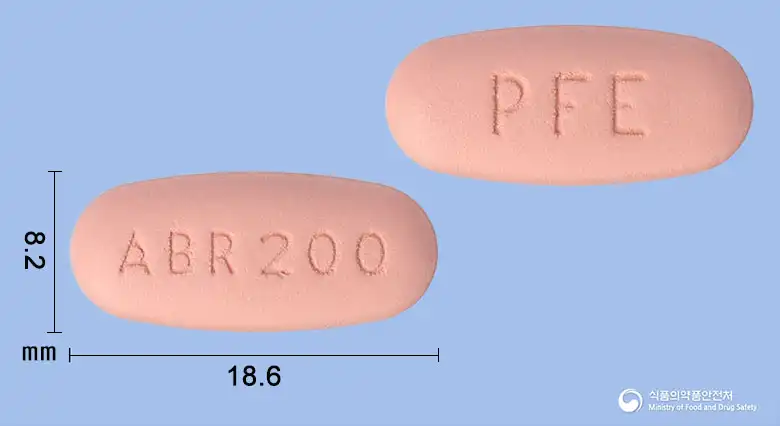
Pink oval film-coated tablet engraved with 'ABR200' on one side and 'PFE' on the other side
30 tablets/bottle
Even with the same ingredient, strength, dosage form and how it is taken can differ.
Viewing nowAbrocitinib 200mg
Tablet · Prescription medication
Pfizer Korea Co., Ltd.
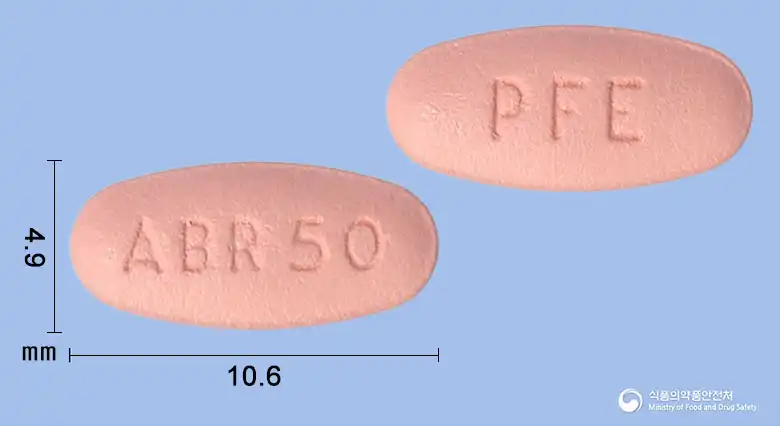
Abrocitinib 50mg
Tablet · Prescription medication
Pfizer Korea Co., Ltd.
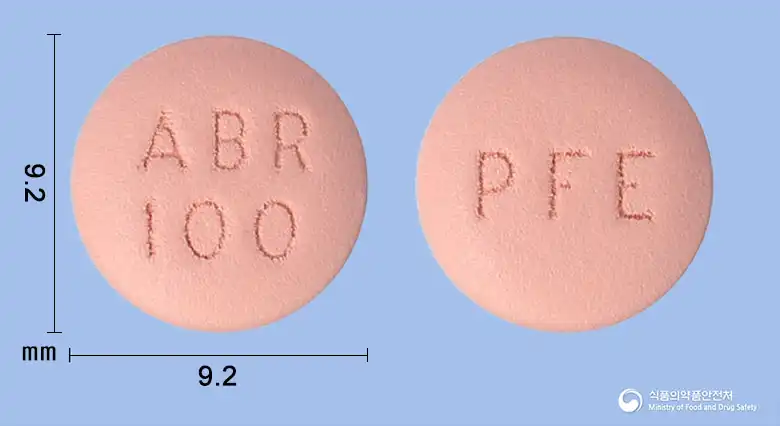
Abrocitinib 100mg
Tablet · Prescription medication
Pfizer Pharmaceuticals Korea Co., Ltd.
Even with the same ingredient, the dose and directions can differ by strength and dosage form. Talk to a doctor or pharmacist before switching from a medication you are already taking.
No questions yet.
For anything that needs medical judgment, consult a doctor or pharmacist.
This drug information is based on data provided by the Korea Ministry of Food and Drug Safety.
Consult a doctor or pharmacist for accurate dosage, administration, and usage instructions.