
 한국어
한국어 English
 日本語
日本語 中文(简体)
 Viewing now
Vancomycin Capsule 125 mg (Vancomycin Hydrochloride)
Vancomycin Hydrochloride 125mg
Hard capsule · Prescription medication
Korea United Pharmaceutical Co., Ltd.
MFDS item code 202006034 · Approved 2020.08.27 · Insurance code 644309560
Treatment of small intestine and colitis due to staphylococcal and Clostridium infections, as well as pseudomembranous colitis.
This medication is used to treat small intestine and colitis caused by Staphylococcus and antibiotic-associated pseudomembranous colitis caused by Clostridium difficile.
For adults, 500 mg (equivalent) of vancomycin should be administered orally in divided doses for 7-10 days. In severe cases, 2 g (equivalent) may be used in divided doses of 3-4 times a day, with the total daily dose not exceeding 2 g.
For children, 40 mg (equivalent) per kg of body weight, divided into 3-4 doses, should be administered orally for 7-10 days. The total daily dose should not exceed 2 g and should be adjusted according to age and symptoms.
This medication should not be used in certain patients. Patients with a history of allergy to this medication or its components should not take it. Additionally, those with lactose intolerance or genetic lactose-related disorders should avoid this medication as it contains lactose. There are patients who should use this medication with caution. Patients with allergies to peptide-type or aminoglycoside antibiotics or with a history of hearing loss should be careful. Patients with kidney function issues, elderly patients, and those with damage to the vestibular system and cochlea should also use it carefully. Moreover, patients allergic to the dye Yellow No. 5 should be cautious. While taking this medication, serious side effects can occur, although they are rare. Symptoms of shock such as low blood pressure, dizziness, and difficulty breathing may occur, and if any abnormal symptoms appear, the administration should be stopped immediately. Additionally, there have been reports of decreased blood cell counts, hearing loss, and kidney dysfunction, so regular monitoring is necessary. To prevent the occurrence of resistant bacteria, it is advisable to administer this medication only for the necessary duration. Patients with intestinal disorders like pseudomembranous colitis or those with reduced kidney function may absorb more of the drug, increasing the risk of side effects, so caution is advised. Regular auditory tests are recommended due to the risk of hearing loss. When taken with other anticoagulants, this medication may affect blood coagulation, so the patient's condition should be frequently checked with blood tests, and the drug dosage may need adjustment as necessary. Pregnant or breastfeeding women should consult their doctor thoroughly regarding the use of this medication. Caution is warranted as there is a possibility of auditory toxicity or nephrotoxicity in the fetus or newborn. Elderly patients should be particularly careful, as reduced kidney function and intestinal disorders may lead to accumulation of the drug in the body. In the case of overdose, treatment to support kidney function is needed, and since regular dialysis may not effectively remove the drug, special blood filtration methods may be required. This drug works by inhibiting bacterial cell wall synthesis and is effective against Gram-positive bacteria, but not against Gram-negative bacteria or fungi. There is a potential for resistant bacteria to develop, so caution is advised during use.
Hives, severe swelling (edema), shock, low blood pressure, anaphylaxis (severe allergic reaction), Stevens-Johnson syndrome, toxic epidermal necrolysis, DRESS, acute generalized exanthematous pustulosis, vasculitis, dysfunction of the eighth cranial nerve, jaundice, wheezing, difficulty breathing, acute renal failure, interstitial pneumonia, severe skin reactions, pseudomembranous colitis, CDAD, severe neurological symptoms (headache, seizures, confusion, visual disturbances, paralysis potential
Not everyone experiences these, and they can vary from person to person.
This medication should be stored in a sealed container to prevent air exposure, and it is best kept at a temperature between 1 and 30 degrees Celsius to maintain its effectiveness.
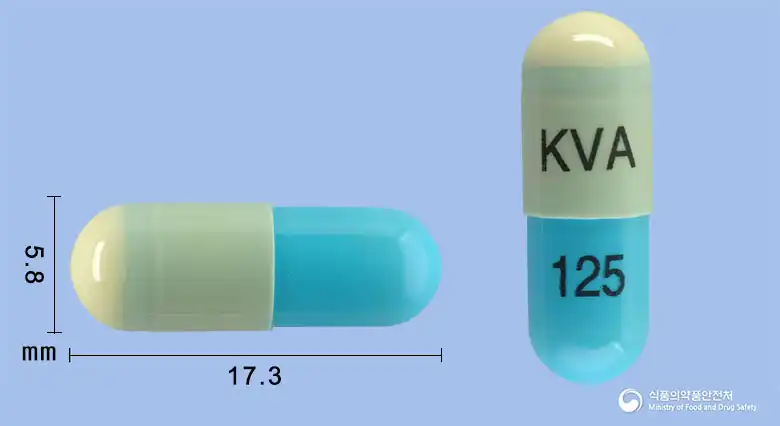
A capsule with a pale brown powder filling, with an upper yellowish tan and a lower light blue color.
For domestic use: 30 capsules/bottle For export: 40 capsules (10 capsules/PTP x 4)
Even with the same ingredient, strength, dosage form and how it is taken can differ.
Viewing nowVancomycin Hydrochloride 125mg
Hard capsule · Prescription medication
Korea United Pharmaceutical Co., Ltd.
Vancomycin Hydrochloride 500mg
Injections · Prescription medication
HK Innoen Co., Ltd.
Vancomycin Hydrochloride 500mg
Injections · Prescription medication
Aprogen Pharmaceuticals Co., Ltd.
Vancomycin Hydrochloride 500mg
Injections · Prescription medication
Yuyoung Pharmaceutical Co., Ltd.
Vancomycin Hydrochloride 500mg
Injections · Prescription medication
Oskorea Pharmaceutical Co., Ltd.
Vancomycin Hydrochloride
Prescription medication
International Pharmaceutical Co., Ltd.
Vancomycin Hydrochloride 1g
Injections · Prescription medication
Aprogen Biosciences, Co., Ltd.
Vancomycin Hydrochloride 1g
Injections · Prescription medication
HK Innoen Co., Ltd.
Even with the same ingredient, the dose and directions can differ by strength and dosage form. Talk to a doctor or pharmacist before switching from a medication you are already taking.
No questions yet.
For anything that needs medical judgment, consult a doctor or pharmacist.
This drug information is based on data provided by the Korea Ministry of Food and Drug Safety.
Consult a doctor or pharmacist for accurate dosage, administration, and usage instructions.