
 한국어
 English
 日本語
 中文(简体)
Summary
- Main use
- Reduction of the risk of cardiovascular death and hospitalization in adults with transthyretin amyloid cardiomyopathy
- Who takes it
- Adults
- Adult dose
- Administer the recommended dose of 61 mg orally once daily. Swallow the capsule whole; do not crush or cut it. If vomiting occurs immediately after taking this medicine, check the vomitus for the medicine. If the medicine is found in the vomitus, take an additional dose as soon as possible. If no capsule is found, do not take an additional dose and resume taking this medicine as usual the next day.
Ingredients
- Importer
- Pfizer Pharmaceuticals Korea Limited
Efficacy & effects
Reduction of the risk of cardiovascular death and hospitalization in adults with transthyretin amyloid cardiomyopathy
View approved original textHide original text
This medication is used to reduce cardiovascular mortality and cardiovascular-related hospitalizations in adult patients with wild-type or hereditary transthyretin amyloid cardiomyopathy (ATTR-CM).
How to take
Adult dose
Administer the recommended dose of 61 mg orally once daily. Swallow the capsule whole; do not crush or cut it. If vomiting occurs immediately after taking this medicine, check the vomitus for the medicine. If the medicine is found in the vomitus, take an additional dose as soon as possible. If no capsule is found, do not take an additional dose and resume taking this medicine as usual the next day.
Precautions
Women of childbearing potential must use appropriate contraception during treatment and for one month after stopping the medication. This medication contains sorbitol, so it should not be taken by patients with hereditary fructose intolerance. It should not be administered to patients with hypersensitivity to this drug or its components. Clinical trial results indicate that gastrointestinal adverse reactions such as diarrhea and abdominal pain may occur while taking this medication. For patients with mild to moderate liver impairment, dose adjustment is not required, but the effects in patients with severe liver impairment or NYHA class IV heart failure are not known. Clinical trials have not yet been conducted in patients with renal impairment. There is insufficient research on the effects on driving or operating machinery, so caution is advised. This medication does not significantly inhibit or induce the cytochrome P450 enzyme, reducing the likelihood of drug interactions; however, it may inhibit certain drug transporters, so consult a healthcare professional if you are taking other medications. Pregnant or breastfeeding women should avoid taking this medication, especially during breastfeeding. Safety and efficacy in pediatric patients have not been established, and no dose adjustment is required in elderly patients. This medication may reduce total serum thyroxine levels but does not cause thyroid dysfunction. Reported cases of overdose are very rare, and adverse reactions have been mild. This medication should be kept out of the reach of children and stored in its original container to maintain the quality of the drug.
Side effects
- Diarrhea
- urinary tract infection
- vaginal infection
- upper abdominal pain
- mild miliaria
Not everyone experiences these, and they can vary from person to person.
Storage
This medication should be stored in a tightly closed container to prevent exposure to air or moisture. Additionally, it is important to store it in a cool place at room temperature, below 25 degrees Celsius, to maintain its effectiveness.
Appearance and packaging
Appearance
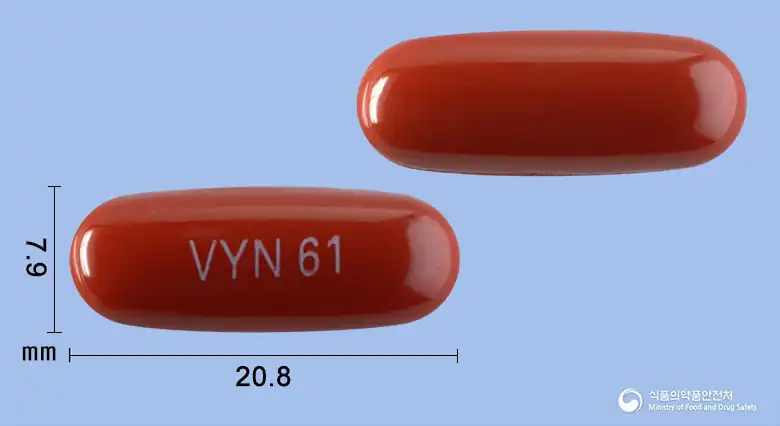
An opaque brown oblong soft capsule containing a white-pink suspension.
Package unit
30 capsules/box [(10 capsules/PTP x 3)]
Questions about this medicine
No questions yet.
For anything that needs medical judgment, consult a doctor or pharmacist.