
 한국어
 English
 日本語
 中文(简体)
Summary
- Main use
- Adjunctive treatment with levodopa for idiopathic Parkinson's disease with motor fluctuations
- Who takes it
- Adults
- Adult dose
- 1. This medicine is administered in combination with levodopa-containing products. Start this medicine at 50 mg once daily and, based on the individual patient's response and tolerability, the dose may be increased to 100 mg (2 tablets of 50 mg) once daily. This medicine may be taken with or without food. 2. Patients with hepatic impairment No dose adjustment is required in patients with mild hepatic impairment (Child-Pugh A). In patients with moderate hepatic impairment (Child-Pugh B), the dose of this medicine should not exceed 50 mg daily. Use of this medicine is not recommended in patients with severe hepatic impairment (Child-Pugh C) [see Precautions for Use, 4. General Precautions].
Ingredients
- Importer
- Eisai Korea Inc.
Efficacy & effects
Adjunctive treatment with levodopa for idiopathic Parkinson's disease with motor fluctuations
- Motor fluctuations
View approved original textHide original text
This medication helps alleviate motor symptoms that occur during periods of reduced drug effect in patients with idiopathic Parkinson's disease. It is particularly used as an adjunct to levodopa-containing formulations to reduce symptom fluctuations and improve the quality of daily life, thus facilitating smoother movements and improving symptoms for patients.
How to take
Adult dose
1. This medicine is administered in combination with levodopa-containing products. Start this medicine at 50 mg once daily and, based on the individual patient's response and tolerability, the dose may be increased to 100 mg (2 tablets of 50 mg) once daily. This medicine may be taken with or without food. 2. Patients with hepatic impairment No dose adjustment is required in patients with mild hepatic impairment (Child-Pugh A). In patients with moderate hepatic impairment (Child-Pugh B), the dose of this medicine should not exceed 50 mg daily. Use of this medicine is not recommended in patients with severe hepatic impairment (Child-Pugh C) [see Precautions for Use, 4. General Precautions].
Precautions
This medicine should not be administered to certain patients. Patients currently taking other monoamine oxidase inhibitors, narcotic analgesics, serotonergic drugs, central nervous system stimulants, or dextromethorphan should not use this medication. Furthermore, it should not be taken by patients with severe liver impairment or known allergies to its ingredients, or by pregnant women or those who may become pregnant. Patients with moderate liver impairment should use this medication cautiously and under medical supervision. This medication may cause side effects such as dyskinesia, falls, nausea, and insomnia. Psychiatric symptoms can include hallucinations, drowsiness, sudden sleep symptoms, and impulse control disorders, so if these occur, patients should consult a healthcare professional immediately. This medication may worsen psychiatric symptoms by increasing dopamine activity, so particularly cautious use is advised in patients with mental disorders. Additionally, hypotension or orthostatic hypotension may occur, increasing the risk of dizziness or falls. Patients with compromised liver function may have elevated drug concentrations in the blood and should monitor liver function status while taking the medication. Patients with retinal disease or visual changes should undergo regular eye examinations. This medication has many interactions with other drugs, particularly MAO inhibitors, narcotic analgesics, serotonergic drugs, dextromethorphan, and sympathomimetics; it should not be taken together with these drugs, and a certain period should be allowed before starting other medications after discontinuation. During the course of this medication, it is also advised to avoid aged cheeses and pickled foods rich in tyramine. Women who are pregnant or breastfeeding should not take this medication, and if taking it, should ensure adequate contraception. The safety in children under 18 years has not been established, so its use is not recommended. In case of overdose, medication should be stopped immediately and appropriate treatment should be received at a hospital. Lastly, this medication should be kept out of the reach of children, expired products should not be used, and after opening the package, it should be stored away from moisture. Care should be taken not to swallow PTP packaging sheets.
Side effects
- movement disorders
- falls
- nausea
- insomnia
- orthostatic hypotension
- anxiety
- cough
- loss of appetite
- visual hallucinations
- hallucinations
Show 65 moreCollapse
- drowsiness
- narcolepsy
- impulse control disorder
- gingivitis
- nasopharyngitis
- pneumonia
- anemia
- decreased appetite
- headache
- dizziness
- delirium
- REM sleep abnormalities
- pleural rigidity
- Parkinson's disease
- restless legs syndrome
- restlessness
- worry
- confusion
- depression
- akinesia
- balance disorders
- hyperkinesia
- tremor
- serotonin syndrome
- dizziness
- cataract
- double vision
- blurred vision
- decreased vision
- visual impairment
- hypotension
- hypertension
- orthostatic hypotension
- dyspnea
- nausea
- constipation
- indigestion
- gastritis
- vomiting
- abdominal discomfort
- abdominal pain
- diarrhea
- erythema
- hyperhidrosis
- phototoxic reaction
- back pain
- postural abnormalities
- spinal osteoarthritis
- arthralgia
- muscle rigidity
- muscle spasms
- gait disorders
- peripheral edema
- thirst
- fatigue
- lethargy
- increased ALT
- increased AST
- increased ALP
- increased GTP
- elevated serum potassium
- presence of glucose in urine
- decreased blood pressure
- weight loss
- increased blood pressure
Not everyone experiences these, and they can vary from person to person.
Storage
This medicine may be sensitive to air and moisture, so it should be stored in a tightly sealed container. It is important to maintain storage temperatures between 1 and 30 degrees Celsius. Proper storage will help preserve the medication's effectiveness over time.
Appearance and packaging
Appearance
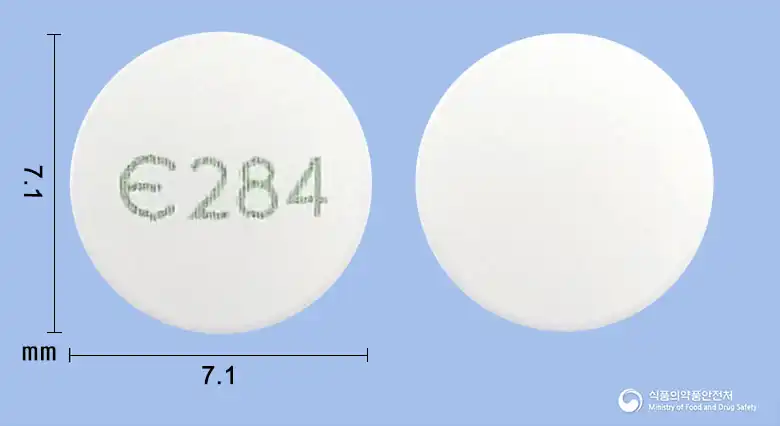
White, double convex, round film-coated tablet
Package unit
100 tablets/box [10 tablets/PTP X 10], 28 tablets/box [14 tablets/PTP X 2]
Questions about this medicine
No questions yet.
For anything that needs medical judgment, consult a doctor or pharmacist.