
 한국어
한국어 English
 日本語
日本語 中文(简体)
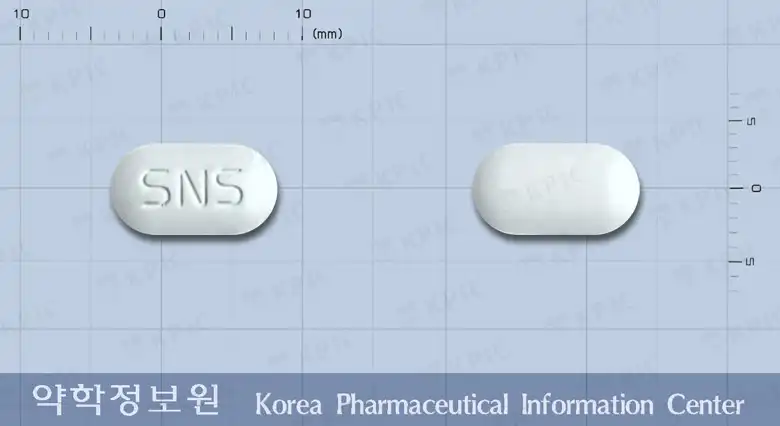
Dosage form image
Viewing nowFlanax Tablet (Naproxen Sodium)
Naproxen Sodium 275mg
Tablet · OTC medication
Korea PMG Pharmaceutical Co., Ltd.
MFDS item code 202003782 · Notified 2020.05.25
This product's status changed to Approval withdrawn on 2025.02.27. It may no longer be sold, so consult a doctor or pharmacist before taking it.
Pain relief and functional improvement for inflammatory diseases such as rheumatoid arthritis and osteoarthritis
This medication is effectively used for degenerative joint diseases such as rheumatoid arthritis and osteoarthritis, ankylosing spondylitis, tendinitis, acute gout, and dysmenorrhea. It is also widely used for skeletal muscle disorders such as bursitis, muscle and ligament sprains and strains, postoperative pain, migraine, and pain after tooth extraction. Overall, it helps relieve inflammation and pain related to joints and muscles, playing an essential role in improving patients' symptoms. It is used for the treatment of various inflammatory diseases and pain.
1. Rheumatoid arthritis, osteoarthritis, ankylosing spondylitis Adults should take 275-550mg of naproxen sodium orally twice a day (every 12 hours). 2. Acute gout Adults should take 825mg of naproxen sodium orally as the initial dose and then 275mg every 8 hours until the attack subsides. 3. Skeletal muscle disorders, postoperative pain, pain after tooth extraction, dysmenorrhea, tendinitis, bursitis Adults should take 550mg of naproxen sodium orally as the initial dose, followed by 275mg every 6-8 hours. Do not exceed a total daily dose of 1350mg. 4. Migraine Adults should take 825mg of naproxen sodium orally as the initial dose. If needed, 275-550mg may be taken later in the day, 30 minutes after the initial dose. Do not exceed a total daily dose of 1350mg. Adjust adequately based on age and symptoms.
People who regularly consume more than three alcoholic beverages daily should consult a doctor or pharmacist before taking this medication as there is a risk of gastrointestinal bleeding. This medication may increase the risk of cardiovascular disease, so individuals with a history of heart disease or stroke or risk factors should be more cautious. If cardiovascular symptoms occur while taking this medication, inform healthcare providers immediately. This medication can cause serious gastrointestinal problems such as bleeding, ulcers, and perforation and is particularly at higher risk for the elderly, so attention should be paid to gastrointestinal symptoms during use. Individuals with peptic ulcers, severe liver or kidney dysfunction, severe blood disorders, severe heart failure, hypertension, or those allergic to this medication or non-steroidal anti-inflammatory drugs (NSAIDs) should not take it. Those with a history of peptic ulcers, liver or kidney disease, blood disorders, asthma, hypertension, heart dysfunction, elderly individuals, etc., should take this medication cautiously and monitor for abnormal reactions closely. This medication can cause various side effects such as allergic reactions, gastrointestinal bleeding, liver or kidney dysfunction, blood abnormalities, skin rashes, and difficulty breathing. If symptoms appear, discontinue use immediately and consult with healthcare providers. Before taking this medication, the benefits and risks of treatment should be thoroughly considered, and it is recommended to use the minimum dose for the shortest duration possible. The risk of side effects may increase when this medication is used in combination with other NSAIDs or specific drugs, so consult with healthcare providers when combining medications. It may be harmful to the fetus during pregnancy, especially in the late stages, so pregnant women should not take it, and women of childbearing age should consult a doctor before taking it. During breastfeeding, this medication can be transmitted to breast milk and affect newborns, so it is safer for nursing mothers not to use it. It is preferable not to administer this medication to children under 2 years of age as safety has not been established, and it should be administered cautiously at the minimum dose to children and the elderly with specific attention to side effects. This medication can affect blood test results, so inform healthcare providers before tests, and if an overdose occurs, visit a medical institution immediately for appropriate treatment. When storing, keep it out of reach of children and do not transfer it to other containers to ensure safety and maintain quality.
Hives, severe swelling (edema), chest tightness, difficulty breathing, cold sweat, pallor, severe rash with high fever, blisters, pain in oral/ocular mucous membranes, breathlessness or difficulty breathing, asthmatic attacks, respiratory abnormalities accompanied by coughing and fever, yellowing of the skin or eyes (jaundice), extreme lethargy, sudden and severe headaches, lightning-bolt headache, seizures, altered consciousness, visual disturbances, paralysis, and urination difficulties.
Not everyone experiences these, and they can vary from person to person.
This medication should be stored in a tightly closed container to prevent air or moisture ingress and is best kept at room temperature between 1 and 30 degrees Celsius. Proper storage will help retain the medication's effectiveness for a longer period.
Blue oval film-coated tablet
10 tablets/box [10 tablets/PTP × 1]
Even with the same ingredient, strength, dosage form and how it is taken can differ.
Naproxen Sodium 275mg
Tablet · OTC medication
Korea PMG Pharmaceutical Co., Ltd.

Naproxen Sodium 275mg
Tablet · OTC medication
Jongkundang Co., Ltd.

Naproxen Sodium 275mg
Tablet · OTC medication
Hanin Pharmaceutical Co., Ltd.

Naproxen Sodium 275mg
Tablet · OTC medication
GL Pharma Co., Ltd.

Naproxen Sodium 275mg
Tablet · OTC medication
Myeongin Pharmaceutical Co., Ltd.

Naproxen Sodium 275mg
Tablet · OTC medication
Korea Pharmaceutical Co., Ltd.

Naproxen Sodium 275mg
Tablet · OTC medication
Kolon Pharmaceutical Co., Ltd.
Naproxen Sodium 275mg
Tablet · OTC medication
Youngpoong Pharmaceutical Co., Ltd.
Even with the same ingredient, the dose and directions can differ by strength and dosage form. Talk to a doctor or pharmacist before switching from a medication you are already taking.
No questions yet.
For anything that needs medical judgment, consult a doctor or pharmacist.
This drug information is based on data provided by the Korea Ministry of Food and Drug Safety.
Consult a doctor or pharmacist for accurate dosage, administration, and usage instructions.