
 한국어
 English
 日本語
 中文(简体)
Dosage form image
Viewing nowMeloxone Capsule 7.5 mg (Meloxicam)
Meloxicam 7.5mg
Prescription medication
Seohung Co., Ltd.
MFDS item code 202002677 · Approved 2020.04.16
This product's status changed to Expired on 2025.04.16. It may no longer be sold, so consult a doctor or pharmacist before taking it.
Relief of symptoms of rheumatoid arthritis, acute exacerbations of osteoarthritis, and ankylosing spondylitis
This medication is used for the short-term relief of symptoms during acute exacerbations of osteoarthritis associated with pain and mobility impairment. It also treats symptoms of rheumatoid arthritis and ankylosing spondylitis, reducing discomfort for patients. In summary, this drug helps effectively improve symptoms of various inflammatory diseases related to arthritis. Therefore, it is actively used for alleviating joint pain and inflammation.
Acute exacerbation of osteoarthritis (degenerative arthritis): Adults: Administer 7.5 mg of meloxicam orally once daily. If symptoms do not improve, the dose may be increased to 15 mg daily as needed. Rheumatoid arthritis, ankylosing spondylitis: Adults: Administer 15 mg of this drug orally once daily. The dose may be reduced to 7.5 mg daily according to response to treatment. Do not administer more than 15 mg of this drug daily. Take with water or another beverage during a meal. In elderly patients or those at increased risk of adverse reactions, treatment is usually initiated at a dose of 7.5 mg daily. Patients with severe renal impairment undergoing hemodialysis should not receive more than 7.5 mg daily.
This medication should be consulted with a doctor or pharmacist if taken by individuals who regularly consume more than three glasses of alcohol daily due to increased risk of gastrointestinal bleeding. This medication may increase the risk of cardiovascular problems such as myocardial infarction or stroke in individuals with cardiovascular diseases or risk factors. If symptoms arise, discontinue use immediately and seek medical attention. This medication can cause serious gastrointestinal side effects such as gastrointestinal bleeding, ulcers, and perforation, and caution is particularly necessary for the elderly and individuals with a history of gastrointestinal diseases. Severe allergic skin reactions or dermatitis may occur, so if symptoms such as skin rash or mucosal lesions appear, discontinue use immediately. This medication may affect kidney and liver function, so individuals with existing kidney or liver diseases should consult a doctor before taking it and require regular check-ups during use. Women who are pregnant or planning to become pregnant should not take this medication, and breastfeeding women should also avoid it. This medication may cause serious side effects in individuals with certain genetic metabolic disorders; therefore, those with lactose intolerance and similar conditions should not take it. The risk of side effects increases when this medication is taken with other non-steroidal anti-inflammatory drugs, so it should be avoided. Strict management by a doctor is needed when taken with anticoagulants, lithium, methotrexate, etc. Elderly patients may have reduced kidney, liver, and heart function, so it should be taken carefully at a minimum dose, with close monitoring for side effects. Overdose of this medication can cause symptoms such as vomiting, drowsiness, and gastrointestinal bleeding; in severe cases, it may lead to life-threatening conditions such as kidney failure, liver failure, or seizures, requiring immediate emergency treatment.
Not everyone experiences these, and they can vary from person to person.
This medication should be stored in a container that blocks light and air, preferably at room temperature between 1 and 30 degrees Celsius. Proper storage can prolong the medication's effectiveness.
Light yellow powder in a hard capsule with a pale green shell
30 capsules/bottle, 300 capsules/bottle
Even with the same ingredient, strength, dosage form and how it is taken can differ.
Meloxicam 7.5mg
Prescription medication
Seohung Co., Ltd.
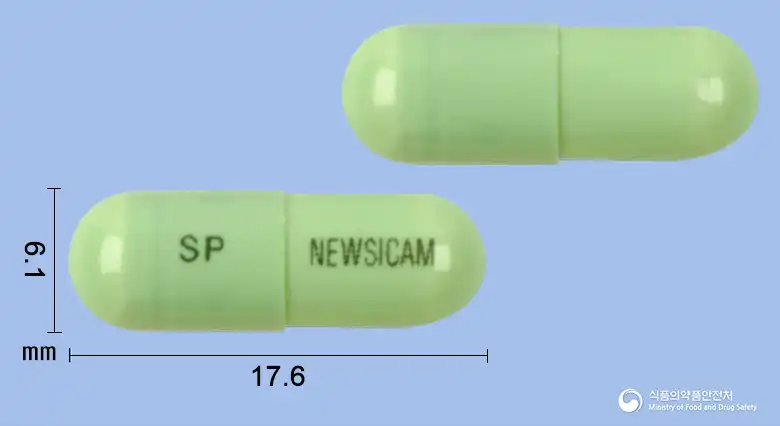
Meloxicam 7.5mg
Hard capsule · Prescription medication
Shinpoong Pharmaceutical Co., Ltd.
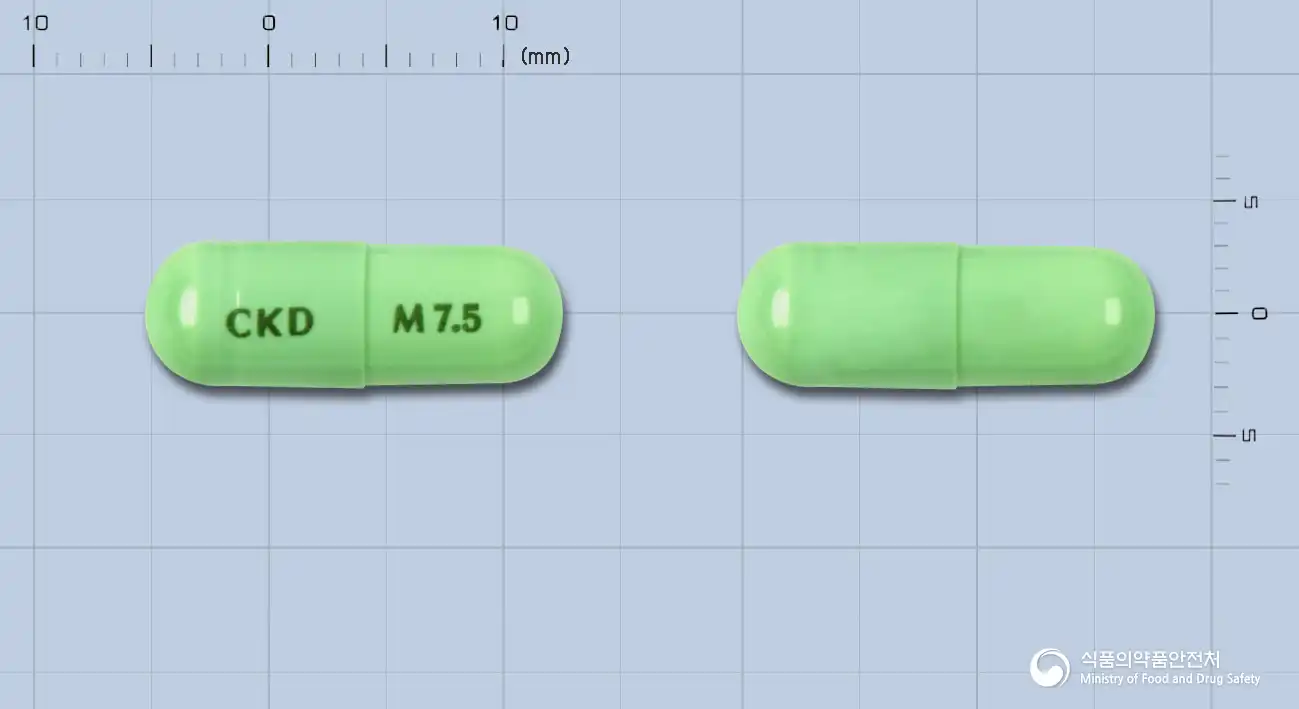
Meloxicam 7.5mg
Hard capsule · Prescription medication
Jongkundang Co., Ltd.
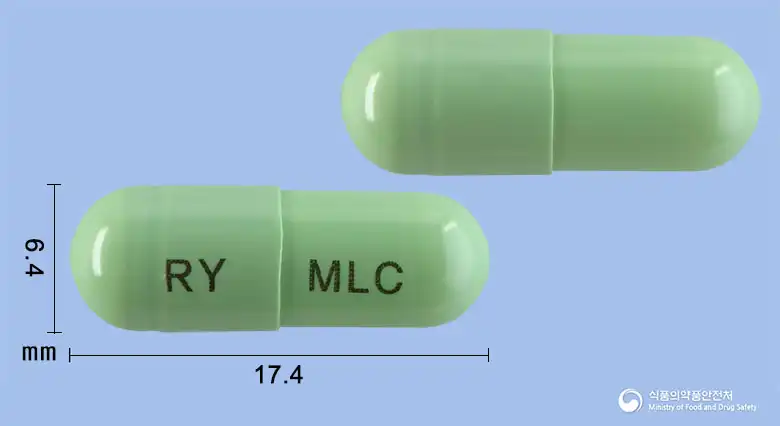
Meloxicam 7.5mg
Hard capsule · Prescription medication
IYUN Pharmaceutical Co., Ltd.
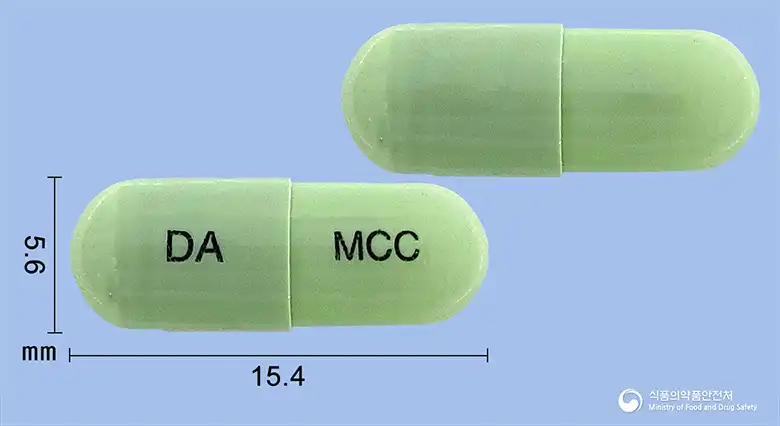
Meloxicam 7.5mg
Hard capsule · Prescription medication
Dong-A ST Co., Ltd.
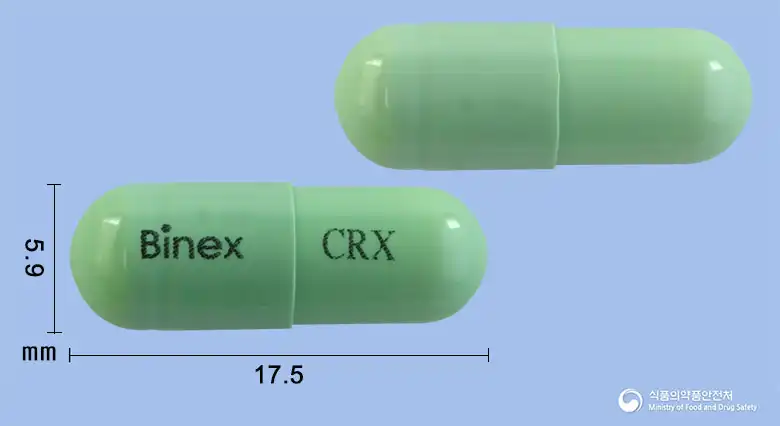
Meloxicam 7.5mg
Hard capsule · Prescription medication
Bionex Co., Ltd.
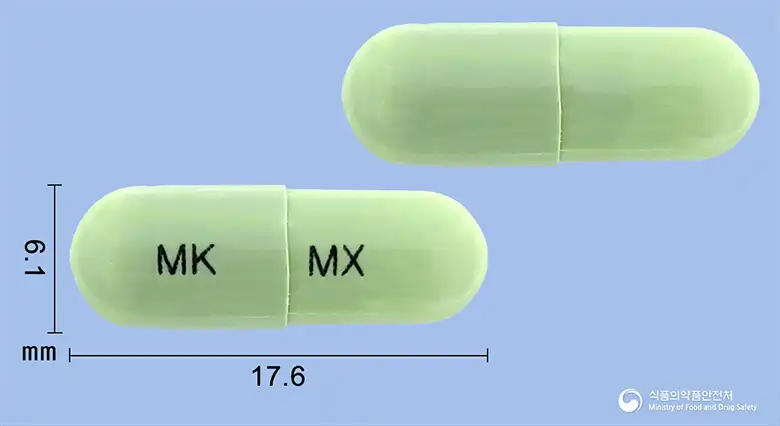
Meloxicam 7.5mg
Hard capsule · Prescription medication
Medica Korea Co., Ltd.
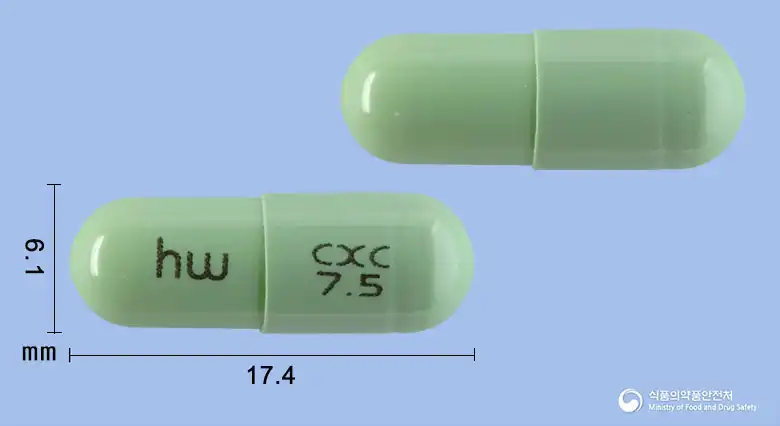
Meloxicam 7.5mg
Hard capsule · Prescription medication
Hawon Pharmaceutical Co., Ltd.
Even with the same ingredient, the dose and directions can differ by strength and dosage form. Talk to a doctor or pharmacist before switching from a medication you are already taking.
No questions yet.
For anything that needs medical judgment, consult a doctor or pharmacist.
This drug information is based on data provided by the Korea Ministry of Food and Drug Safety.
Consult a doctor or pharmacist for accurate dosage, administration, and usage instructions.