
 한국어
 English
 日本語
 中文(简体)
Dosage form image
Viewing nowMetagen MR Sustained Release Tablet 35mg (Trimetazidine Dihydrochloride)
Trimetazidine Hydrochloride 35mg
Tablet · Prescription medication
Albozen Korea Co., Ltd.
MFDS item code 201908660 · Approved 2019.12.26 · Insurance code 652606630
This product's status changed to Approval withdrawn on 2025.09.26. It may no longer be sold, so consult a doctor or pharmacist before taking it.
Combination therapy for adults with stable angina inadequately controlled by or intolerant of first-line treatment
This medication is used in combination therapy with other medications for symptomatic relief in patients with stable angina who are not adequately controlled or tolerate the first-line anti-anginal treatment. It helps effectively improve symptoms of stable angina.
Adults: Take 35mg twice daily, with breakfast and dinner. Patients with renal impairment Patients with moderate renal impairment (creatinine clearance 30-60 ml/min) should take 35mg once daily with breakfast.
This medication is not intended to directly treat angina attacks, and it should not be used in cases requiring emergency treatment for heart problems. It is especially not suitable as an initial treatment for serious cardiac conditions such as unstable angina or myocardial infarction. A reevaluation of the patient's heart condition and consideration of other necessary treatment methods must occur prior to using this medication. Patients with known allergies or hypersensitivity related to this medication should not take it. Furthermore, patients with neurological disorders such as Parkinson's disease, related movement disorders, tremors, or restless legs syndrome should avoid using this drug. This medication should also be avoided in patients with severely impaired kidney function, particularly those with a creatinine clearance of less than 30 mL/min. Patients with moderately reduced kidney function or those aged 75 and older should exercise special caution when taking this medication, and dosage adjustment may be necessary. Common neurological side effects when taking this drug may include dizziness and headache, while rarer effects may involve abnormalities in heart rhythm, reduced blood pressure, gastrointestinal disorders, and skin rashes. Since it can affect motor function and trigger Parkinson's symptoms or restless legs syndrome, any appearance of these symptoms should prompt immediate discontinuation and consultation with a healthcare professional. In particular, elderly patients should regularly check for exacerbation of Parkinsonian symptoms, and medical attention from a neurologist may be necessary if symptoms appear. This medication can cause serious skin reactions; thus, if red spots, rashes, itching, or swelling appear, immediate discontinuation and a visit to a hospital are required. The safety of this medication during pregnancy has not been fully established; therefore, avoidance of use is recommended, and nursing mothers are also advised against using this drug. The safety and efficacy of this medication in children under 18 have not been confirmed, thus its use is not advisable. Information on overdose of this medication is limited, so it is essential to adhere strictly to the dosage. Any abnormal symptoms should be reported to healthcare providers immediately. Dizziness or drowsiness may occur during use, requiring caution when driving or operating machinery. Lastly, this medication should be stored out of reach of children, and expired medication should not be taken.
Dizziness, headache, Parkinsonian symptoms (tremor, bradykinesia, rigidity), gait instability, restless legs syndrome, other movement-related disorders, sleep disorders (insomnia, sedation), perceptual disturbances, vertigo, palpitations, ectopic beats, tachycardia, orthostatic hypotension associated with falls, flushing, abdominal pain, diarrhea, dyspepsia, nausea, vomiting, constipation, rash, pruritus, urticaria, drug reaction with eosinophilia and systemic symptoms (DRESS), acute generalized exanthematous pustulosis (AGEP), angioedema, weakness, agranulocytosis, thrombocytopenia, thrombocytopenic purpura, hepatitis
Not everyone experiences these, and they can vary from person to person.
This medication should be stored at room temperature between 1 and 30 degrees Celsius, and it is important to keep it in a sealed container to prevent exposure to air or moisture. This helps maintain the drug's efficacy and prevent degradation.
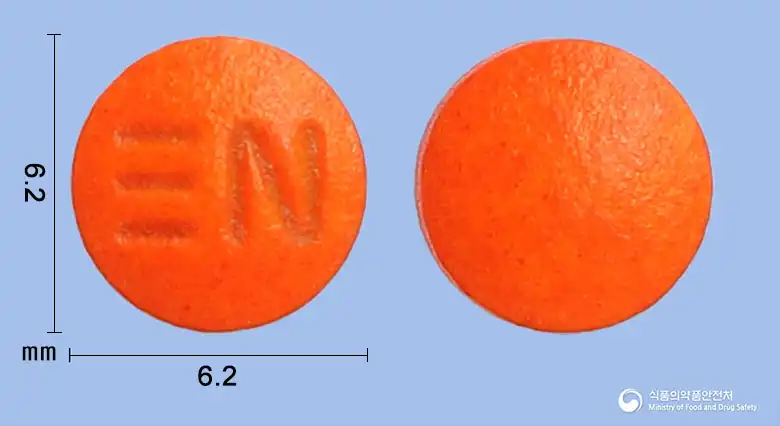
Bright pink, biconvex, round film-coated tablet
60 tablets/box [10 tablets/PTP*6]
Even with the same ingredient, strength, dosage form and how it is taken can differ.
Trimetazidine Hydrochloride 35mg
Tablet · Prescription medication
Albozen Korea Co., Ltd.
Trimetazidine Hydrochloride 20mg
Tablet · Prescription medication
Sammann Pharmaceutical Co., Ltd.

Trimetazidine Hydrochloride 35mg
Tablet · Prescription medication
Korea Servier Co., Ltd.

Trimetazidine Hydrochloride 20mg
Tablet · Prescription medication
Korea Servier Co., Ltd.

Trimetazidine Hydrochloride 20mg
Tablet · Prescription medication
Celltrion Pharmaceutical Co., Ltd.
Trimetazidine Hydrochloride
Prescription medication
Korea SanDoos Co., Ltd.
Even with the same ingredient, the dose and directions can differ by strength and dosage form. Talk to a doctor or pharmacist before switching from a medication you are already taking.
No questions yet.
For anything that needs medical judgment, consult a doctor or pharmacist.
This drug information is based on data provided by the Korea Ministry of Food and Drug Safety.
Consult a doctor or pharmacist for accurate dosage, administration, and usage instructions.