
 한국어
한국어 English
 日本語
日本語 中文(简体)
Dosage form image
Viewing nowDonepezil Sublingual Tablet 5 mg (Donepezil Hydrochloride Monohydrate)
Donepezil Hydrochloride Hydrate 5.22mg
Orally disintegrating Tablet · Prescription medication
Hanpung Pharmaceutical Co., Ltd.
MFDS item code 201908248 · Approved 2019.12.05
This product's status changed to Expired on 2024.12.05. It may no longer be sold, so consult a doctor or pharmacist before taking it.
Improvement of Alzheimer's disease symptoms
This medication is used to treat symptoms of Alzheimer's disease. It helps improve the quality of daily life by alleviating symptoms such as memory decline and cognitive function impairment.
For donepezil hydrochloride, administer 5 mg once daily at bedtime. The concentration of donepezil reaches a steady state after 15 days of administration, therefore, maintain the dose at 5 mg for 4 to 6 weeks. After evaluating clinical response, it can be increased to 10 mg, and if increasing to 10 mg daily, it is necessary to monitor for gastrointestinal adverse reactions. This medication is a sublingual tablet; place it on the tongue to dissolve and take it with or without water.
This medication should not be administered to patients with phenylketonuria. The artificial sweetener aspartame contained in this medication is broken down into phenylalanine in the body. This medication should not be used by persons allergic to donepezil hydrochloride, piperidine derivatives, or any other component of this medication. Pregnant women, women who may become pregnant, and breastfeeding women should also avoid taking this medication. Patients with heart diseases or conduction disorders should use this medication cautiously as it may stimulate the vagus nerve and cause bradycardia or arrhythmia. Patients taking non-steroidal anti-inflammatory drugs or with a history of peptic ulcers should be cautious about gastrointestinal symptom exacerbation when using this medication. Patients with asthma or chronic obstructive pulmonary disease may experience worsening symptoms due to bronchoconstriction and increased mucus secretion, so caution is needed. Patients with Parkinson's disease or extrapyramidal disorders should be careful as this medication may worsen their symptoms. When taking this medication, various reactions such as cardiac-related adverse effects, gastrointestinal bleeding, liver function abnormalities, cerebrovascular issues, and neurologic symptoms may occur. Therefore, one should consult a doctor immediately if any symptoms develop. This medication may cause sedation, dizziness, insomnia, hallucinations, anxiety, depression, and in rare cases, severe adverse effects like cardiac arrhythmias or cardiac arrest have been reported. Driving or operating machinery may be impaired, so caution is necessary during the initial stages of treatment. This medication can interact with various drugs, so if you are currently taking other medications, it is essential to inform your doctor or pharmacist. Special caution is required when used in conjunction with heart-related medications, antidepressants, antibiotics, or antipsychotic drugs. It is advisable not to use this medication during pregnancy and, if possible, to avoid its administration during breastfeeding or to discontinue breastfeeding. The safety for pediatric use has not been established, therefore it should not be administered to children. In case of overdose, symptoms may include nausea, vomiting, bradycardia, hypotension, and seizures, and immediate medical attention is required. This medication should be taken by dissolving it on the tongue, and it is advisable to swallow it with water or saliva after taking it. For storage, keep it in a tightly sealed container to prevent air exposure, and it is best to store it at room temperature between 1 degrees and 30 degrees. This storage method helps maintain the effectiveness of the medication and prevents deterioration.
Syncope, bradycardia, heart block, QT interval prolongation, myocardial infarction, heart failure, peptic ulcer, perforated duodenal perforation, gastrointestinal bleeding, hepatitis, liver dysfunction, jaundice, cerebral seizure, intracerebral hemorrhage, cerebrovascular disorders, extrapyramidal symptoms (motor dysfunction, ataxia, tremors, etc.), neuroleptic malignant syndrome, rhabdomyolysis, respiratory distress, acute pancreatitis, acute renal failure, and unexplained sudden death.
Nausea, vomiting, diarrhea, loss of appetite, headache, fatigue, drowsiness, dizziness, insomnia, fever, rash, itching, muscle pain, hives, urinary incontinence, frequent urination, urination disorders, anxiety, hallucinations, aggressive behavior, tremors, gait disturbances, involuntary movements, decreased concentration, mental dullness, weight loss, muscle cramps, thrombocytopenia, blood pressure fluctuations, and other mild or moderate adverse reactions.
Not everyone experiences these, and they can vary from person to person.
This medication should be stored in a tightly sealed container to prevent air exposure, at room temperature between 1 to 30 degrees. This storage method maintains the effectiveness and prevents degradation of the medication.
White round sublingual tablet
30 tablets/PTP [(10 tablets/PTP packaging x 3)]
Even with the same ingredient, strength, dosage form and how it is taken can differ.
Donepezil Hydrochloride Hydrate 5.22mg
Orally disintegrating Tablet · Prescription medication
Hanpung Pharmaceutical Co., Ltd.

Donepezil Hydrochloride 5mg
Tablet · Prescription medication
HanDoc Co., Ltd.

Donepezil Hydrochloride 10mg
Tablet · Prescription medication
Hanmi Pharmaceutical Co., Ltd.

Donepezil Hydrochloride Hydrate 10.43mg
Tablet · Prescription medication
IYun Pharmaceuticals Co., Ltd.

Donepezil Hydrochloride Hydrate 10.43mg
Tablet · Prescription medication
Yuhan Corporation
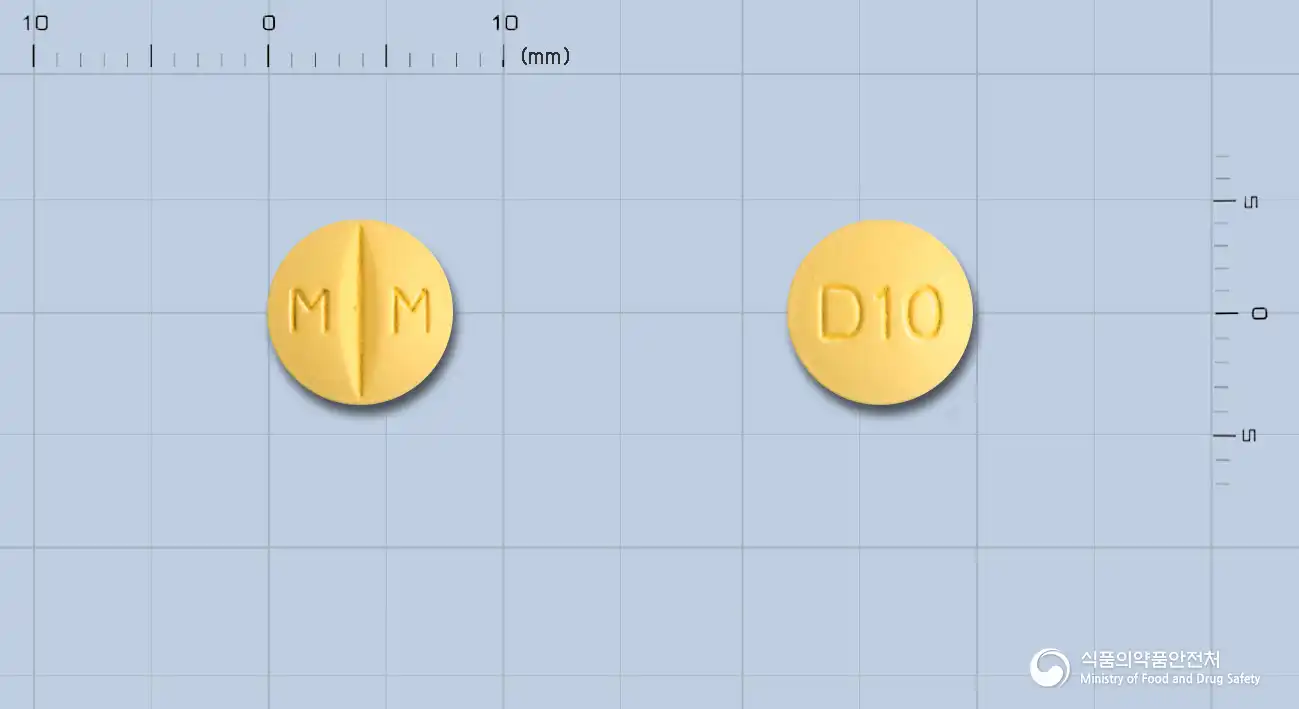
Donepezil Hydrochloride Hydrate 10.43mg
Tablet · Prescription medication
Myungmoon Pharmaceutical Co., Ltd.

Donepezil Hydrochloride Hydrate 10.43mg
Tablet · Prescription medication
HK inno.N Co., Ltd.
Donepezil Hydrochloride 10mg
Tablet · Prescription medication
Celltrion Pharmaceutical Co., Ltd.
Even with the same ingredient, the dose and directions can differ by strength and dosage form. Talk to a doctor or pharmacist before switching from a medication you are already taking.
No questions yet.
For anything that needs medical judgment, consult a doctor or pharmacist.
This drug information is based on data provided by the Korea Ministry of Food and Drug Safety.
Consult a doctor or pharmacist for accurate dosage, administration, and usage instructions.