
 한국어
 English
 日本語
 中文(简体)
Dosage form image
Viewing nowTicada Tablet 90mg (Ticagrelor)
Ticagrelor 90mg
Tablet · Prescription medication
HanPung Pharmaceutical Co., Ltd.
MFDS item code 201907578 · Approved 2019.10.30
This product's status changed to Expired on 2024.10.30. It may no longer be sold, so consult a doctor or pharmacist before taking it.
Prevention of thrombotic cardiovascular events (e.g., myocardial infarction) and stroke
This medication helps reduce the incidence of thrombotic cardiovascular events, namely deaths due to cardiovascular anomalies, myocardial infarction, and stroke, when used in conjunction with aspirin. It is particularly effective in patients with acute coronary syndrome or those with a history of myocardial infarction who are at high risk for thrombotic cardiovascular events. It is also used to lower the incidence of myocardial infarction or stroke in patients with type 2 diabetes who have undergone procedures due to coronary artery disease. Additionally, it aids in reducing the risk of stroke in patients with acute ischemic stroke or high-risk transient ischemic attacks when combined with aspirin. In summary, this medication effectively decreases the incidence of thrombotic cardiovascular events and stroke when used with aspirin in various adult patient populations at high risk.
Do not use this medicine concomitantly with other ADP receptor inhibitors (ticlopidine, clopidogrel, prasugrel). ㆍAcute coronary syndrome: Administer an initial dose of 180mg, followed by 90mg twice daily. Treatment for 12 months is recommended unless discontinuation is clinically necessary. Patients taking this medicine should also receive a maintenance dose of aspirin (75 - 150mg), unless specifically contraindicated. ㆍPatients with a history of myocardial infarction (occurring at least 1 year previously) who are at high risk of thrombotic cardiovascular events: Administer 60mg twice daily. Patients taking this medicine should also receive a maintenance dose of aspirin (75 - 150mg), unless specifically contraindicated. - Patients who took this medicine 90mg or another ADP receptor inhibitor (ticlopidine, clopidogrel, prasugrel) during the first year after myocardial infarction may continue treatment with this medicine 60mg. - Treatment with this medicine may also be initiated in patients within 2 years after myocardial infarction or within 1 year after discontinuing a previous ADP receptor inhibitor (ticlopidine, clopidogrel, prasugrel). - The safety and efficacy of this medicine were evaluated at 3 years of follow-up. ㆍPatients with type 2 diabetes who have undergone percutaneous coronary intervention (PCI) for coronary artery disease: Administer 60mg twice daily. Patients taking this medicine should also receive a maintenance dose of aspirin (75 - 150mg), unless specifically contraindicated. - Refer to the corresponding dosage and administration for patients with acute coronary syndrome. - Data on the safety and efficacy of treatment with this medicine for more than 3 years are limited. ㆍPatients with acute ischemic stroke or high-risk transient ischemic attack: Administer an initial dose of 180mg, followed by 90mg twice daily for 30 days. Patients taking this medicine should also receive a maintenance dose of aspirin (75 - 100mg), unless specifically contraindicated. An initial loading dose of aspirin (300-325mg) is recommended for patients with acute ischemic stroke or high-risk transient ischemic attack. Method of administration This medicine is administered orally and may be taken with or without food. ㆍFor patients who have difficulty swallowing the tablet, crush this medicine into a fine powder, disperse it in half a glass of water, and drink it immediately. Rinse the glass used with half a glass of water and drink the rinse. This mixture may also be administered through a nasogastric tube (CH8 or larger); it is important to flush the tube with water after administration. ㆍWhen switching from another antiplatelet agent to this medicine, start this medicine 24 hours after the last dose of the previous medicine. ㆍIf a dose is missed, take only 1 tablet (the next scheduled dose) at the next scheduled dosing time. Patients with renal impairment No dose adjustment is needed in patients with renal impairment. Patients with hepatic impairment No dose adjustment is needed in patients with mild hepatic impairment. This medicine has not been studied in patients with severe hepatic impairment, and there is limited experience with its use in patients with moderate hepatic impairment.
The safety and efficacy of this medicine have not been established in pediatric patients under 18 years of age (see the Other section).
This medication prevents platelet aggregation in the blood to avoid clot formation. However, it may increase the risk of bleeding, thus it should not be used by patients with bleeding conditions or a prior history of intracranial hemorrhage. If surgery is planned, this medication should be discontinued at least 5 days prior, and any signs of bleeding must be immediately reported to medical personnel. It should not be administered to patients with allergies to any of its components or those with severe liver impairment. Furthermore, concomitant use with certain strong CYP3A4 inhibitors, such as specific antibiotics or antiviral agents, should be avoided as it may excessively elevate the drug's concentration and pose risks. Caution must be exercised in patients at high risk of bleeding or those taking other medications that affect blood coagulation, especially when combined with warfarin, as this may increase bleeding risk. While taking this medication, sudden shortness of breath, dizziness, irregular heartbeat, or severe bleeding symptoms may occur, necessitating immediate consultation with a doctor if any such symptoms arise. Women who are pregnant or breast-feeding must discuss prior to administering this medication, and women of childbearing age planning pregnancy should practice adequate contraception during the treatment period. Safety and effectiveness in children under 18 years have not been established, hence it is not recommended. Overdose may further increase the risk of bleeding, so it is crucial to adhere to prescribed dosages and methods. Caution is also needed while driving or operating machinery due to the potential for dizziness or confusion during this medication's use. Finally, this medication should be stored in its original container and kept out of reach of children.
Not everyone experiences these, and they can vary from person to person.
This medication must be stored in a tightly sealed container to avoid exposure to air or moisture. It is important to maintain a storage temperature between 1 and 30 degrees Celsius at room temperature.
Yellow, double convex, round film-coated tablet
56 tablets/PTP[(14 tablets/PTP × 4)]
Even with the same ingredient, strength, dosage form and how it is taken can differ.
Ticagrelor 90mg
Tablet · Prescription medication
HanPung Pharmaceutical Co., Ltd.
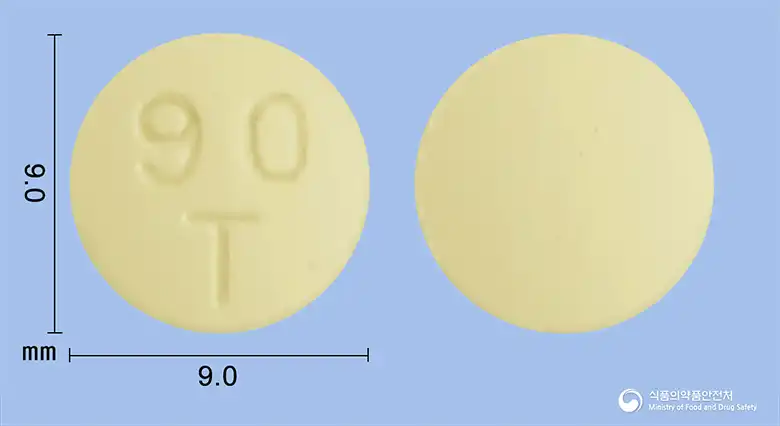
Ticagrelor 90mg
Tablet · Prescription medication
AstraZeneca Korea Co., Ltd.
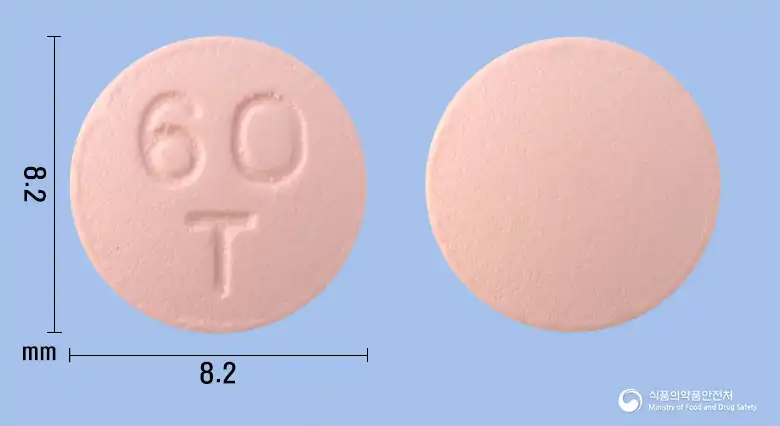
Ticagrelor 60mg
Tablet · Prescription medication
AstraZeneca Korea Co., Ltd.
Ticagrelor
Prescription medication
HK Inno.N Co., Ltd.
Ticagrelor
Prescription medication
HK Inno.N Co., Ltd.
Ticagrelor
Prescription medication
Anguk Pharmaceuticals Co., Ltd.
Ticagrelor
Prescription medication
Anguk Pharmaceutical Co., Ltd.
Ticagrelor
Prescription medication
Daewoong Pharmaceutical Co., Ltd.
Even with the same ingredient, the dose and directions can differ by strength and dosage form. Talk to a doctor or pharmacist before switching from a medication you are already taking.
No questions yet.
For anything that needs medical judgment, consult a doctor or pharmacist.
This drug information is based on data provided by the Korea Ministry of Food and Drug Safety.
Consult a doctor or pharmacist for accurate dosage, administration, and usage instructions.