
 한국어
한국어 English
 日本語
日本語 中文(简体)
Dosage form image
Viewing nowAcetid Capsule 200 mg (Acetylcysteine)
Acetylcysteine 200mg
OTC medication
Highpl Life Science Co., Ltd.
MFDS item code 201902645 · Notified 2019.04.25
This product's status changed to Approval withdrawn on 2024.03.28. It may no longer be sold, so consult a doctor or pharmacist before taking it.
Relief of sputum expulsion difficulties in respiratory diseases such as acute and chronic bronchitis and bronchial asthma.
This medication is used to help remove sputum and improve breathing in conditions where sputum expulsion is difficult, such as acute or chronic bronchitis, bronchial asthma, laryngitis, sinusitis, and cystic fibrosis.
Acute disease: 200 mg once, three times a day Chronic disease: 200 mg once, twice a day
Acute disease (6-14 years): 200 mg once, twice a day Chronic disease (6-14 years): 100 mg once, three times a day Cystic fibrosis (over 6 years): 200 mg once, three times a day
This medication contains the artificial sweetener aspartame. When aspartame is broken down in the body, it converts into a substance called phenylalanine, which should be controlled in patients with the hereditary disease phenylketonuria. Additionally, the daily allowable amount of aspartame is limited to 40 mg/kg, as recommended by WHO, thus it should be used in the minimum amount possible. For example, for an adult weighing 60 kg, the maximum daily dosage is 2.4 g. This medication should be avoided by individuals with certain conditions or diseases. Those who have had allergic reactions to this medication or its components, patients with gastric or duodenal ulcers, children under 2 years old, and individuals with a genetic condition that prevents them from digesting lactose should not take this medication. Women who are pregnant or may become pregnant should only take this medication after consulting with a physician due to insufficient research on its safety. Additionally, breastfeeding women should be cautious as it is not certain whether this medication passes into breast milk. If gastrointestinal symptoms such as nausea, vomiting, oral inflammation, heartburn, diarrhea, or hypersensitivity reactions such as hives, itching, rash, headache, tinnitus, and bronchospasm in asthma patients occur during use, discontinue use immediately and consult a healthcare professional. Rarely, symptoms such as rapid heartbeat or high blood pressure, and shortness of breath have been reported, so caution is needed. This medication may reduce the effectiveness of certain oral antibiotics when taken together, so it is recommended to space them out by at least 2 hours. Also, do not mix this medication with other drugs in solution. This medication should be kept out of reach of children and should not be transferred to another container from the original packaging to prevent misuse or quality degradation.
Not everyone experiences these, and they can vary from person to person.
This medication should be stored in a tightly sealed container to prevent air exposure, and it is best kept at room temperature between 1 and 30 degrees Celsius. Storing it this way can maintain the medication's effectiveness for a longer time.
A capsule containing white powder with a light blue upper and lower part.
30 capsules/bottle, 600 capsules/bottle
Even with the same ingredient, strength, dosage form and how it is taken can differ.
Acetylcysteine 200mg
OTC medication
Highpl Life Science Co., Ltd.
Acetylcysteine 200mg
Solution · OTC medication
(Co., Ltd.) Celltrion Pharm
Acetylcysteine 20g
OTC medication
Boryeong Co., Ltd.
Acetylcysteine 200mg
OTC medication
Hanwha Pharmaceutical Co., Ltd.
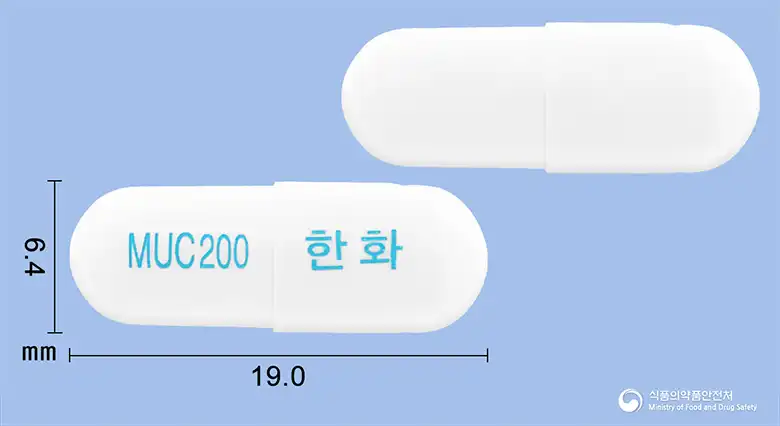
Acetylcysteine 200mg
Hard capsule · OTC medication
Hanwha Pharmaceutical Co., Ltd.
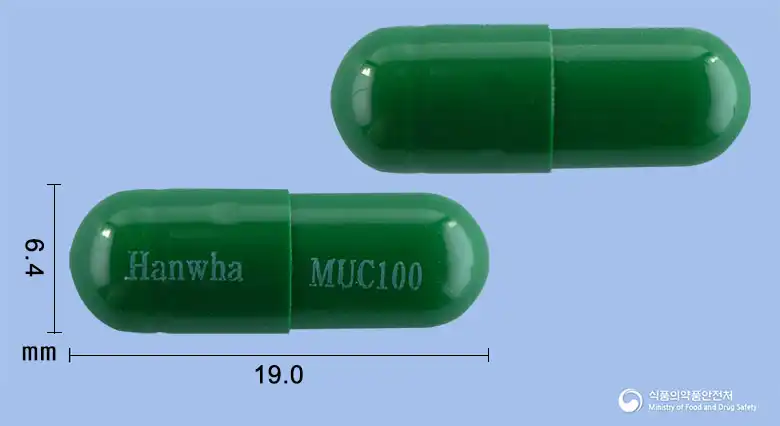
Acetylcysteine 100mg
Hard capsule · OTC medication
Hanwha Pharmaceutical Co., Ltd.
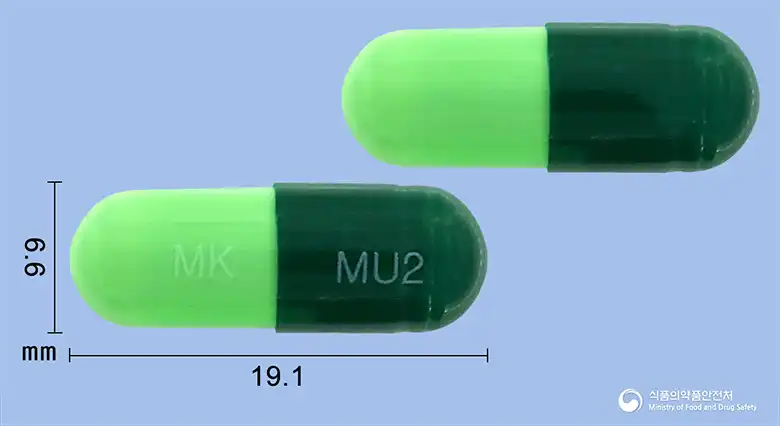
Acetylcysteine 200mg
Hard capsule · OTC medication
(Medica Korea Co., Ltd.)
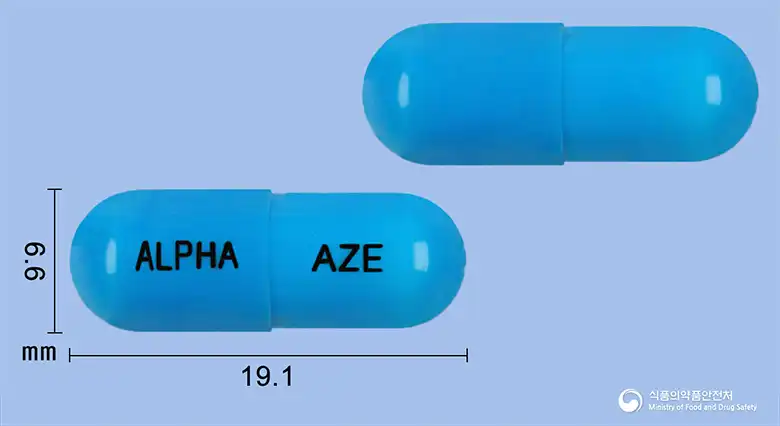
Acetylcysteine 200mg
Hard capsule · OTC medication
Alpha Pharmaceutical Co., Ltd.
Even with the same ingredient, the dose and directions can differ by strength and dosage form. Talk to a doctor or pharmacist before switching from a medication you are already taking.
No questions yet.
For anything that needs medical judgment, consult a doctor or pharmacist.
This drug information is based on data provided by the Korea Ministry of Food and Drug Safety.
Consult a doctor or pharmacist for accurate dosage, administration, and usage instructions.