
 한국어
 English
 日本語
 中文(简体)
Dosage form image
Viewing nowApixaban 5 mg Tablets
Apixaban
Prescription medication
Ildong Pharmaceutical Co., Ltd.
MFDS item code 201901172 · Approved 2019.02.25
This product's status changed to Approval withdrawn on 2023.08.30. It may no longer be sold, so consult a doctor or pharmacist before taking it.
Prevention of stroke and embolism, prevention of postoperative thrombosis, and treatment and prevention of recurrence of thromboembolism
This medication is used to prevent venous thromboembolism in adult patients who have undergone hip or knee surgery. Additionally, it plays a role in reducing the risk of stroke and systemic embolism in patients with non-valvular atrial fibrillation. It is used to treat deep vein thrombosis and pulmonary embolism, and reduces the risk of recurrence of these conditions. Overall, this medication helps effectively prevent and treat thrombotic-related issues.
This medicine may be taken with water, with or without food. If a patient misses a dose, they should take this medicine immediately and continue taking it twice daily as before.
This medication is used to prevent or treat blood clot formation by preventing excessive blood coagulation. Patients taking this medication should closely observe for signs of bleeding. As the risk of bleeding may increase, if any bleeding symptoms occur, immediate consultation with a physician is necessary. In the event of serious bleeding, the use of this medication should be discontinued, and appropriate treatment should be administered if required. This medication should not be administered to certain patients. For example, those allergic to this medication or its components, those with active bleeding, blood clotting disorders, or those at high risk of bleeding, such as patients with liver disease, or with a recent history of gastrointestinal ulcers or intracranial hemorrhage, as well as patients with certain vascular anomalies or surgical histories. Additionally, caution is needed when taking this medication together with other anticoagulants, and concomitant use should be avoided except in certain circumstances involving switching medications. This medication contains lactose, thus patients with lactose intolerance or related genetic conditions should not take it. Patients with severe renal dysfunction or impaired liver function should be administered this medication with caution, particularly if liver enzymes are more than double the upper limit of normal or if bilirubin levels are more than 1.5 times the normal level. Concomitant use with non-steroidal anti-inflammatory drugs (NSAIDs) or acetylsalicylic acid may increase the risk of bleeding, so caution should be exercised, and elderly or underweight patients may also have an increased risk of bleeding. Patients undergoing spinal or epidural anesthesia or lumbar puncture may be at risk of nerve damage while taking this medication, so the timing of catheter removal and medication administration must be strictly controlled, and immediate diagnosis and treatment are necessary if neurological symptoms occur. This medication is not recommended for patients undergoing thrombolysis or embolectomy as safety and efficacy have not been established. Common side effects of this medication include bleeding, bruising, nosebleeds, hematoma, among others, while rare side effects may include severe bleeding or allergic reactions. This medication can interact with other drugs, particularly with CYP3A4 and P-gp inhibitors or inducers, antiplatelet agents, NSAIDs, among others. Pregnant women are advised against taking this medication and breastfeeding women should stop either breastfeeding or the medication itself while taking it. Safety and efficacy in pediatric patients have not been established. Before undergoing surgery or invasive procedures, this medication should be temporarily discontinued to consider the risk of bleeding, and it is crucial to resume treatment as soon as possible due to the increased risk of thrombosis upon discontinuation. In case of overdose, the risk of bleeding may significantly increase, necessitating immediate medical treatment. There is no antidote for this medication, so appropriate treatment to control bleeding is essential. Finally, this medication does not significantly affect driving or operation of machinery, but attention should be paid to symptoms related to an increased risk of bleeding.
Not everyone experiences these, and they can vary from person to person.
This medication should be stored in a tightly sealed container as it may be sensitive to air or moisture. Additionally, avoid storing in excessively hot or cold places, and it is advisable to store it at room temperature between 1 and 30 degrees Celsius.
Pink, oval, film-coated tablet with a biconvex surface
60 tablets/box [(10 tablets/PTP) × 6]
Even with the same ingredient, strength, dosage form and how it is taken can differ.
Apixaban
Prescription medication
Ildong Pharmaceutical Co., Ltd.
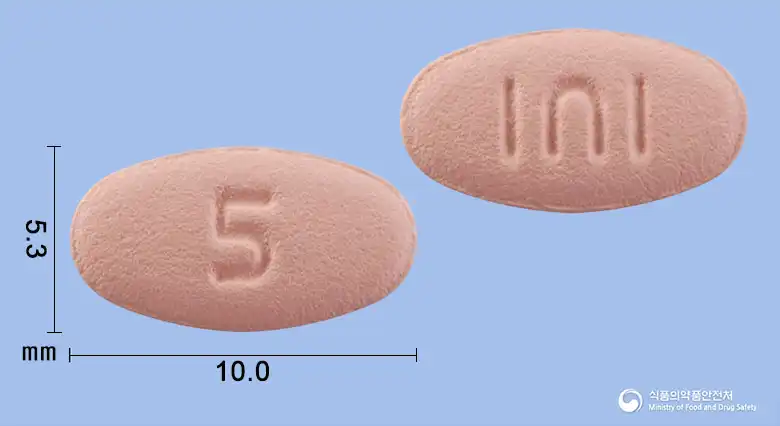
Apixaban 5mg
Tablet · Prescription medication
Bivagon Pharmaceutical Co., Ltd.
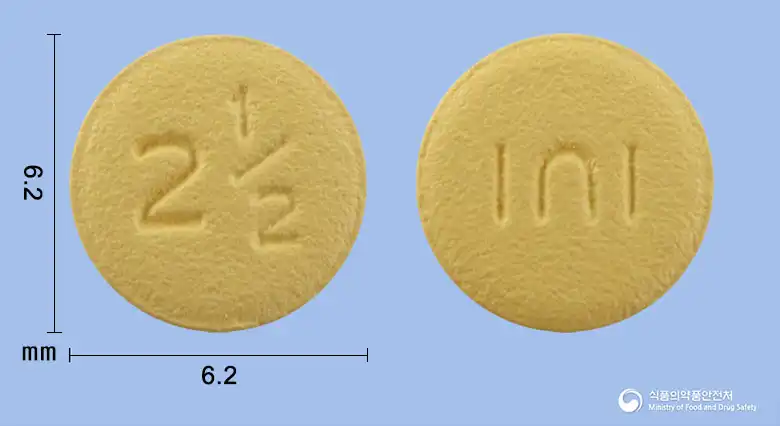
Apixaban 2.5mg
Tablet · Prescription medication
Vivozon Pharmaceuticals Co., Ltd.
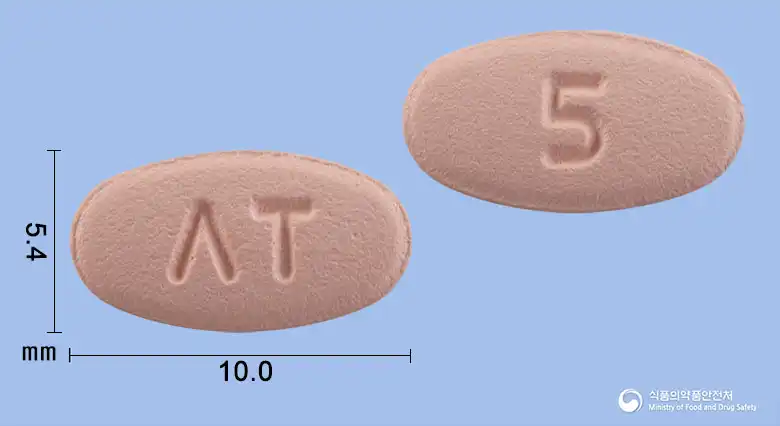
Apixaban 5mg
Tablet · Prescription medication
HuTex Pharmaceuticals Co., Ltd.
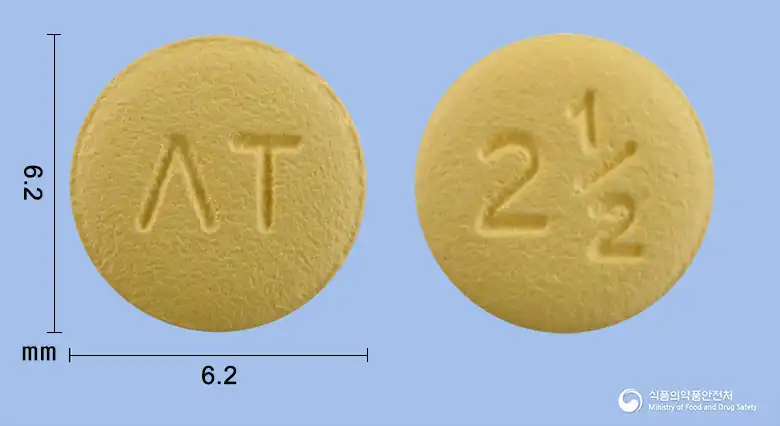
Apixaban 2.5mg
Tablet · Prescription medication
Korea HuTechs Pharmaceutical Co., Ltd.
Apixaban 5mg
Tablet · Prescription medication
Jinyang Pharmaceutical Co., Ltd.
Apixaban 2.5mg
Tablet · Prescription medication
Jinyang Pharmaceutical Co., Ltd.
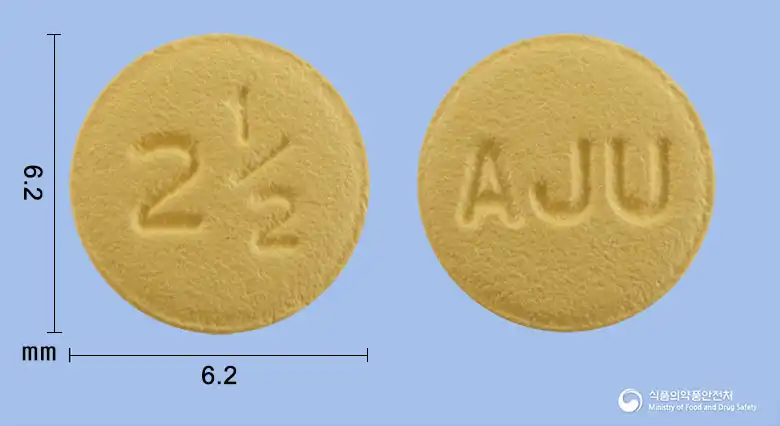
Apixaban 2.5mg
Tablet · Prescription medication
Ajou Pharmaceuticals Co., Ltd.
Even with the same ingredient, the dose and directions can differ by strength and dosage form. Talk to a doctor or pharmacist before switching from a medication you are already taking.
No questions yet.
For anything that needs medical judgment, consult a doctor or pharmacist.
This drug information is based on data provided by the Korea Ministry of Food and Drug Safety.
Consult a doctor or pharmacist for accurate dosage, administration, and usage instructions.