
 한국어
 English
 日本語
 中文(简体)
 Viewing now
Femirozal Tablets 5 mg (Femorolast Potassium)
Pemirolast Potassium 5mg
Tablet · Prescription medication
Hyundai Pharmaceutical Co., Ltd.
MFDS item code 201802179 · Approved 2018.05.25 · Insurance code 642004190
Treatment of bronchial asthma and perennial allergic rhinitis
This medication is used for bronchial asthma and perennial allergic rhinitis.
For bronchial asthma: Adults are usually given 10 mg of pemirolast potassium orally twice daily, after breakfast and after dinner (or at bedtime). The dose may be adjusted according to age and symptoms. For perennial allergic rhinitis: Adults are usually given 5 mg of pemirolast potassium orally twice daily, after breakfast and after dinner (or at bedtime). The dose may be adjusted according to age and symptoms.
For bronchial asthma: In children 11 years of age and older, the usual dose is 10 milligrams of pemirolast potassium per dose, administered orally twice daily after breakfast and after the evening meal (or before bedtime). For bronchial asthma: In children 5 years of age and older but younger than 11 years, the usual dose is 5 milligrams of pemirolast potassium per dose, administered orally twice daily after breakfast and after the evening meal (or before bedtime).
This medication should not be used by patients with allergies to certain components. Women who are pregnant or may become pregnant should not take this medication. This medication is not to be administered to children under the age of 5. Patients with lactose intolerance or certain genetic metabolic disorders should not take this medication. Patients with severely impaired liver or kidney function should use this medication with special caution. Side effects such as abdominal pain, elevated liver function tests, drowsiness, and nausea may occur; notify healthcare professionals if these symptoms arise. If symptoms of hypersensitivity or bladder infection occur, immediately discontinue use and seek appropriate treatment. This medication is not a quick relief drug for asthma attacks; patients should be adequately informed of this. If symptoms worsen while taking this medication, it may be necessary to use a bronchodilator or steroids in addition. When reducing steroids during long-term steroid treatment, the dosage should be decreased gradually and managed carefully. Discontinuing this medication may lead to a resurgence of the original condition, so caution is needed. If there is no effect, do not use it indiscriminately for long periods, and it should be given under the supervision of guardians for children. Seasonal allergy patients are advised to start taking this medication before the allergy-inducing season and continue until the season ends. It is safe for pregnant or breastfeeding women to avoid this medication, and breastfeeding should be avoided while taking it. Safety for premature infants, newborns, and infants has not been confirmed, so it is recommended not to use it. Elderly patients should be careful as physical functions are weaker, leading to a higher incidence of side effects; it may be necessary to reduce the dose or take breaks.
Abdominal pain, ALT (GPT) elevation, drowsiness, nausea, AST (GOT) elevation, rash, pruritus, urticaria, edema, eczema, facial flushing, fatigue, headache, brain fog, diarrhea, thirst, constipation, appetite loss, burning sensation in the epigastric region, feeling of pressure in the stomach, vomiting, stomatitis, γ-GTP elevation, ALP elevation, proteinuria, elevated BUN, anemia, thrombocytosis, frequent urination, hematuria, generalized joint pain, nasal dryness, sinus pain, itching, vomiting sensation, hives, dry mouth
Not everyone experiences these, and they can vary from person to person.
This medication may be sensitive to light and should be stored in a container that prevents light exposure. Additionally, it is most appropriate to store it at room temperature between 1 degree and 30 degrees Celsius. Storing it this way maintains the medication's effectiveness and allows for safe use.
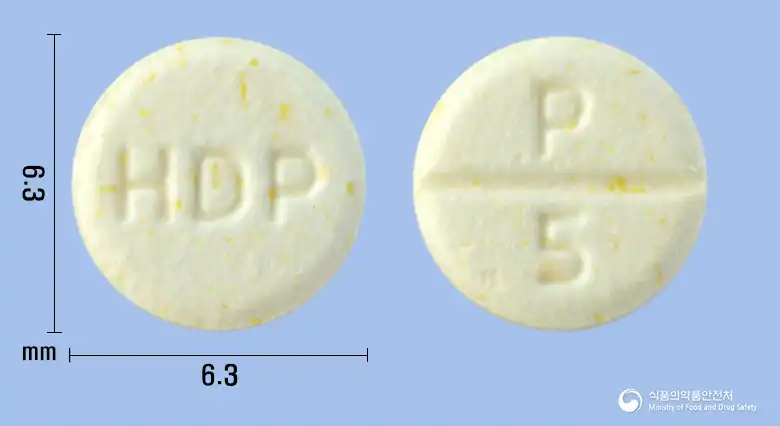
Yellowish round tablet
30 tablets, 100 tablets, 500 tablets
Even with the same ingredient, strength, dosage form and how it is taken can differ.
Viewing nowPemirolast Potassium 5mg
Tablet · Prescription medication
Hyundai Pharmaceutical Co., Ltd.
Pemirolast Potassium 1mg
Eye drops · Prescription medication
Korea Santen Pharmaceutical Co., Ltd.
Pemirolast Potassium
Prescription medication
Hyundai Pharmaceutical Co., Ltd.
Pemirolast Potassium 500mg
Syrup · Prescription medication
Hyundai Pharmaceutical Co., Ltd.
Even with the same ingredient, the dose and directions can differ by strength and dosage form. Talk to a doctor or pharmacist before switching from a medication you are already taking.
No questions yet.
For anything that needs medical judgment, consult a doctor or pharmacist.
This drug information is based on data provided by the Korea Ministry of Food and Drug Safety.
Consult a doctor or pharmacist for accurate dosage, administration, and usage instructions.