
 한국어
 English
 日本語
 中文(简体)
Summary
- Main use
- Improvement of serum phosphorus control in patients with chronic kidney disease on dialysis
- Who takes it
- Adults · Children
- Adult dose
- Take this drug by chewing it 3 times daily with meals. To maximize phosphate binding from the diet, divide the daily dose and take it with each meal. Patients taking this drug should follow the recommended dietary regimen to control phosphate intake and do not need to drink more water than usual. Do not swallow this drug whole; it must be chewed or crushed before taking. The recommended initial dose is 3 tablets daily (equivalent to 1,500 mg of iron), taken as 1 tablet chewed with each meal. While monitoring serum phosphate levels regularly, increase or decrease the dose by 1 tablet daily (equivalent to 500 mg of iron) at 2~4 week intervals until the appropriate serum phosphate level is reached. In clinical trials, most patients who responded to this drug achieved optimal serum phosphate levels when taking 3~4 tablets daily (equivalent to 1,500~2,000 mg of iron); however, in clinical practice, adjust the dose according to the patient's serum phosphate level. If you forget to take a dose, take a single dose with your next meal. The maximum recommended daily dose of this drug is 6 tablets (equivalent to 3,000 mg of iron). No dose adjustment is necessary in elderly patients.
- Child dose
- The safety and efficacy in children under 18 years of age have not been established.
Ingredients
- Importer
- Fresenius Medical Care Korea Ltd.
Efficacy & effects
Improvement of serum phosphorus control in patients with chronic kidney disease on dialysis
- Problems with serum phosphorus control
View approved original textHide original text
This medication is used to control serum phosphorus levels in patients with chronic kidney disease undergoing hemodialysis or peritoneal dialysis. Due to chronic kidney disease, the elimination of phosphorus through the kidneys may be difficult, leading to elevated serum phosphorus levels, which this medicine helps to manage effectively and prevent complications.
How to take
Adult dose
Take this drug by chewing it 3 times daily with meals. To maximize phosphate binding from the diet, divide the daily dose and take it with each meal. Patients taking this drug should follow the recommended dietary regimen to control phosphate intake and do not need to drink more water than usual. Do not swallow this drug whole; it must be chewed or crushed before taking. The recommended initial dose is 3 tablets daily (equivalent to 1,500 mg of iron), taken as 1 tablet chewed with each meal. While monitoring serum phosphate levels regularly, increase or decrease the dose by 1 tablet daily (equivalent to 500 mg of iron) at 2~4 week intervals until the appropriate serum phosphate level is reached. In clinical trials, most patients who responded to this drug achieved optimal serum phosphate levels when taking 3~4 tablets daily (equivalent to 1,500~2,000 mg of iron); however, in clinical practice, adjust the dose according to the patient's serum phosphate level. If you forget to take a dose, take a single dose with your next meal. The maximum recommended daily dose of this drug is 6 tablets (equivalent to 3,000 mg of iron). No dose adjustment is necessary in elderly patients.
Child dose
The safety and efficacy in children under 18 years of age have not been established.
Precautions
This medication should not be taken by those with a hypersensitivity to this medication or its ingredients or those with a history of such hypersensitivity. Additionally, individuals with hemochromatosis or diseases that lead to excessive accumulation of iron in the body should not take this medication. This product contains sucrose, so individuals with genetic conditions such as fructose intolerance, glucose-galactose malabsorption, or sucrase-isomaltase deficiency should not take it. Patients with gastrointestinal issues or those who have undergone peritoneal dialysis or gastrointestinal surgery within the last 3 months, as well as individuals with impaired liver function, should use this medication with caution. Diabetic patients should be cautious since this medication contains carbohydrates in each tablet. While taking this medication, gastrointestinal disturbances such as diarrhea, changes in stool color, nausea, constipation, vomiting, indigestion, abdominal pain, and bloating may occur, typically early in treatment, and these tend to improve over time. Additionally, rare side effects may include headache, dyspnea, itching or rash, fatigue, etc. Particularly, changes in stool color may occur, so caution should be exercised when checking for gastrointestinal bleeding. This medication should be used alongside other calcium supplements or vitamin D preparations for managing minerals and bone metabolism in patients with kidney disease, and there is limited experience using it in patients with renal impairment who are not undergoing dialysis. This medication is poorly absorbed in the gastrointestinal tract, so the likelihood of interactions with other medications is low, but dosing times with some medications may need to be adjusted. Pregnant women should carefully weigh the benefits and risks of taking this medication, using it only when absolutely necessary. While very little iron is excreted in breast milk, breastfeeding mothers should consider the health of both themselves and their child before taking this medication. The safety and efficacy of this medication have not been established in children under 18, so it is advisable not to use it in this age group. Elderly patients can take this medication without the need for dose adjustment. In case of overdose, seek medical attention immediately for appropriate treatment. This medication should be stored out of reach of children, protected from moisture, and kept in its original container. Once opened, it should be used within 90 days.
Side effects
Diarrhea
Not everyone experiences these, and they can vary from person to person.
Storage
This medication should be stored in a tightly closed container to protect it from air and moisture. Ideal storage temperature is between 1°C and 30°C at room temperature. Additionally, care should be taken to prevent the medication from coming into contact with moisture.
Appearance and packaging
Appearance
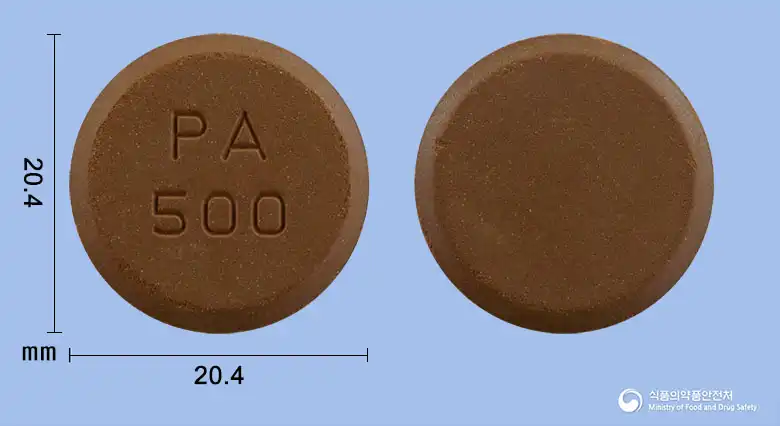
A round chewable tablet with a reddish-brown color, marked with PA500 on one side.
Package unit
30 tablets/bottle
Questions about this medicine
No questions yet.
For anything that needs medical judgment, consult a doctor or pharmacist.