
 한국어
 English
 日本語
 中文(简体)
 Viewing now
Olumiant Tablet 4 mg (Baricitinib)
Baricitinib 4mg
Tablet · Prescription medication
Eli Lilly Korea, Co., Ltd.
MFDS item code 201708281 · Approved 2017.12.11 · Insurance code 670801130
Treatment of arthritis (rheumatoid, juvenile idiopathic), atopic dermatitis, and alopecia areata
This medication is used for the treatment of moderate to severe rheumatoid arthritis, severe atopic dermatitis, and severe alopecia areata in adults aged 18 years and older. It is also effective in treating active juvenile idiopathic arthritis in children aged 2 years and older. It is recommended for use only in patients who have not responded adequately to existing antirheumatic drugs or traditional treatments or who are intolerant to these therapies. In particular, it can be used alone or in combination with certain antirheumatic drugs, but it should not be used with biological antirheumatic drugs or other Janus kinase inhibitors. Caution should be exercised for elderly patients, those at high risk for cardiovascular events, and patients at risk for malignancies. Overall, this medication serves as an effective treatment option for various autoimmune and inflammatory diseases.
Do not initiate treatment in patients with an absolute lymphocyte count (ALC) below 500 cells/mm3, an absolute neutrophil count (ANC) below 1000 cells/mm3, or a hemoglobin level below 8 g/dL. Rheumatoid arthritis: The recommended dose of this drug is 4 mg once daily. A dose of 2 mg once daily is recommended for patients at increased risk of venous thromboembolism (VTE), major adverse cardiovascular events (MACE), and malignancy; patients aged 65 years or older; and patients with a history of chronic or recurrent infections. For patients whose disease activity is not adequately controlled with 2 mg once daily, 4 mg once daily may be considered. A dose of 2 mg once daily should also be considered for patients whose disease activity is persistently controlled with 4 mg once daily and for whom dose tapering is appropriate. Atopic dermatitis, adults: The recommended dose of this drug is 4 mg once daily. A dose of 2 mg once daily is recommended for patients at increased risk of venous thromboembolism (VTE), major adverse cardiovascular events (MACE), and malignancy; patients aged 65 years or older; and patients with a history of chronic or recurrent infections. For patients whose disease activity is not adequately controlled with 2 mg once daily, 4 mg once daily may be considered. A dose of 2 mg once daily should also be considered for patients whose disease activity is persistently controlled with 4 mg once daily and for whom dose tapering is appropriate. Atopic dermatitis: This drug may be administered alone or in combination with topical corticosteroids. The efficacy of this drug may be increased when administered in combination with topical corticosteroids. Topical calcineurin inhibitors may be used, but only on sensitive areas such as the face, neck, skin folds, and genital area. Discontinuation of treatment should be considered for patients who show no evidence of therapeutic benefit after 8 weeks of treatment. Alopecia areata: The recommended dose of this drug is 4mg once daily. A dose of 2 mg once daily is recommended for patients at increased risk of venous thromboembolism (VTE), major adverse cardiovascular events (MACE), and malignancy; patients aged 65 years or older; and patients with a history of chronic or recurrent infections. For patients whose disease activity is not adequately controlled with 2 mg once daily, 4 mg once daily may be considered. A dose of 2mg once daily should also be considered for patients whose disease activity is persistently controlled with 4mg once daily and for whom dose tapering is appropriate. Alopecia areata: Once a stable response is achieved, it is recommended that treatment be continued for at least several months to avoid relapse. The benefit-risk balance of treatment should be reassessed periodically for each patient. Discontinuation of treatment should be considered for patients who show no evidence of therapeutic benefit after 36 weeks of treatment. For adult patients receiving a strong organic anion transporter 3 (OAT3) inhibitor such as probenecid, or with creatinine clearance of 30-60mL/min, the recommended dose of this drug is 2mg once daily. The recommended dose for adult patients with creatinine clearance of 30-60mL/min is 2 mg once daily. Do not administer this drug to patients with creatinine clearance below 30mL/min. No dose adjustment is required in patients with mild or moderate hepatic impairment. Administration of this drug is not recommended in patients with severe hepatic impairment. Clinical experience in patients over 75 years of age is very limited. This drug is administered orally with or without food.
Atopic dermatitis (children aged 2 years to under 18 years): The recommended dose of this drug for patients weighing 30kg or more is 4mg once daily. Atopic dermatitis (children aged 2 years to under 18 years): A dose of 2mg once daily is recommended for patients weighing 10kg or more and less than 30kg. Juvenile idiopathic arthritis (JIA) (aged 2 years to under 18 years): The recommended dose of this drug for patients weighing 30kg or more is 4mg once daily. Juvenile idiopathic arthritis (JIA) (aged 2 years to under 18 years): A dose of 2mg once daily is recommended for patients weighing 10kg or more and less than 30kg. Pediatric patients receiving a strong organic anion transporter 3 (OAT3) inhibitor such as probenecid, or with creatinine clearance of 30-60mL/min: 2mg once daily for patients weighing 30kg or more. Pediatric patients receiving a strong organic anion transporter 3 (OAT3) inhibitor such as probenecid, or with creatinine clearance of 30-60mL/min: 1mg once daily for patients weighing 10kg or more and less than 30kg. Pediatric patients with creatinine clearance of 30-60mL/min: 2mg once daily for patients weighing 30kg or more. Pediatric patients with creatinine clearance of 30-60mL/min: 1mg once daily for patients weighing 10kg or more and less than 30kg.
This medication may increase susceptibility to infections, so patients with active infections or chronic infections should have the risks and benefits carefully evaluated before treatment. Elderly patients and those with diabetes have a higher incidence of infections, so these patients should be particularly careful when using this medication. In patients aged 50 years and older with cardiovascular risk, there may be increased mortality and cardiovascular adverse reactions, so it should be used only in patients who do not respond to existing treatments or are intolerant to them. There is a risk of malignancies, especially lung cancer or lymphoma, so long-term smokers or patients with a history of malignancies should use this medication cautiously. There is also a risk of thrombosis, so patients with a history of thrombosis or risk factors should avoid this medication and should cease use immediately if symptoms develop and evaluate the condition. Tuberculosis testing should be conducted prior to administration, and this medication should not be given to patients with active tuberculosis. This medication should not be used in patients who are allergic to it or its components, those with significant infections, severe renal impairment, hematological abnormalities (decreased neutrophils, lymphocytes, or hemoglobin), pregnant women or those who may become pregnant, or nursing mothers. Patients suspected of infection, with a history of tuberculosis, immunocompromised patients, elderly patients, those with gastrointestinal diseases, hematological abnormalities, or reduced kidney or liver function, and those with a history of interstitial lung disease or at risk of thrombosis or diabetes should be administered this medication with caution. Commonly, side effects such as upper respiratory tract infections, headaches, skin infections, urinary tract infections, abnormal liver function, and increased lipid levels have been reported. Blood tests should be conducted regularly during treatment to monitor liver function and lipid levels; if any abnormal signs are found, immediate consultation with medical personnel is required. When used in combination with other immunosuppressants, the immunosuppressive effects may increase, so caution is necessary with concomitant therapy. Use during pregnancy may pose risks to the fetus and should be avoided; women of childbearing age should use effective contraception during and for a period after treatment. It is recommended to avoid using this medication during lactation; careful consideration should be given to whether to continue breastfeeding or to discontinue the medication if necessary. In children, especially those under 2 years of age or with certain diseases under 18 years of age, safety and efficacy have not been established, and care should be taken with use. No specific toxicity has been reported in cases of overdose; however, if adverse reactions occur, medical evaluation and treatment should be sought immediately. If swallowing tablets is difficult, they may be dispersed in water for administration; however, they should be taken within 4 hours after dispersion, and any remaining medication should not be taken additionally. This medication should be kept out of reach of children, and transferring it to other containers should be avoided as it is detrimental to maintaining quality.
Not everyone experiences these, and they can vary from person to person.
This medication may be sensitive to air or moisture, so it should be stored in a tightly sealed container. It is important to maintain a storage temperature between 1 and 30 degrees Celsius at room temperature. This helps to preserve the efficacy and safety of the medication for a longer period.
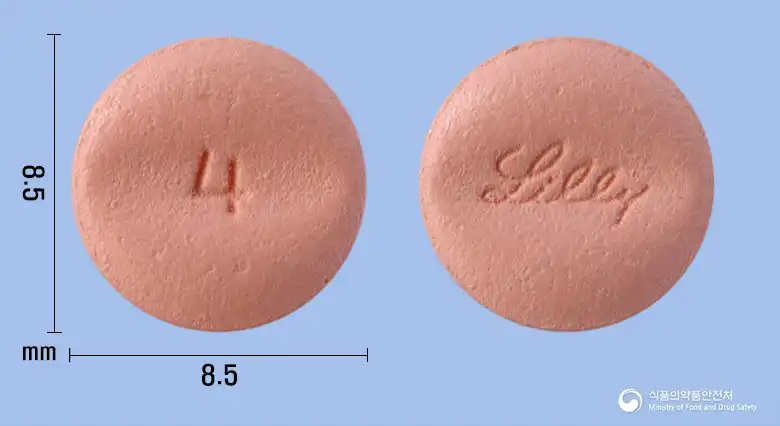
Pink round film-coated tablet with 'Lilly' embossed on one side and '4' on the other side
28 tablets (14 tablets/PTPX2) per box
Even with the same ingredient, strength, dosage form and how it is taken can differ.
Viewing nowBaricitinib 4mg
Tablet · Prescription medication
Eli Lilly Korea, Co., Ltd.
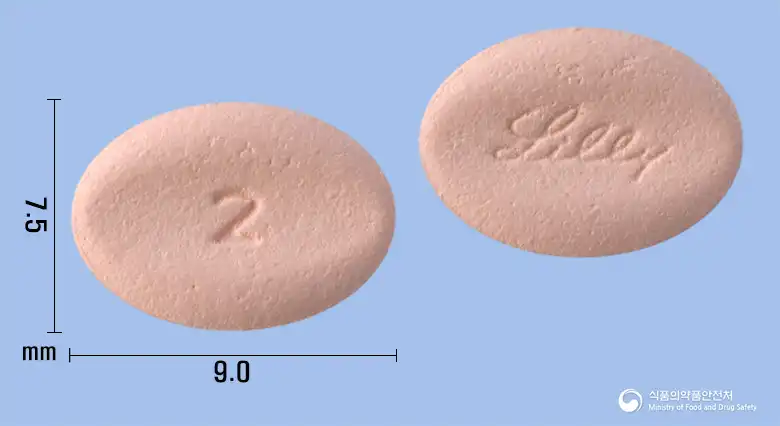
Baricitinib 2mg
Tablet · Prescription medication
Lilly Korea, Ltd.
Baricitinib 2mg
Tablet · Prescription medication
Eli Lilly Korea, Co., Ltd.
Even with the same ingredient, the dose and directions can differ by strength and dosage form. Talk to a doctor or pharmacist before switching from a medication you are already taking.
No questions yet.
For anything that needs medical judgment, consult a doctor or pharmacist.
This drug information is based on data provided by the Korea Ministry of Food and Drug Safety.
Consult a doctor or pharmacist for accurate dosage, administration, and usage instructions.