
 한국어
 English
 日本語
 中文(简体)
Summary
- Main use
- Treatment of chronic hepatitis B virus (HBV) infection
- Who takes it
- Adults · Children
- Adult dose
- Recommended dose for adults Take 1 tablet once daily, with or without food. No dose adjustment is necessary for adult patients with mild, moderate, or severe renal impairment. Patients receiving chronic hemodialysis should take this medication after dialysis on dialysis days. No dose adjustment is necessary for patients with hepatic impairment.
- Child dose
- Recommended dose for children aged 6 years or older and weighing at least 25kg Take 1 tablet once daily, with or without food. The recommended dose of this medication has not been established for pediatric patients with renal impairment.
Ingredients
- Importer
- Gilead
Efficacy & effects
Treatment of chronic hepatitis B virus (HBV) infection
- Chronic hepatitis B virus infection
View approved original textHide original text
This medication is used for the treatment of chronic hepatitis B virus (HBV) infection in adults and pediatric patients aged 6 years and older with a body weight of 25 kg or more.
How to take
Adult dose
Recommended dose for adults Take 1 tablet once daily, with or without food. No dose adjustment is necessary for adult patients with mild, moderate, or severe renal impairment. Patients receiving chronic hemodialysis should take this medication after dialysis on dialysis days. No dose adjustment is necessary for patients with hepatic impairment.
Child dose
Recommended dose for children aged 6 years or older and weighing at least 25kg Take 1 tablet once daily, with or without food. The recommended dose of this medication has not been established for pediatric patients with renal impairment.
Precautions
This medication may worsen hepatitis acutely upon discontinuation of treatment, so continued monitoring by a physician for several months after stopping the treatment is necessary. This medication should not be used by individuals with hypersensitivity to the drug or those with genetic lactose-related disorders. The most commonly reported side effect in clinical trials is headache, but abdominal pain, cough, back pain, fatigue, nausea, joint pain, diarrhea, and dyspepsia may also occur. Regular blood tests and urinalysis should be conducted to monitor kidney function as this drug may affect renal function, and if kidney function worsens, medication may need to be discontinued. It may affect bone density, so it is advisable to check bone health during prolonged use. This drug can interact with certain medications, so it is crucial to consult with a physician or pharmacist if taking other drugs. Women who are pregnant or breastfeeding should carefully consider the potential effects of this medication on their fetus or infant before use. Pediatric patients aged 6 years and older and elderly patients aged 65 years and older may also use this medication, but dose adjustment or special precautions may be necessary. Patients with severe kidney or liver impairment can use this medication, but they should follow their physician's instructions according to their condition. In case of overdose, it is essential to visit a medical facility immediately to monitor vital signs and clinical status, and if necessary, the drug can be removed through hemodialysis. This medication should be stored in a tightly closed container at a temperature between 1 to 30 degrees Celsius, avoiding exposure to direct sunlight.
Side effects
- headache
- abdominal pain
- cough
- back pain
- fatigue
- nausea
- joint pain
- diarrhea
- indigestion
- vomiting
Show 30 moreCollapse
- rash
- edema
- angioedema
- urticaria
- acute kidney failure
- acute tubular necrosis
- proximal tubular nephropathy
- Fanconi syndrome
- abdominal discomfort
- constipation
- upper abdominal discomfort
- scallop-shaped stool
- asthenia
- peripheral edema
- chest discomfort
- chills
- cholelithiasis
- cystitis
- sinusitis
- dizziness
- muscle spasms
- hair loss
- eczema
- splenomegaly
- eosinophilia
- macular degeneration
- hypercholesterolemia
- depression
- palpitations
- benign paroxysmal positional vertigo
Not everyone experiences these, and they can vary from person to person.
Storage
This medication may be sensitive to air or moisture, so it should be stored in a tightly closed container. The storage temperature should be maintained at room temperature between 1 to 30 degrees Celsius. Proper storage will safely preserve the medication's effectiveness.
Appearance and packaging
Appearance
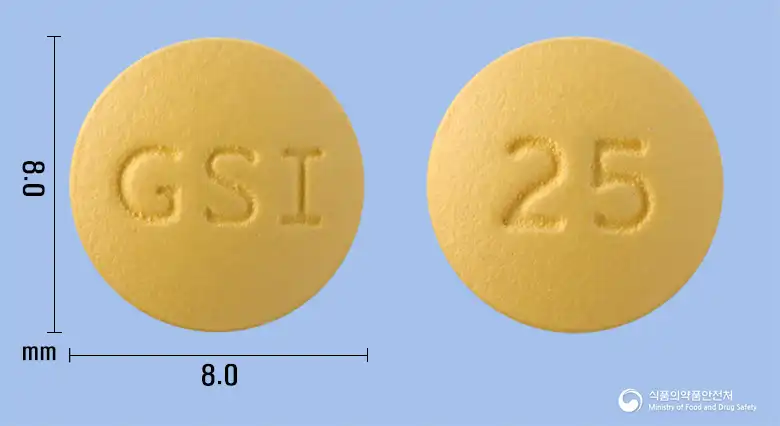
A yellow round film-coated tablet with 'GSI' embossed on one side and '25' embossed on the other side.
Package unit
30 tablets/bottle
Questions about this medicine
No questions yet.
For anything that needs medical judgment, consult a doctor or pharmacist.