
 한국어
한국어 English
 日本語
日本語 中文(简体)
 Viewing now
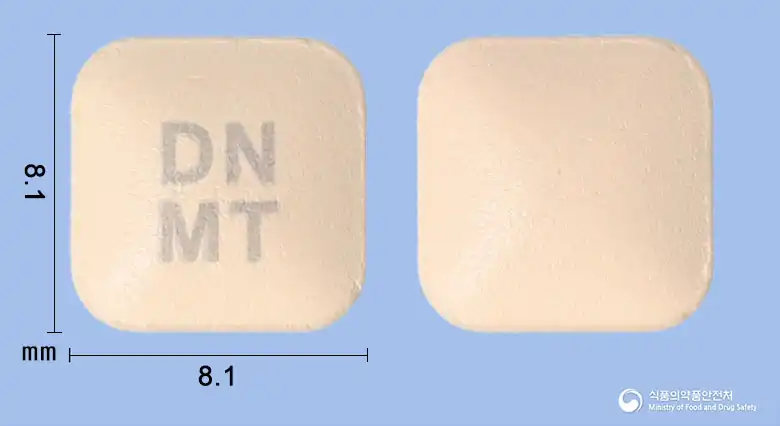
Montest 10 mg Tablet (Montelukast Sodium)
Montelukast Sodium 10.4mg
Tablet · Prescription medication
Daehan New Pharm Co., Ltd.
MFDS item code 201603176 · Approved 2016.06.02 · Insurance code 669906860
Prevention of asthma and alleviation of allergy rhinitis symptoms
This medication helps prevent the occurrence of asthma and provides continuous treatment. It is also used to alleviate symptoms of seasonal and year-round allergic rhinitis.
Adults and adolescents aged 15 years and older should take Montelukast at a dose of 10 mg once daily orally. This medication should be administered 1 hour before meals or 2 hours after meals. Patients with asthma and allergic rhinitis should take 1 tablet, 1 packet, or 1 film at dinner, once daily. The 10 mg orally disintegrating film should be placed on the tongue to dissolve without water, taking 10 mg once daily.
Children aged 6 to 14 years should take Montelukast at a dose of 5 mg once daily, either chewed or placed on the tongue to dissolve without water. This medication should be administered 1 hour before meals or 2 hours after meals.
This drug is used to treat asthma and allergic rhinitis. During treatment, it may cause psychiatric symptoms, therefore both patients and caregivers should closely monitor for any new mental symptoms or changes in behavior. If symptoms such as restlessness, anxiety, depression, hallucinations, or suicidal thoughts occur, discontinue use immediately and consult a doctor. This drug contains the artificial sweetener aspartame, so patients with the genetic disorder Phenylketonuria should avoid it. Additionally, patients with genetic issues that prevent the breakdown of lactose should not take this medication. This drug is not intended for the treatment of acute asthma attacks, so an emergency inhaler should be used during acute symptoms. Do not use it alone for exercise-induced bronchospasm, and if necessary, use it with inhaled medications. Patients with hypersensitivity to aspirin should avoid taking aspirin or non-steroidal anti-inflammatory drugs while using this medication. This drug can be used by patients of various ages, and it is safe for children and the elderly, but a doctor should be consulted before use. There is no specific antidote for overdose, and general treatment and monitoring based on symptoms are necessary. This medication should be kept out of reach of children and should not be transferred to other containers. Continue taking as directed by your doctor, and if symptoms worsen or adverse reactions occur, consult healthcare professionals immediately.
Hives, severe swelling (edema), angioedema, chest tightness, difficulty breathing, cold sweat, pallor, toxic epidermal necrolysis, Stevens-Johnson syndrome, severe allergic reactions, severe skin adverse reactions, shortness of breath or difficulty breathing, asthma attacks, respiratory abnormalities accompanied by cough and fever, yellowing of skin or eyes (jaundice), profound lethargy, liver abnormalities (jaundice), sudden and severe headache, thunderclap headache.
Not everyone experiences these, and they can vary from person to person.
Store this medication in a tightly closed container to protect it from air, moisture, and light. It is recommended to maintain a storage temperature between 1 to 30 degrees Celsius at room temperature to preserve the drug's efficacy and safety.
Beige, rounded rectangular film-coated tablets
28 tablets/box [7 tablets/pack x 4]
Even with the same ingredient, strength, dosage form and how it is taken can differ.
Viewing nowMontelukast Sodium 10.4mg
Tablet · Prescription medication
Daehan New Pharm Co., Ltd.
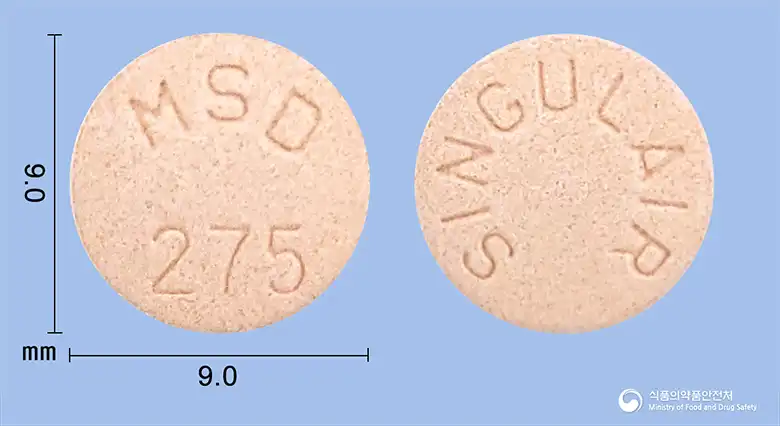
Montelukast Sodium 5.2mg
Chewable Tablet · Prescription medication
Korea Organon Co., Ltd.
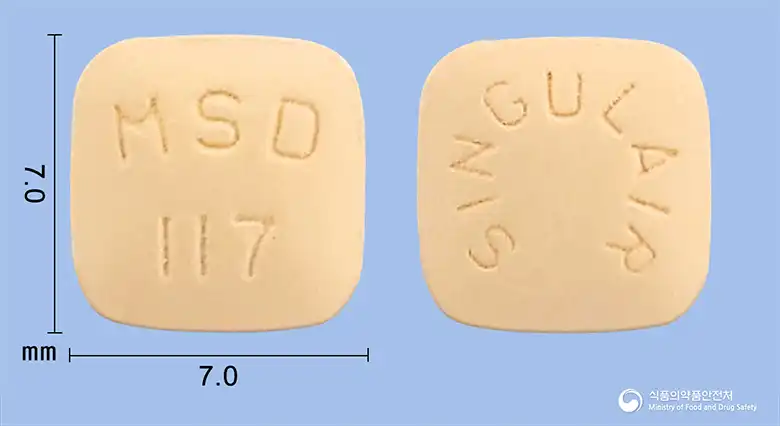
Montelukast Sodium 10.4mg
Tablet · Prescription medication
Korea Organon Co., Ltd.
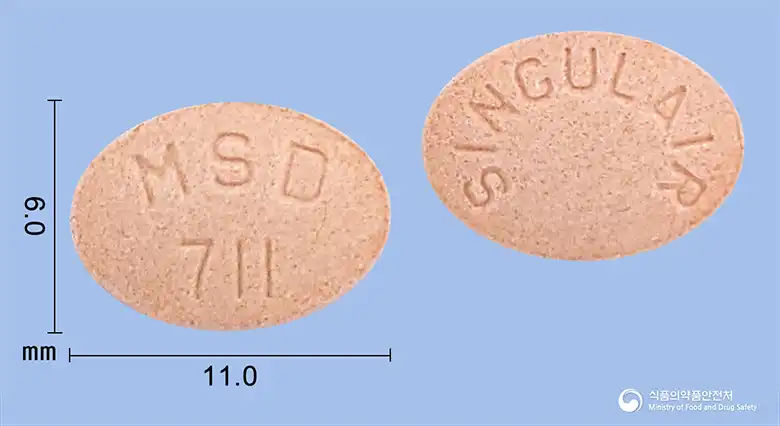
Montelukast Sodium 4.16mg
Chewable Tablet · Prescription medication
Korea Organon Co., Ltd.
Montelukast Sodium 4.16mg
Prescription medication
Korea Organon Co., Ltd.
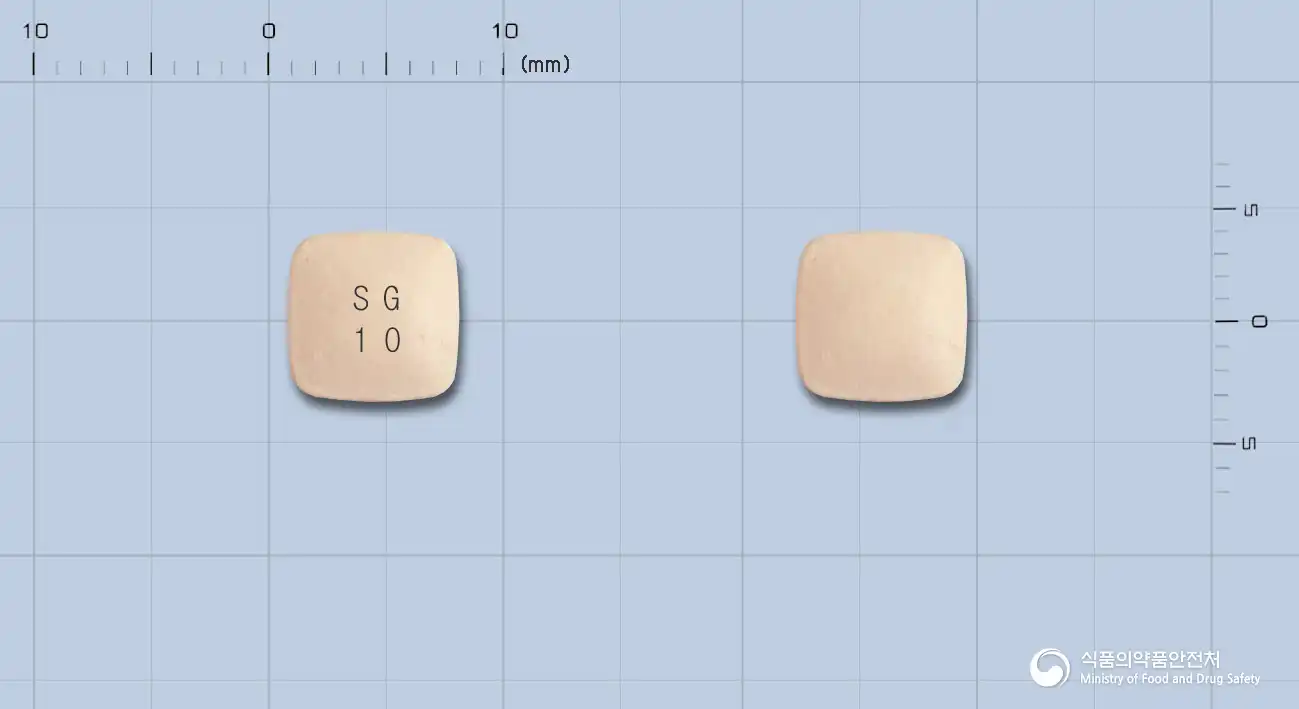
Montelukast Sodium 10.4mg
Tablet · Prescription medication
JW Pharmaceutical Co., Ltd.
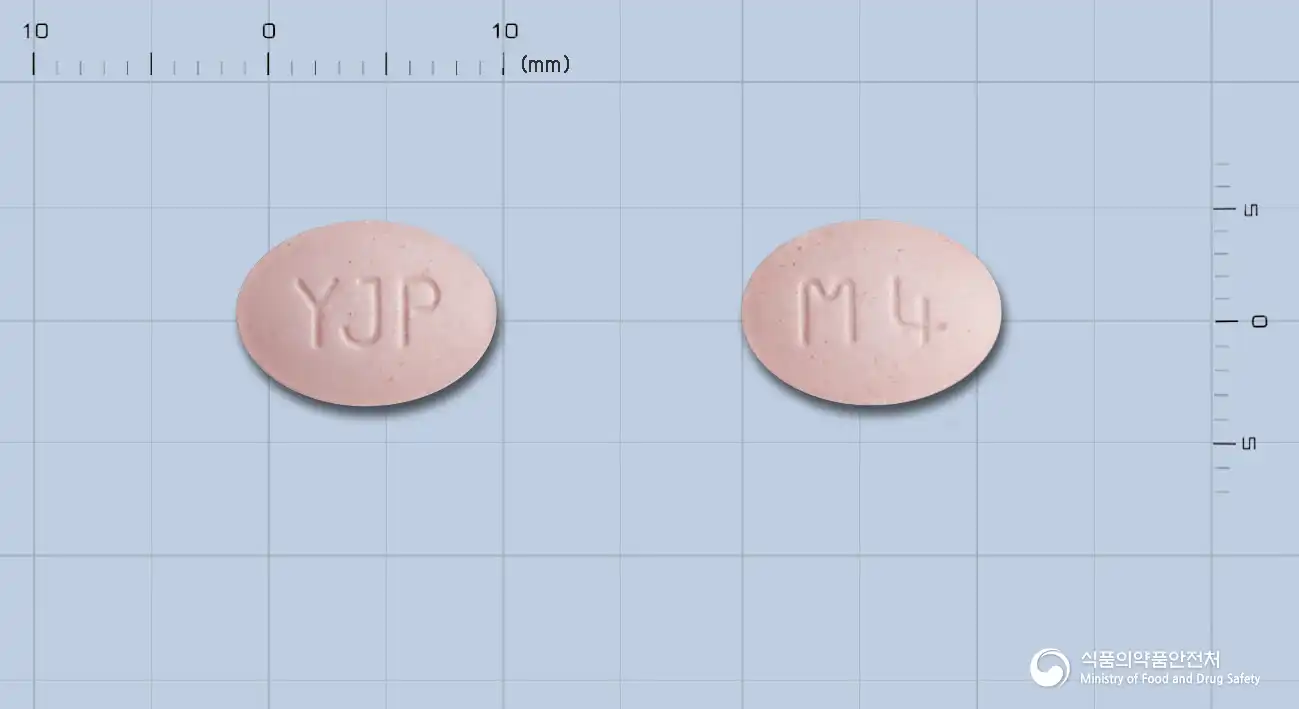
Montelukast Sodium 4.16mg
Chewable Tablet · Prescription medication
Youngjin Pharmaceutical Co., Ltd.
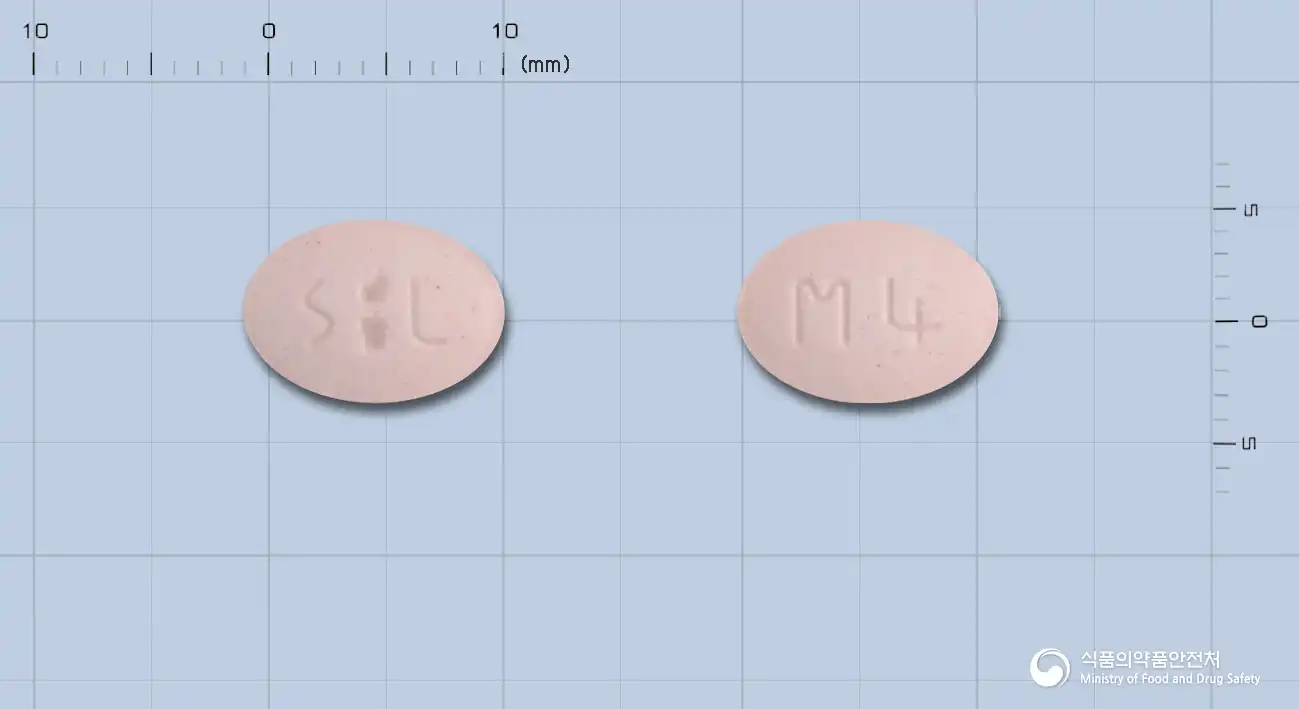
Montelukast Sodium 4.16mg
Chewable Tablet · Prescription medication
Samil Pharmaceutical Co., Ltd.
Even with the same ingredient, the dose and directions can differ by strength and dosage form. Talk to a doctor or pharmacist before switching from a medication you are already taking.
No questions yet.
For anything that needs medical judgment, consult a doctor or pharmacist.
This drug information is based on data provided by the Korea Ministry of Food and Drug Safety.
Consult a doctor or pharmacist for accurate dosage, administration, and usage instructions.