
 한국어
 English
 日本語
 中文(简体)
 Viewing now
Teva Bicalutamide Tablet 50 mg
Bicalutamide 50mg
Tablet · Prescription medication
Han Dok Teva Co., Ltd.
MFDS item code 201507324 · Approved 2015.10.23 · Insurance code 626900610
Treatment of advanced prostate cancer and high-risk locally advanced nonmetastatic prostate cancer
This medication is primarily used for the treatment of progressive prostate cancer. In particular, it inhibits the progression of cancer when used in conjunction with luteinizing hormone-releasing hormone (LHRH) analogs or castration surgery. It is also administered alone or used as an adjunct to prostatectomy and radiotherapy in patients with locally advanced or non-metastatic prostate cancer who are at high risk of progression. This treatment approach helps enhance the efficacy of prostate cancer treatment and improves patient survival rates. Therefore, it is used for the effective treatment of prostate cancer.
1. Concomitant use with a luteinizing hormone-releasing hormone (LHRH) analog or with surgical castration in adult men and elderly patients: Administer bicalutamide 50 mg orally once daily. Start taking this medicine at least 3 days before administration of an LHRH analog or at the same time as surgical castration. 2. Monotherapy or adjuvant therapy to radical prostatectomy or radiotherapy in patients with high-risk, locally advanced, non-metastatic prostate cancer: Adult men and elderly patients: Administer bicalutamide 150 mg orally once daily. This 150 mg regimen should be continued for at least 2 years or until disease progression.
This drug should not be used by women and children under 18. Patients who have had an allergic reaction to this drug or any of its components should avoid its use. It should not be taken with certain medications such as terfenadine, astemizole, or cisapride. Patients who have had liver damage or severe liver impairment should not use this drug. This drug contains lactose, so patients with lactose intolerance or certain genetic metabolic disorders should avoid it. Patients with impaired liver function should use this drug with caution as it may stay in the body longer and increase the risk of side effects. When taking this medication, side effects such as dizziness, abdominal pain, constipation, nausea, diarrhea, rash, hematuria, gynecomastia, weakness, and edema may occur. Various adverse reactions have been reported, including abnormal liver function, heart problems, decreased libido, and depression, so consult a healthcare professional immediately if symptoms occur. It is important to have regular liver function tests to check for liver damage. Since this drug is primarily metabolized in the liver, dosage adjustment or caution is needed for patients with liver function impairment. Caution is advised when driving or operating machinery, as confusion or drowsiness may occur. This drug can interact with other medications by inhibiting certain enzymes, so it is essential to inform healthcare providers of any other medications being taken. Women who are pregnant or may become pregnant, as well as breastfeeding mothers, should not take this medication. Elderly patients may be at increased risk for side effects due to decreased heart and circulatory function, so caution is advised. In case of overdose, there is no specific antidote, and appropriate treatment should be provided based on symptoms, as dialysis may not be effective. This drug should be kept out of reach of children and stored in its original container to prevent misuse or quality degradation. This drug may affect male reproductive ability, so using appropriate contraceptive methods for a certain period after administration is recommended.
Anemia, dizziness, facial flushing, abdominal pain, constipation, nausea, diarrhea, rash, hematuria, gynecomastia, breast engorgement, weakness, edema, loss of appetite, decreased libido, depression, drowsiness, myocardial infarction, heart failure, dyspepsia, abdominal distension, vomiting, hepatotoxicity, jaundice, elevated aminotransferase levels, alopecia, hirsutism, dry skin, itching, erectile dysfunction, chest pain, weight gain, hypersensitivity reactions, angioedema, urticaria, interstitial lung disease, liver failure, photosensitivity reactions, angina pectoris, symptoms of heart failure, prolonged PR and QT intervals on electrocardiogram, arrhythmia, non-specific ECG changes, leukopenia, thrombocytopenia, dry mouth, insomnia, confusion, dyspnea, nocturia, sweating, hyperglycemia, weight loss, diabetes mellitus, headache, pelvic pain, chills, ejaculation disorders, epididymitis, groin discomfort, pneumonia
Not everyone experiences these, and they can vary from person to person.
This medication should be stored in a tightly closed container to prevent air or moisture from entering and should be kept at a cool room temperature, preferably below 30 degrees Celsius. Proper storage will help maintain the drug's efficacy.
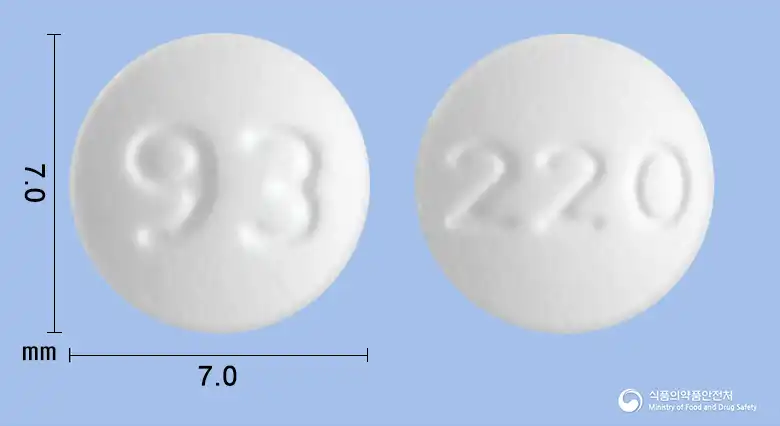
White or pale yellow round film-coated tablet
28 tablets (14 tablets/PTP x 2)
Even with the same ingredient, strength, dosage form and how it is taken can differ.
Even with the same ingredient, the dose and directions can differ by strength and dosage form. Talk to a doctor or pharmacist before switching from a medication you are already taking.
No questions yet.
For anything that needs medical judgment, consult a doctor or pharmacist.
This drug information is based on data provided by the Korea Ministry of Food and Drug Safety.
Consult a doctor or pharmacist for accurate dosage, administration, and usage instructions.