
 한국어
 English
 日本語
 中文(简体)
 Viewing now
Noxafil (Posaconazole) 100 mg Delayed-Release Tablets
Posaconazole Micronized 100mg
Tablet · Prescription medication
MSD Korea Co., Ltd.
MFDS item code 201502727 · Approved 2015.05.01 · Insurance code 655501910
Prevention of invasive fungal infections; treatment of refractory or intolerant invasive aspergillosis
This medication is used to treat patients with invasive aspergillosis who do not respond to or cannot tolerate amphotericin B or itraconazole. It is also used to prevent invasive fungal infections in patients with acute myelogenous leukemia or myelodysplastic syndromes expected to have prolonged neutropenia, and in hematopoietic stem cell transplant patients receiving high-dose immunosuppressive therapy for graft-versus-host disease. This helps in the treatment and prevention of fungal infections.
Refractory or intolerant invasive fungal infections: Administer 300 mg (three 100 mg tablets) twice daily on the first day, then 300 mg once daily starting the following day. The duration of treatment is determined by the patient's underlying disease status, degree of recovery from immunosuppression, and clinical response. Prevention of invasive fungal infections: Administer 300 mg (three 100 mg tablets) twice daily on the first day, then 300 mg once daily starting the following day. The duration of treatment should be determined by the degree of recovery from neutropenia or immunosuppression. In patients with acute myeloid leukemia or myelodysplastic syndrome, start prophylactic treatment with this medicine several days before the onset of neutropenia and continue for 7 days after the neutrophil count reaches 500/mm3 or higher.
This medication should not be used in patients with hypersensitivity to any component of this product. This medication should not be taken with ergotamine alkaloids. Caution should be exercised when taking this medication with certain heart-related medications (e.g., terfenadine, astemizole) as it may cause irregular heart rhythms. This medication may affect liver function; hence, patients with liver diseases or abnormal liver function test results must have regular liver function tests. Patients with heart rhythm problems or those at risk for QT interval prolongation should use this medication with caution. This medication has many drug interactions, so if you are taking other medications, it is essential to consult a doctor or pharmacist. Pregnant or breastfeeding women should consult a healthcare professional before taking this medication, especially during pregnancy due to potential risks to the fetus. This medication may cause side effects such as drowsiness or dizziness, which warrant caution when driving or operating machinery. Patients should be careful if these symptoms occur after taking it. In cases of overdose, there is no specific antidote, so immediate contact with a medical institution is required to receive appropriate assistance.
Hypersensitivity, QTc prolongation, Torsades de Pointes syndrome, hepatotoxicity, ALT elevation, AST elevation, alkaline phosphatase elevation, total bilirubin elevation, hepatitis, nausea, diarrhea, pancreatitis, rash, itching, weakness, fatigue, fever, neutropenia, loss of appetite, electrolyte imbalance, hypokalemia, dizziness, headache, paresthesia, drowsiness, abdominal pain, dyspepsia, bloating, dry mouth, vomiting, constipation, elevated liver function test values, hyperbilirubinemia, hepatocyte damage, adrenal insufficiency, allergic reactions, hypersensitivity reactions, hemolytic uremic syndrome, thrombocytopenic purpura, phototoxic reactions, febrile neutropenia, thrombocytopenia, pneumonia, streptococcal bacteremia, fungal pneumonia, septic shock, hyperbilirubinemia, increased liver enzymes, hepatocyte damage, nausea, vomiting, adrenal insufficiency, pancreatitis, allergic reactions, hypersensitivity reactions, Torsades de Pointes syndrome, hemolytic uremic syndrome, thrombocytopenic purpura, pseudohyperaldosteronism, febrile neutropenia, neutropenia, thrombocytopenia, hypokalemia, hyperkalemia, fever, atrial fibrillation, disseminated intravascular coagulation, leukopenia, pancytopenia, agranulocytosis, hemolysis, thrombotic microangiopathy, bacteremia, soft tissue infection, Clostridium difficile infection, Escherichia coli bacteremia, Aspergillus infection, bronchopulmonary aspergillosis, liver abscess, Staphylococcus infection, perianal abscess, cytomegalovirus viremia, device-related infection, Escherichia infection, Klebsiella infection, Pneumocystis pneumonia, splenic abscess, abdominal abscess, Aeromonas infection, bacterial arthritis, atypical pneumonia, brain abscess, bronchiolitis, Clostridium difficile colitis, cytomegalovirus chorioretinitis, epididymitis, gastroenteritis, inguinal abscess, disseminated herpes zoster, colonic infection, lung abscess, bacterial lymphadenitis, neutropenic infection, parainfluenza virus infection, parotitis, perineal abscess, ocular surrounding soft tissue infection, pneumococcal sepsis, Pseudomonas sepsis, pyomyositis, viral respiratory infection, sepsis, Stenotrophomonas infection, streptococcal bacteremia, systemic fungal infection, urinary tract infection, varicella zoster virus infection, stomatitis, hemorrhoids, oral ulcer formation, colitis, cough, pleural effusion, hemoptysis, runny nose, dyspnea, epistaxis, hypophosphatemia, hypoalbuminemia, hyperkalemia, hypocalcemia, urticaria, insomnia, hypertension, hypotension, dysuria, decreased platelet count, atrial fibrillation, nasopharyngitis, herpes simplex, oral herpes, shingles, oral candidiasis, periodontitis, pharyngitis, rhinitis, conjunctivitis, eczema infection, breast atrophy, perineal disorder, genital pruritus, testicular disorder, vaginal bleeding, vulvar edema, acute cholecystitis, hepatic congestion, cholestatic hepatitis, hydropic cholecystitis, ischemic hepatitis, tinnitus, nephrogenic diabetes insipidus, peripheral neuropathy, tremor, loss of taste, facial paralysis, neuralgia, blurred vision, visual impairment, blepharitis, conjunctival hyperemia, eye edema, graft versus host disease of the gastrointestinal tract, acute graft versus host disease, pulmonary graft versus host disease, graft versus host disease, procedure-related pain, brain herniation, unresponsive to platelet transfusion, spinal compression fracture, subdural hematoma, arthralgia, musculoskeletal pain, myalgia, back pain, bone pain, flank pain, muscle weakness, limb pain, jaw pain, bone overgrowth, intervertebral disc herniation in the spine, joint swelling, musculoskeletal discomfort, musculoskeletal stiffness, cervical pain, rotator cuff syndrome, serum ferritin elevation, C-reactive protein elevation, blood albumin reduction, hemoglobin reduction, Murphy's sign positive, myocardial necrosis marker elevation, prolonged prothrombin time, weight gain, leukopenia, heart failure, pericardial effusion, acute myocardial infarction, cardiac arrest, cardiomyopathy, left ventricular dysfunction, sinus bradycardia, sinus tachycardia, stress cardiomyopathy, tachycardia, differentiation syndrome, acute myeloid leukemia, cancer pain, leukemic retinopathy, acute lymphoblastic leukemia, cutaneous leukemia, leukemic infiltration, seborrheic keratosis, tremor, cerebral artery stenosis, intracranial hemorrhage, intracranial hematoma, Wernicke's encephalopathy
Not everyone experiences these, and they can vary from person to person.
This medication is sensitive to air and moisture, so it must be stored in a tightly sealed container. Furthermore, it is important to maintain a temperature between 1 and 30 degrees Celsius when storing the medication. This way, the effectiveness of the medication can be well preserved.
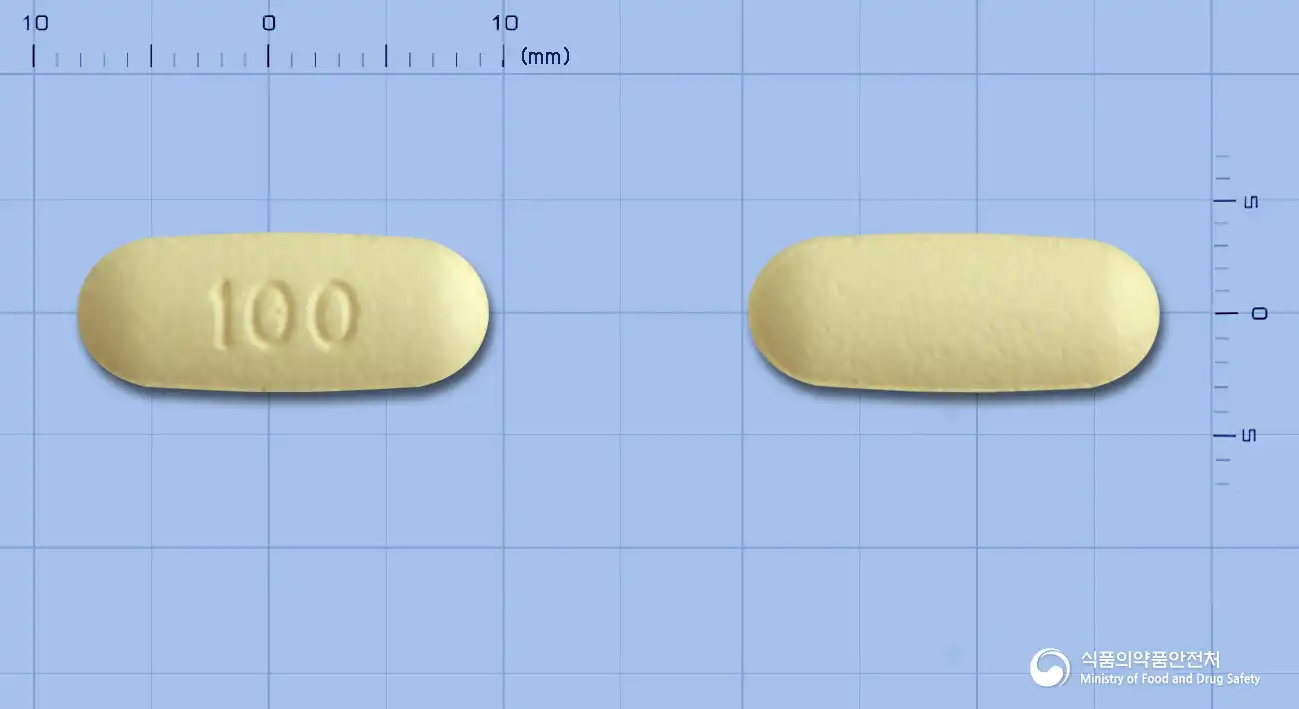
Yellow, capsule-shaped delayed-release film-coated tablet with '100' engraved on one side
24 tablets (12 tablets/PTP x 2 PTP)
Even with the same ingredient, strength, dosage form and how it is taken can differ.
Even with the same ingredient, the dose and directions can differ by strength and dosage form. Talk to a doctor or pharmacist before switching from a medication you are already taking.
No questions yet.
For anything that needs medical judgment, consult a doctor or pharmacist.
This drug information is based on data provided by the Korea Ministry of Food and Drug Safety.
Consult a doctor or pharmacist for accurate dosage, administration, and usage instructions.