
 한국어
한국어 English
 日本語
日本語 中文(简体)
 Viewing now
Mucotain Capsule (Acetylcysteine)
Acetylcysteine 200mg
Hard capsule · OTC medication
Korea Chorus Co., Ltd.
MFDS item code 201500723 · Notified 2015.02.12 · Insurance code 647203860
Relief of sputum discharge difficulties in respiratory diseases such as acute and chronic bronchitis, bronchial asthma.
This medication is used to relieve sputum discharge difficulties in diseases such as acute and chronic bronchitis, bronchial asthma, laryngitis, sinusitis, and cystic fibrosis.
For acute diseases, adults: 200 mg once, three times a day. For chronic diseases, adults: 200 mg once, twice a day.
For acute diseases, children aged 6 to 14 years: 200 mg once, twice a day. For chronic diseases, children aged 6 to 14 years: 100 mg once, three times a day. For cystic fibrosis, children aged 6 years and older: 200 mg once, three times a day.
This medication should not be taken by individuals who are allergic to this drug or its components. Patients with ulcers in the stomach or duodenum should also avoid using this medication. Children under 2 years of age should not use this drug. Pregnant women or those who may become pregnant should consult a doctor before taking this medication. It is also advisable for breastfeeding women to consult a healthcare professional before use since it is uncertain whether this medication passes into breast milk. If gastrointestinal symptoms such as nausea, vomiting, stomatitis, heartburn, or diarrhea occur while taking the medication, discontinue use immediately and consult a doctor. Rarely, allergic reactions such as skin rash, itching, headache, tinnitus, and bronchospasms may occur, and in such cases, discontinue use and inform a healthcare professional. Symptoms such as increased heart rate or elevated blood pressure may rarely occur, so caution is advised. When taking this medication, it is advisable to space it at least 2 hours apart if using some antibiotics, as it may reduce the effectiveness of the antibiotics. Do not mix this medication with other drugs, and if it is in liquid form, do not mix it with other medications. Keep out of reach of children, and store in its original container to maintain the quality of the medication and prevent misuse. Inhalation of this medication can cause bronchospasms in patients with bronchial asthma or poor respiratory function, so consult a doctor before use. The safety of this medication has not been fully established for the elderly or children, so use with caution. Symptoms such as lightheadedness, nausea, vomiting, or loss of appetite may occur during inhalation; if any unusual symptoms arise, consult a healthcare professional. Respiratory irritation or drowsiness, chest tightness may rarely occur, so it is important to monitor one's health condition. Increased bronchial secretions may occur, so if natural sputum expulsion does not happen, appropriate treatment should be sought. When using with antibiotics, it is best to administer them separately, and they should not be used as injections or eye drops. If the mask sticks to the face after inhalation, it can easily be removed by washing it with water. The inhalation device should be cleaned immediately after use, and care should be taken to avoid corrosion or blockage from prolonged contact with the medication solution. Some antibiotics may produce precipitation or discoloration when mixed with this drug, so avoid mixing. Continuous spraying may raise drug concentration, so it is advisable to use a diluent to maintain an appropriate concentration.
Hives, anaphylaxis (severe allergic reaction), bronchospasm (especially in asthma patients), difficulty breathing.
Not everyone experiences these, and they can vary from person to person.
This medication should be taken at least 2 hours apart from oral antibiotics (e.g., amoxicillin, cefuroxime, doxycycline, erythromycin, thiamphenicol).
This medication may be sensitive to air or moisture, so it should be stored in a sealed container. It is best to maintain storage temperatures between 1 to 30 degrees Celsius. Proper storage will help to maintain the medication's efficacy over time.
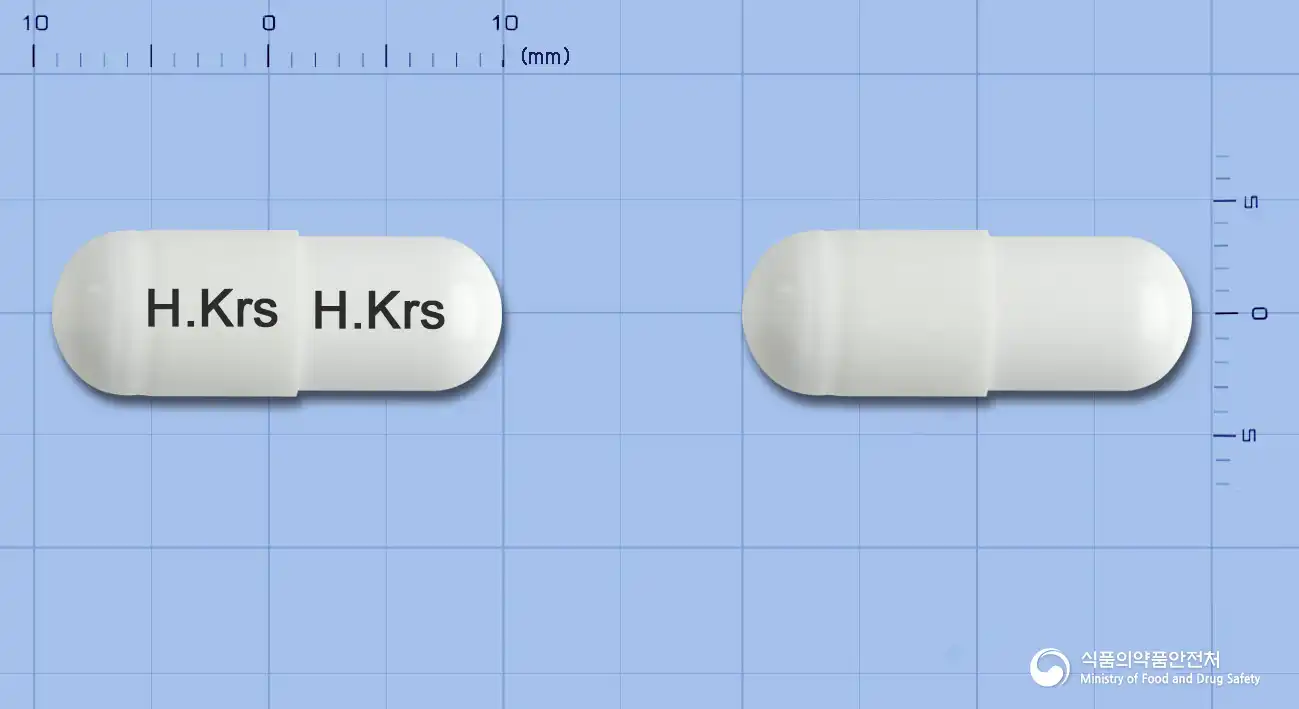
A white capsule filled with white powder in the upper and lower parts.
30 capsules/bottle, 300 capsules/bottle
Even with the same ingredient, strength, dosage form and how it is taken can differ.
Viewing nowAcetylcysteine 200mg
Hard capsule · OTC medication
Korea Chorus Co., Ltd.
Acetylcysteine 200mg
Solution · OTC medication
(Co., Ltd.) Celltrion Pharm
Acetylcysteine 20g
OTC medication
Boryeong Co., Ltd.
Acetylcysteine 200mg
OTC medication
Hanwha Pharmaceutical Co., Ltd.
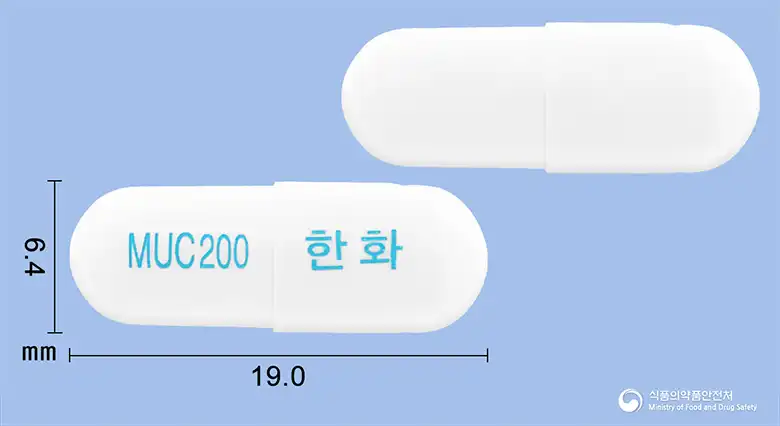
Acetylcysteine 200mg
Hard capsule · OTC medication
Hanwha Pharmaceutical Co., Ltd.
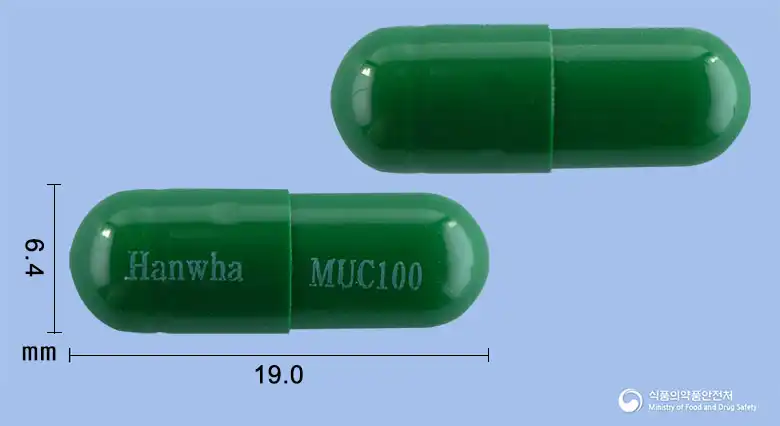
Acetylcysteine 100mg
Hard capsule · OTC medication
Hanwha Pharmaceutical Co., Ltd.
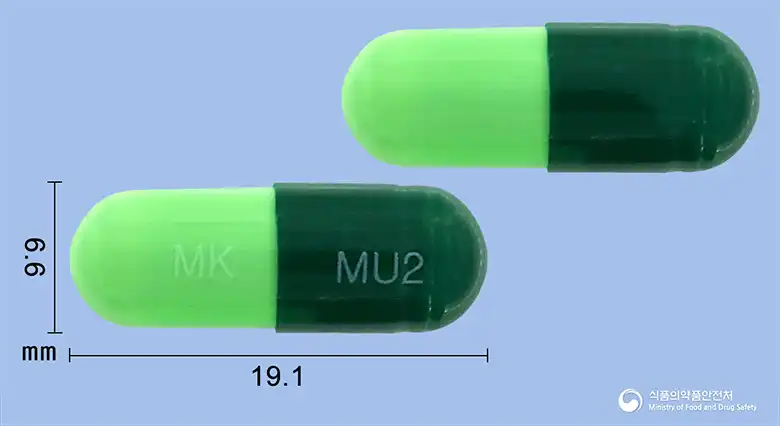
Acetylcysteine 200mg
Hard capsule · OTC medication
(Medica Korea Co., Ltd.)
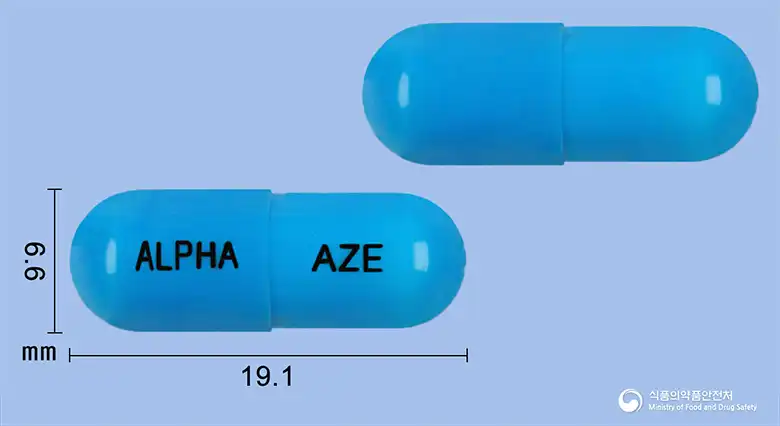
Acetylcysteine 200mg
Hard capsule · OTC medication
Alpha Pharmaceutical Co., Ltd.
Even with the same ingredient, the dose and directions can differ by strength and dosage form. Talk to a doctor or pharmacist before switching from a medication you are already taking.
No questions yet.
For anything that needs medical judgment, consult a doctor or pharmacist.
This drug information is based on data provided by the Korea Ministry of Food and Drug Safety.
Consult a doctor or pharmacist for accurate dosage, administration, and usage instructions.