
 한국어
한국어 English
 日本語
日本語 中文(简体)
 Viewing now
Singulair Tablet 10 mg (Montelukast Sodium)
Montelukast Sodium 10.4mg
Tablet · Prescription medication
Dongkuk Pharmaceutical Co., Ltd.
MFDS item code 201207461 · Approved 2012.10.29 · Insurance code 653402610
Prevention of asthma and relief of allergy rhinitis symptoms
This medication helps in the prevention and long-term treatment of asthma. It is also used to relieve symptoms of seasonal and perennial allergic rhinitis.
Administer 10 mg orally once daily. Asthma patients should take it in the evening. Allergy rhinitis patients should determine the dosing time according to their condition. For patients with both asthma and allergic rhinitis, take 1 tablet in the evening once daily.
This medication contains aspartame, an artificial sweetener, which is metabolized into phenylalanine in the body. Therefore, patients with the genetic disorder phenylketonuria should not take this medication. The daily intake of aspartame should be limited to below WHO recommended amounts, with a maximum daily dosage of 2.4g for adults. Patients with allergies to the components of this medication or those with lactose intolerance, lactase deficiency, or genetic issues such as glucose-galactose malabsorption should not take this medication. During the course of taking this medication, various adverse reactions such as fatigue, headache, indigestion, cough, and rash may occur, so caution is advised. Especially, respiratory and digestive symptoms as well as neuropsychiatric symptoms have been reported in both children and adults. This medication is not intended for use during acute asthma attacks; therefore, appropriate emergency medication should always be carried when asthma worsens. When decreasing the dosage of inhaled corticosteroids, it should be done gradually under physician supervision, and not changed abruptly. Patients with hypersensitivity to aspirin or non-steroidal anti-inflammatory drugs should avoid taking these medications concurrently with this drug. This drug may rarely cause serious immune reactions such as eosinophilia and vasculitis, and if relevant symptoms occur, a doctor should be consulted immediately. While no significant interactions have been reported when taken with other drugs, careful observation is advised when used in conjunction with certain medications under a physician's direction. During pregnancy, it should be taken only when clearly necessary, and caution is needed during breastfeeding. It can also be used in children and the elderly, but its safety and efficacy have not been established for children under 6 months of age. In case of overdose, there is no specific antidote; symptomatic treatment should be provided, and immediate medical attention should be sought if symptoms are severe. This medication is sensitive to light, therefore it should be opened immediately before taking, and consumed shortly after opening. Store this medication in a closed container, out of reach of children, and do not transfer it to other containers. This medication should be taken continuously when asthma or allergic rhinitis symptoms are present, and if symptoms worsen or any abnormal symptoms appear, a doctor should be consulted immediately.
Not everyone experiences these, and they can vary from person to person.
This medication is sensitive to air, moisture, and light, so it must be stored in a tightly sealed container. It is advisable to maintain storage temperatures between 1 degree and 30 degrees Celsius to keep the medication effective for a longer period.
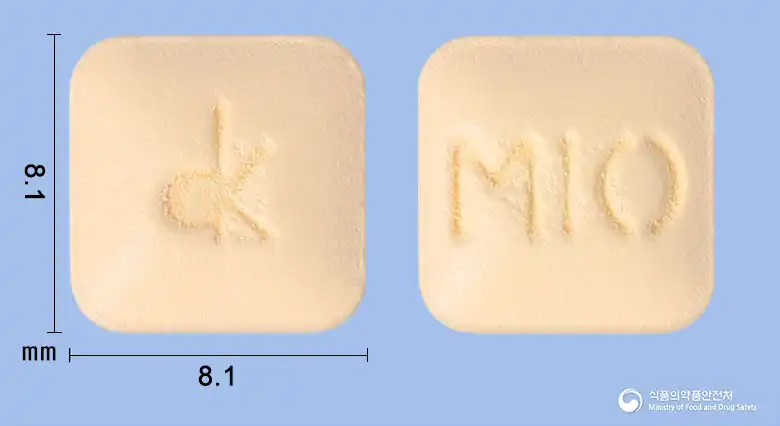
Beige, rounded square film-coated tablet
28 tablets/box [7 tablets/PTP*4]
Even with the same ingredient, strength, dosage form and how it is taken can differ.
Viewing nowMontelukast Sodium 10.4mg
Tablet · Prescription medication
Dongkuk Pharmaceutical Co., Ltd.
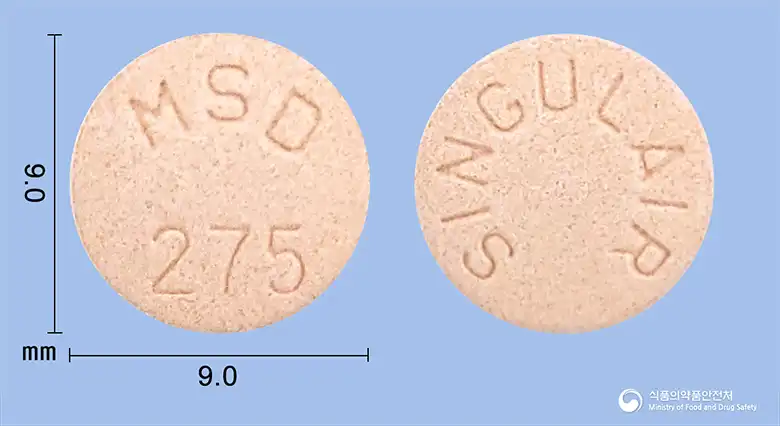
Montelukast Sodium 5.2mg
Chewable Tablet · Prescription medication
Korea Organon Co., Ltd.
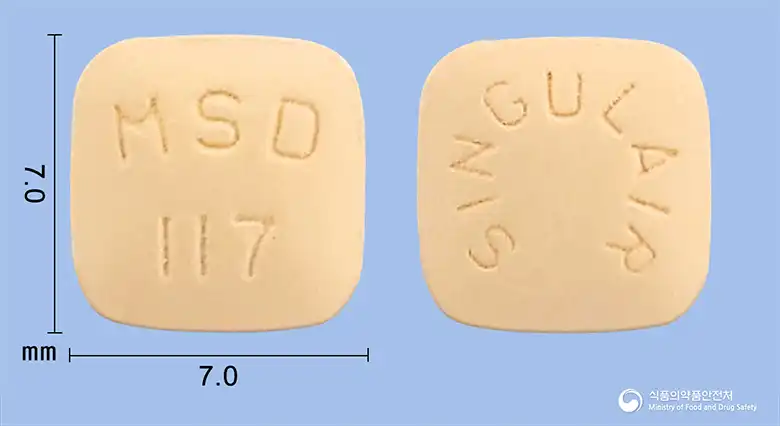
Montelukast Sodium 10.4mg
Tablet · Prescription medication
Korea Organon Co., Ltd.
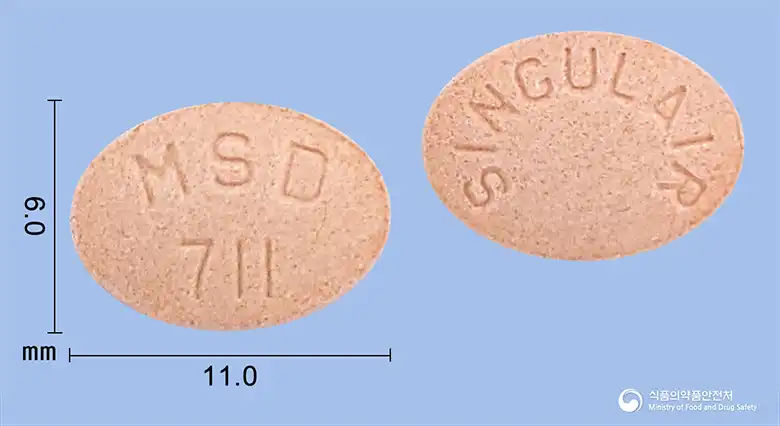
Montelukast Sodium 4.16mg
Chewable Tablet · Prescription medication
Korea Organon Co., Ltd.
Montelukast Sodium 4.16mg
Prescription medication
Korea Organon Co., Ltd.
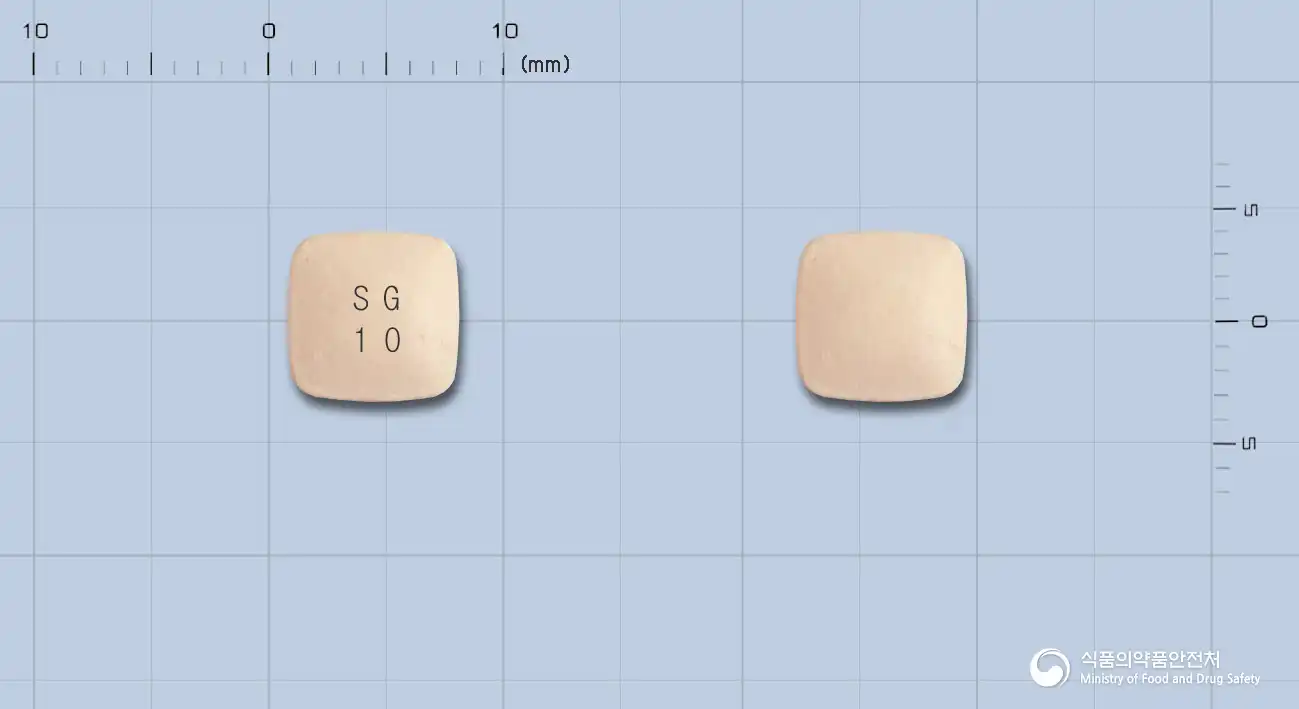
Montelukast Sodium 10.4mg
Tablet · Prescription medication
JW Pharmaceutical Co., Ltd.
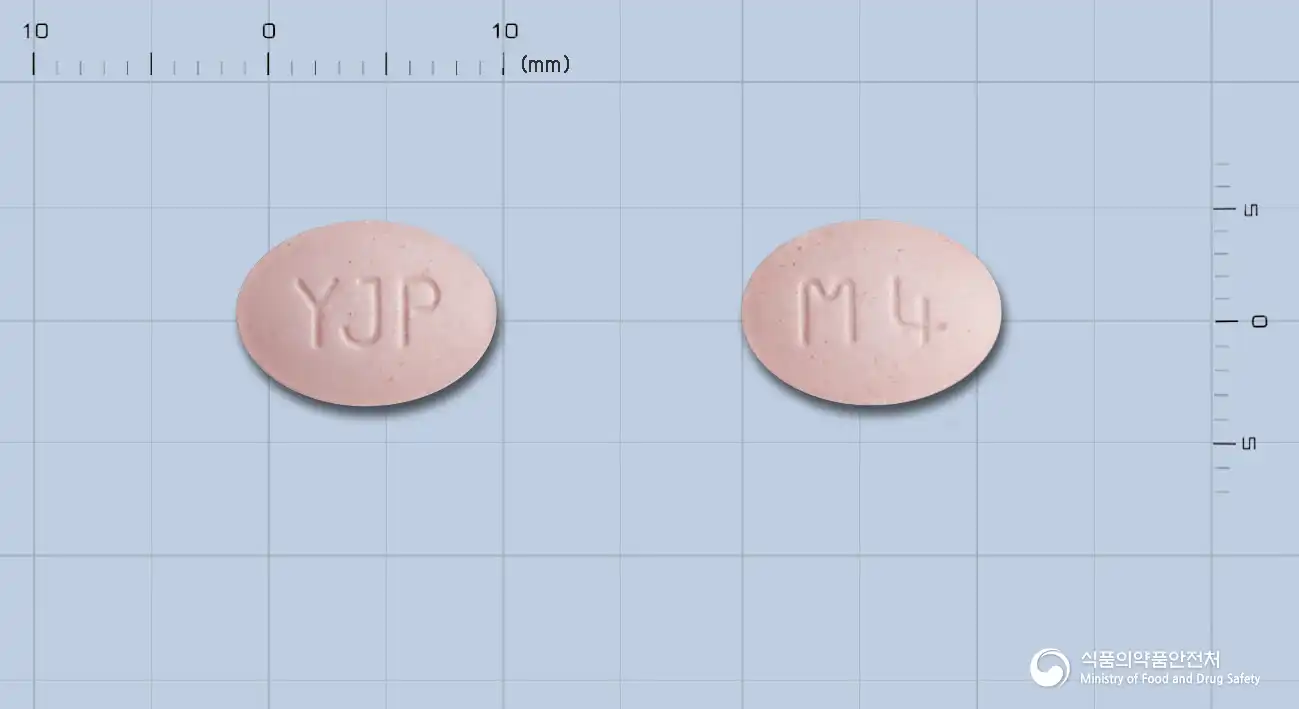
Montelukast Sodium 4.16mg
Chewable Tablet · Prescription medication
Youngjin Pharmaceutical Co., Ltd.
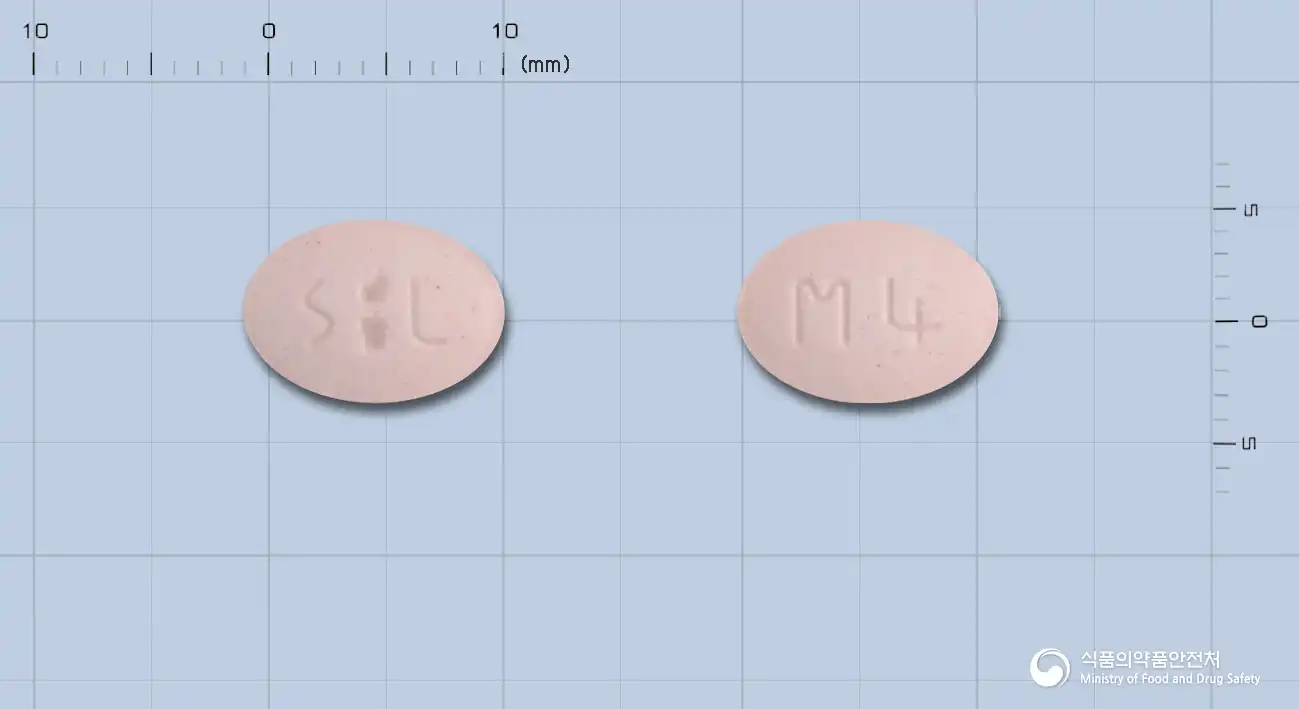
Montelukast Sodium 4.16mg
Chewable Tablet · Prescription medication
Samil Pharmaceutical Co., Ltd.
Even with the same ingredient, the dose and directions can differ by strength and dosage form. Talk to a doctor or pharmacist before switching from a medication you are already taking.
No questions yet.
For anything that needs medical judgment, consult a doctor or pharmacist.
This drug information is based on data provided by the Korea Ministry of Food and Drug Safety.
Consult a doctor or pharmacist for accurate dosage, administration, and usage instructions.