
 한국어
한국어 English
 日本語
日本語 中文(简体)
Dosage form image
Viewing nowSandos Montelukast Tablets 10 mg (Montelukast Sodium)
Montelukast Sodium
Prescription medication
Korea Sandos Co., Ltd.
MFDS item code 201206832 · Approved 2012.09.18
This product's status changed to Company closed on 2023.07.11. It may no longer be sold, so consult a doctor or pharmacist before taking it.
Prevention of asthma and relief of allergic rhinitis symptoms
This medication is used to prevent and continuously treat asthma. It is also effective in alleviating symptoms of seasonal and perennial allergic rhinitis. Therefore, it helps improve discomfort caused by asthma and allergic rhinitis.
Adults and adolescents aged 15 and older should take 10 mg of montelukast once daily by oral administration. This medication should be taken 1 hour before or 2 hours after meals. It is taken once daily, but asthma patients should take it in the evening. Patients with both asthma and allergic rhinitis should take 1 tablet, 1 pack, or 1 film in the evening once daily.
Children aged 6 to 14 years should take 5 mg of montelukast once daily, either by chewing or placing it on the tongue to dissolve or disintegrate without water. Children aged 2 to 5 years should take 4 mg of montelukast once daily by chewing.
This medication contains the artificial sweetener aspartame and should not be used by patients with phenylketonuria, a hereditary disease that requires restriction of phenylalanine intake. When taking this medication, the daily intake of aspartame should be adjusted to stay below the WHO recommended amount of 40 mg/kg, and adults should ensure the maximum daily intake does not exceed 2.4 g. Individuals with hypersensitivity to this medication or its ingredients should not take it, and it should also not be given to patients with lactose intolerance or related genetic issues due to its lactose content. When used by asthma or allergic rhinitis patients, rare side effects such as fatigue, headache, abdominal pain, fever, cough, and rash may occur, so any unusual symptoms should be discussed with a physician. Especially during the use of this medication, neuropsychiatric symptoms such as anxiety, depression, sleep disturbances, hallucinations, and suicidal thoughts may occur. If such changes occur, immediate notification to medical personnel is necessary. In cases of an acute asthma attack, this medication is not suitable as a bronchodilator; therefore, a rescue inhaler should always be kept on hand. While this medication can help gradually reduce the dosage of inhaled corticosteroids, it should not be abruptly switched for corticosteroids. Patients with hypersensitivity to aspirin should avoid taking aspirin or non-steroidal anti-inflammatory drugs concurrently while taking this medication, as it does not counteract bronchoconstriction caused by aspirin. If pregnant or breastfeeding, this medication should only be taken under a doctor's guidance when necessary, as there has not been sufficient research on its effects on the fetus or newborn. It can be used in children and the elderly, but special care regarding dosage and administration methods is necessary for those in the pediatric population, and the safety and efficacy in infants under 6 months have not been established. In cases of overdose, as there is no specific antidote, general treatment should be administered according to symptoms, and care should be taken to avoid exceeding the recommended dosage. This medication is sensitive to light; therefore, it should be taken immediately after opening and stored out of reach of children. Finally, this medication should be taken consistently even when asthma symptoms are absent, and if symptoms worsen or any adverse reactions occur, immediate consultation with a physician is necessary.
Hives, angioedema, toxic epidermal necrolysis, Stevens-Johnson syndrome, severe allergic reactions, eosinophilia, eosinophilic pneumonia, vasculitis, acute skin reactions, thrombocytopenia, seizure disorders, suicidal thoughts and behavior, nosebleeds, pulmonary eosinophilia, cholestatic hepatitis, hepatocellular injury, mixed liver injury, edema accompanied by increased blood pressure, hives, edema
Not everyone experiences these, and they can vary from person to person.
This medication should be stored in a tightly closed container to prevent exposure to air and moisture, and it is important to keep it away from direct sunlight. The storage temperature should be maintained between 1 and 30 degrees Celsius at room temperature.
Beige, biconvex, square-shaped film-coated tablets
28 tablets (14 tablets/PTP x 2 packs)
Even with the same ingredient, strength, dosage form and how it is taken can differ.
Montelukast Sodium
Prescription medication
Korea Sandos Co., Ltd.
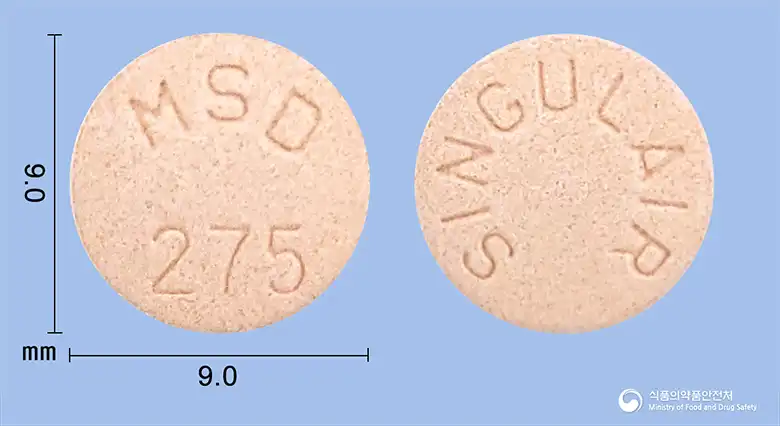
Montelukast Sodium 5.2mg
Chewable Tablet · Prescription medication
Korea Organon Co., Ltd.
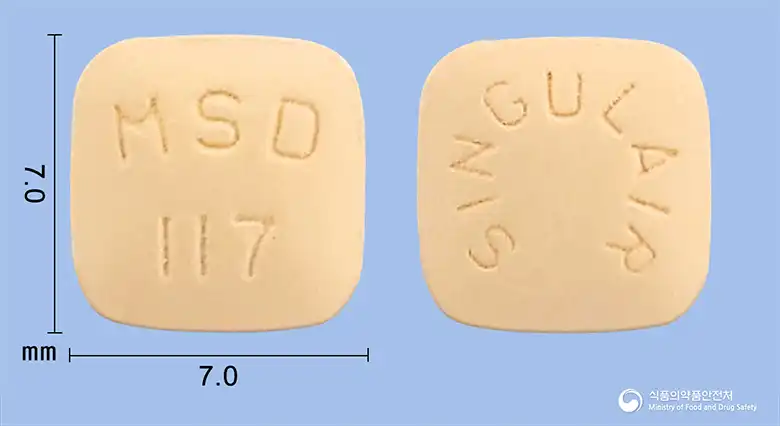
Montelukast Sodium 10.4mg
Tablet · Prescription medication
Korea Organon Co., Ltd.
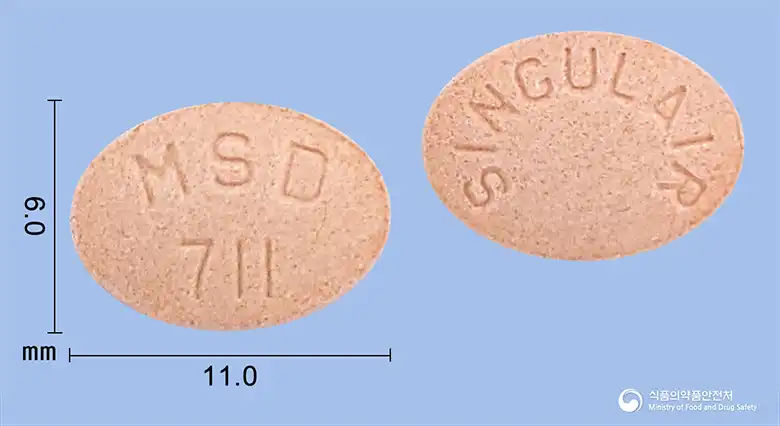
Montelukast Sodium 4.16mg
Chewable Tablet · Prescription medication
Korea Organon Co., Ltd.
Montelukast Sodium 4.16mg
Prescription medication
Korea Organon Co., Ltd.
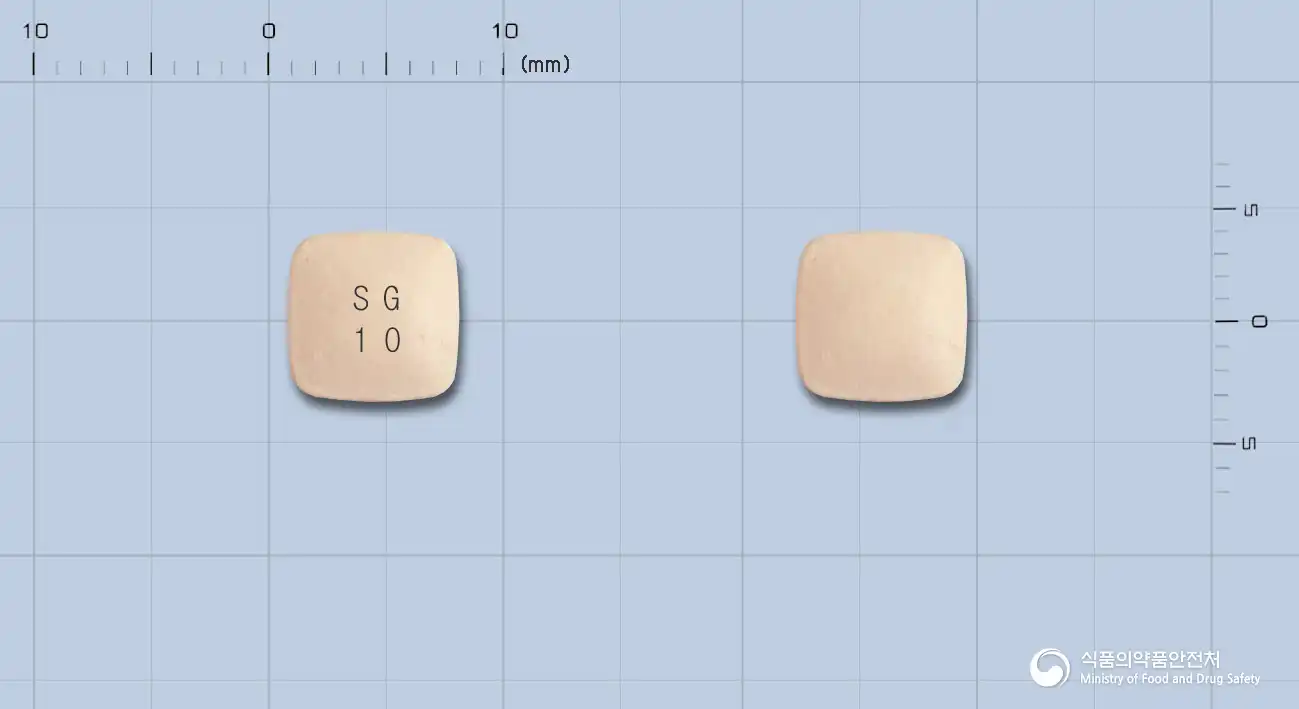
Montelukast Sodium 10.4mg
Tablet · Prescription medication
JW Pharmaceutical Co., Ltd.
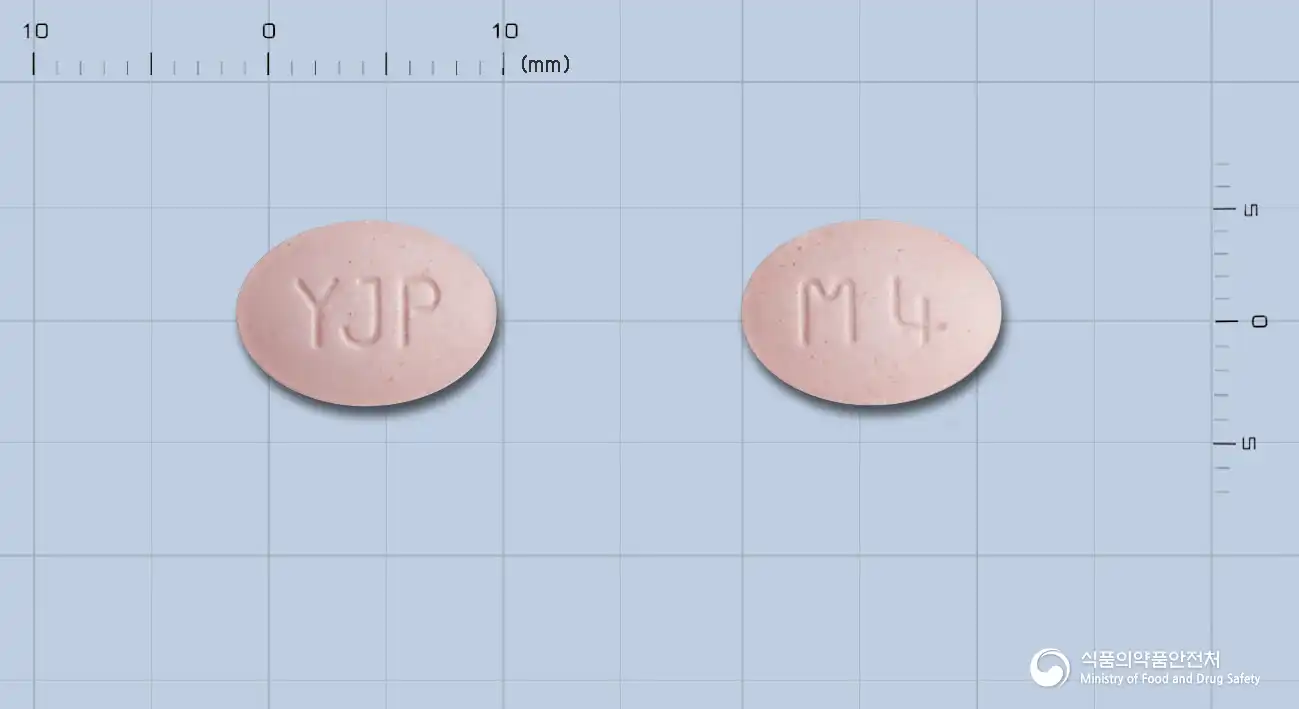
Montelukast Sodium 4.16mg
Chewable Tablet · Prescription medication
Youngjin Pharmaceutical Co., Ltd.
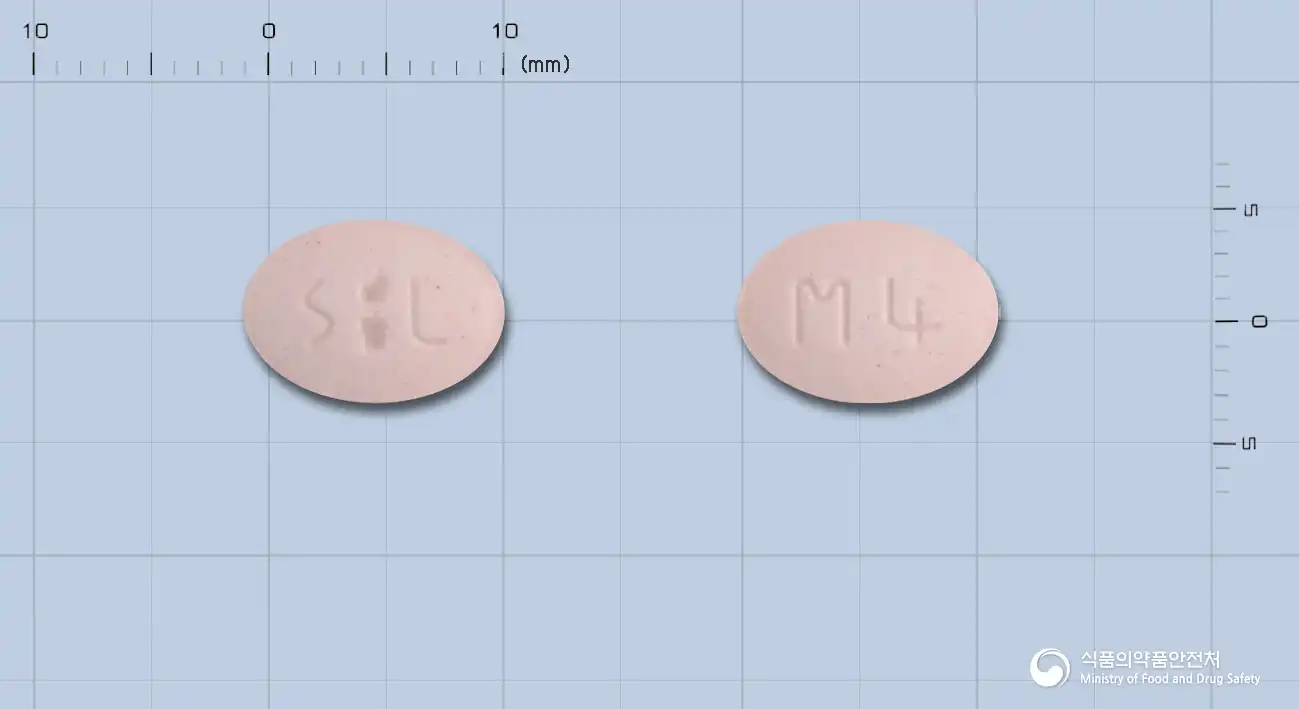
Montelukast Sodium 4.16mg
Chewable Tablet · Prescription medication
Samil Pharmaceutical Co., Ltd.
Even with the same ingredient, the dose and directions can differ by strength and dosage form. Talk to a doctor or pharmacist before switching from a medication you are already taking.
No questions yet.
For anything that needs medical judgment, consult a doctor or pharmacist.
This drug information is based on data provided by the Korea Ministry of Food and Drug Safety.
Consult a doctor or pharmacist for accurate dosage, administration, and usage instructions.