
 한국어
한국어 English
 日本語
日本語 中文(简体)
 Viewing nowCombination
Alendroplus D Tablets
Sodium Alendronate Trihydrate 91.37mg · Cholecalciferol Concentrate Granules 53.33mg
Tablet · Prescription medication · Combination
Kwangdong Pharmaceutical Co., Ltd.
MFDS item code 201203534 · Approved 2012.04.27 · Insurance code 641805200
Improvement of osteoporosis in postmenopausal women and men
This medication is used for the treatment of osteoporosis in both postmenopausal women and men.
Take 1 tablet (70 mg/2800 IU or 70 mg/5600 IU) of this medication once a week in the morning with a sufficient amount of water (170-230 mL) at least 30 minutes before consuming food, beverages, or any other medications. Do not lie down for at least 30 minutes after taking it and remain upright until your first meal. Failure to comply with this administration method may increase the risk of esophageal adverse reactions.
Safety and efficacy in pediatric and adolescent patients (under 18 years) have not been established.
This medication may irritate the upper gastrointestinal mucosa, potentially causing esophagitis, esophageal ulcers, or esophageal erosion. If you experience symptoms such as difficulty swallowing, pain behind the sternum, or heartburn during treatment, you should stop taking the medication immediately and consult a doctor. Always take this medication with a sufficient amount of water, and do not lie down for at least 30 minutes after taking it. Use with caution in individuals with gastrointestinal diseases such as esophageal disorders, gastritis, duodenitis, or ulcers. Do not take this medication if you have esophageal motility disorders, are unable to sit or stand upright for 30 minutes or more, are allergic to any component of this medication, have hypocalcemia, or have certain genetic disorders. Gastrointestinal symptoms such as abdominal pain, dyspepsia, nausea, diarrhea, and constipation may occur, as well as musculoskeletal pain, headaches, and dizziness. This medication may interfere with the absorption of calcium supplements and antacids, so you should space them apart by at least 30 minutes. Caution should be exercised when using it in conjunction with aspirin or non-steroidal anti-inflammatory drugs due to an increase in gastrointestinal side effects. During pregnancy, it should only be used when necessary, considering the risks to the fetus and the mother, and lactating women should consult a doctor before taking it. Not recommended for children, and caution is needed for elderly patients or those with severely impaired kidney function. Always take this medication immediately upon waking in the morning on an empty stomach with plenty of water, and do not eat or lie down for 30 minutes after taking it. Do not chew or suck on this medication, and strictly adhere to the administration method to reduce the risk of esophageal irritation. In case of overdose, do not induce vomiting and immediately contact a medical institution as hypocalcemia or gastrointestinal side effects may occur. Store in a place where children cannot reach and do not transfer to other containers.
Hives, angioedema, symptoms of hypocalcemia, esophagitis with severe bleeding, esophageal ulcers, esophageal erosion, esophageal stricture, esophageal obstruction, esophageal perforation, severe skin reactions (Stevens-Johnson syndrome, toxic epidermal necrolysis), inability to act due to severe bone, joint, and muscle pain, hypocalcemia, symptoms of hypocalcemia, severe edema, and rarely reported localized osteonecrosis of the jaw, angioedema.
Abdominal pain, nausea, dyspepsia, constipation, diarrhea, flatulence, acid reflux, esophageal ulcer, vomiting, difficulty swallowing, abdominal distension, gastritis, musculoskeletal (bone, muscle, or joint) pain, muscle cramps, headache, dizziness, altered taste, rash, itching, hair loss, uveitis, scleral inflammation, episcleritis, external ear cholesteatoma, nasopharyngitis
Not everyone experiences these, and they can vary from person to person.
Store this medication in a tightly sealed container to protect it from air and moisture. The temperature should be kept between 1 to 30 degrees Celsius at room temperature. It is also advisable to store it in a dark place, avoiding direct sunlight.
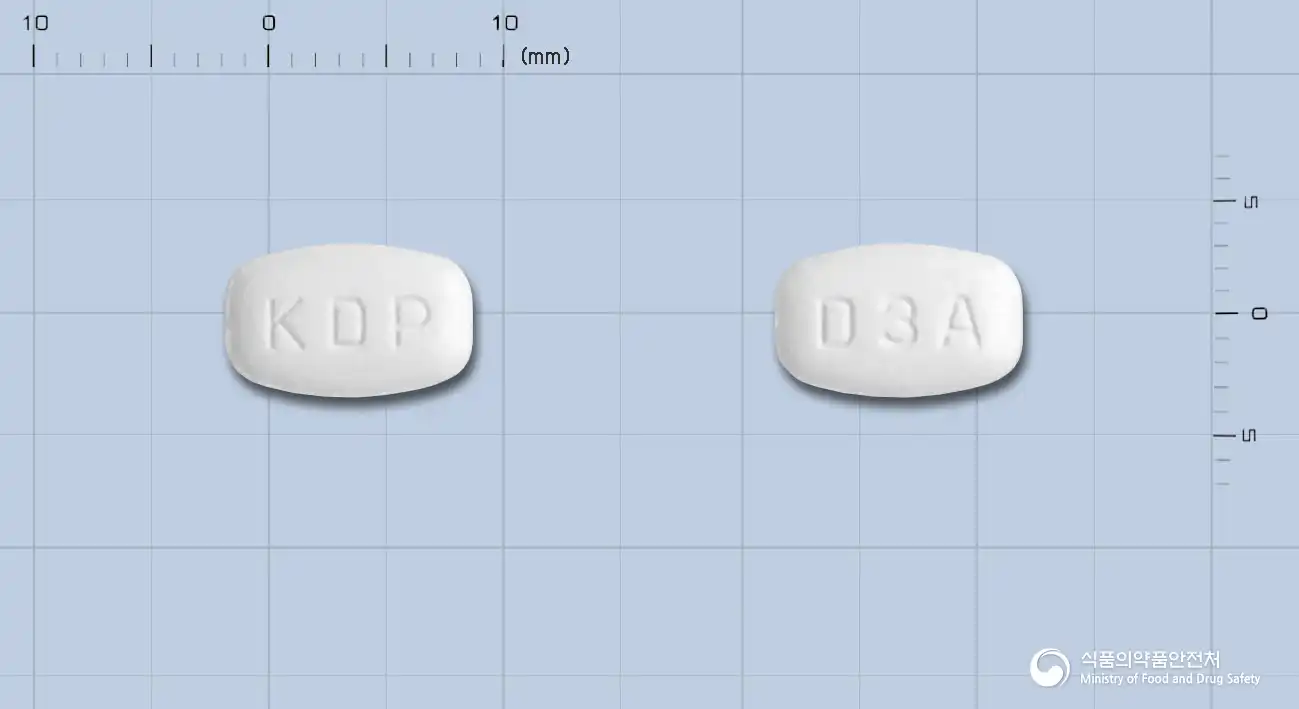
White to grayish-white rectangular tablets
4 tablets (4 tablets/PTPX1)
Even with the same ingredient, strength, dosage form and how it is taken can differ.
Viewing nowCombinationSodium Alendronate Trihydrate 91.37mg · Cholecalciferol Concentrate Granules 53.33mg
Tablet · Prescription medication · Combination
Kwangdong Pharmaceutical Co., Ltd.
 Combination
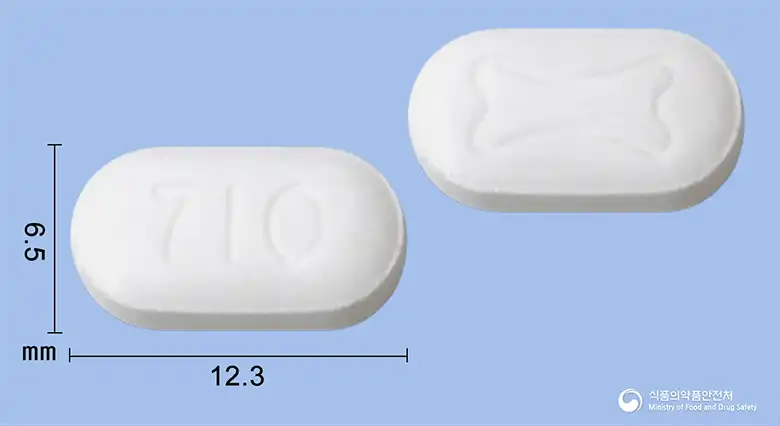
Sodium Alendronate Hydrate 91.37mg · Cholecalciferol Concentrate Granules 26.67mg
Tablet · Prescription medication · Combination
Korea Organon Co., Ltd.
 Combination
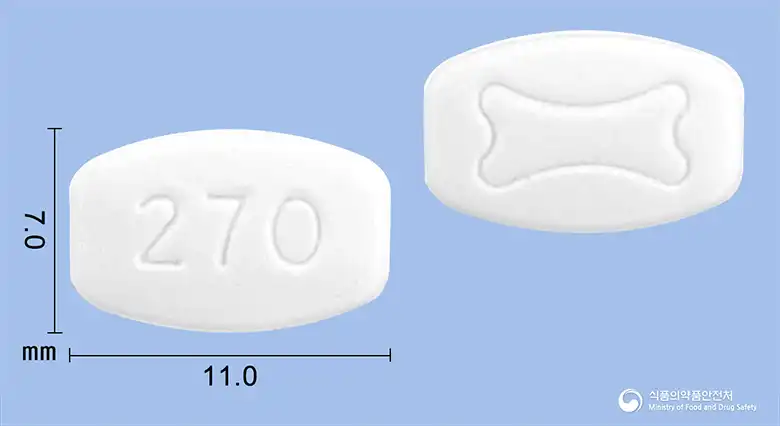
Sodium Alendronate Hydrate 91.37mg · Cholecalciferol Concentrate Granules 53.33mg
Tablet · Prescription medication · Combination
Han-guk Organon Co., Ltd.
Even with the same ingredient, the dose and directions can differ by strength and dosage form. Talk to a doctor or pharmacist before switching from a medication you are already taking.
No questions yet.
For anything that needs medical judgment, consult a doctor or pharmacist.
This drug information is based on data provided by the Korea Ministry of Food and Drug Safety.
Consult a doctor or pharmacist for accurate dosage, administration, and usage instructions.