
 한국어
 English
 日本語
 中文(简体)
 Viewing now
Quinox 400 mg (Moxifloxacin Hydrochloride)
Moxifloxacin Hydrochloride 436.8mg
Tablet · Prescription medication
BC World Pharma Co., Ltd.
MFDS item code 201201789 · Approved 2012.03.22 · Insurance code 653102630
Treatment of respiratory infections, skin and soft-tissue infections, and intra-abdominal and pelvic infections
This medication is effective against various bacteria. It is primarily used for respiratory infections, skin and soft tissue infections, intra-abdominal infections, and uncomplicated pelvic infections. However, it is recommended for use only when there is no other treatment option for acute exacerbations of acute sinusitis and chronic bronchitis. This medication is particularly active against various gram-positive bacteria, gram-negative bacteria, atypical bacteria, and anaerobes. For safe treatment, please use as directed by your physician.
○ Adults: Administer 400 mg of moxifloxacin once daily with plenty of water, with or without food, swallowing the tablet whole. ○ Patients with renal impairment: No dosage adjustment is required. ○ Duration of administration The duration of administration should be determined according to the severity of infection or clinical response. The recommended durations are as follows: - Acute sinusitis: 7 days - Acute exacerbation of chronic bronchitis: 5 days - Community-acquired pneumonia: 10 days - Uncomplicated skin and soft tissue infections: 7 days - Total duration of sequential therapy (intravenous/oral) for complicated skin and soft tissue infections: 7 ∼ 21 days - Total duration of sequential therapy (intravenous/oral) for complicated intra-abdominal infections: 5 ∼ 14 days - Uncomplicated pelvic infections: 14 days
This medication can cause serious side effects such as tendinitis or tendon rupture, peripheral neuropathy, central nervous system abnormalities, and exacerbation of myasthenia gravis. If any of these symptoms occur, discontinue use immediately and consult a healthcare professional. It is recommended that patients with myasthenia gravis do not use this medication. Additionally, precautions should be taken in elderly patients or those using corticosteroids, as well as kidney, heart, and lung transplant recipients, due to an increased risk of tendinitis or tendon rupture. If tendon pain or inflammation occurs, discontinue use and rest the affected area. This medication can prolong the QT interval, increasing the risk of cardiac arrhythmias, so caution is advised for patients with heart diseases. Pregnant or breastfeeding women, children under 18, and patients with severe liver disease should not use this medication. During the course of treatment, adverse reactions may include dyspepsia, nausea, vomiting, diarrhea, headache, dizziness, skin rash, and allergic reactions; if symptoms are severe, consult a physician. Blood sugar fluctuations may occur, so diabetic patients should monitor their blood sugar closely. This medication may interact with other drugs, so be sure to inform your healthcare provider of any medications you are currently taking. Avoid exposure to ultraviolet light while taking this medication, and be cautious while driving or operating machinery. In case of overdose, contact a healthcare professional immediately and seek appropriate treatment if necessary. Store this medication out of reach of children, and do not transfer to another container.
Tendinitis, tendon rupture, peripheral neuropathy, central nervous system effects, exacerbation of myasthenia gravis, fungal superinfection, anemia, leukopenia, neutropenia, thrombocytopenia, thrombocytosis, prolonged prothrombin time, increased INR, abnormal thromoplastin levels, increased prothrombin levels, decreased INR, abnormal prothrombin levels, pancytopenia, allergic reactions, itching, rash, urticaria, blood eosinophilia, anaphylaxis, anaphylactoid reactions, allergic edema, angioedema, shock, hyperlipidemia, hyperglycemia, hyperuricemia, hypoglycemia, anxiety reactions, psychomotor agitation, restlessness, emotional instability, depressive mood, suicidal thoughts, suicide attempts, hallucinations, depersonalization, psychotic reactions, headache, dizziness, sensory disturbances, taste disorders, confusion, disorientation, sleep disorders, tremors, drowsiness, sensory loss, olfactory disorders, abnormal dreams, gait disturbance due to dizziness, coordination disorders, seizures, decreased concentration, speech disorders, amnesia, peripheral neuropathy, polyneuropathy, hypersensitivity, vision disorders, transient vision loss, tinnitus, hearing loss, auditory disorders, QT prolongation in patients with hypokalemia, QT prolongation, palpitations, tachycardia, vasodilation, ventricular tachycardia, syncope, hypertension, hypotension, nonspecific cardiac arrhythmia, Torsades de Pointes, cardiac arrest, dyspnea, asthma symptoms, nausea, vomiting, gastrointestinal and abdominal pain, diarrhea, decreased appetite and food intake, constipation, dyspepsia, abdominal distension, gastroenteritis, increased amylase, dysphagia, stomatitis, antibiotic-associated colitis, increased aminotransferases, liver dysfunction, elevated bilirubin, increased γ-GTP, increased blood alkaline phosphatase, jaundice, hepatitis, fulminant hepatitis, Stevens-Johnson syndrome, toxic epidermal necrolysis, arthralgia, myalgia, tendinitis, increased muscle tone, muscle cramps, muscle weakness, tendon rupture, arthritis, gait disturbance, exacerbation of myasthenia gravis, dehydration, kidney dysfunction, renal failure, injection site reactions, uncomfortable feelings, unidentified pain, sweating, infusion site thrombophlebitis, edema, syndrome of inappropriate antidiuretic hormone secretion
Not everyone experiences these, and they can vary from person to person.
This medication should be stored in a sealed container to prevent exposure to air or moisture, ideally at room temperature between 1 and 30 degrees Celsius. Storing it this way helps maintain the medication's effectiveness and safety over time.
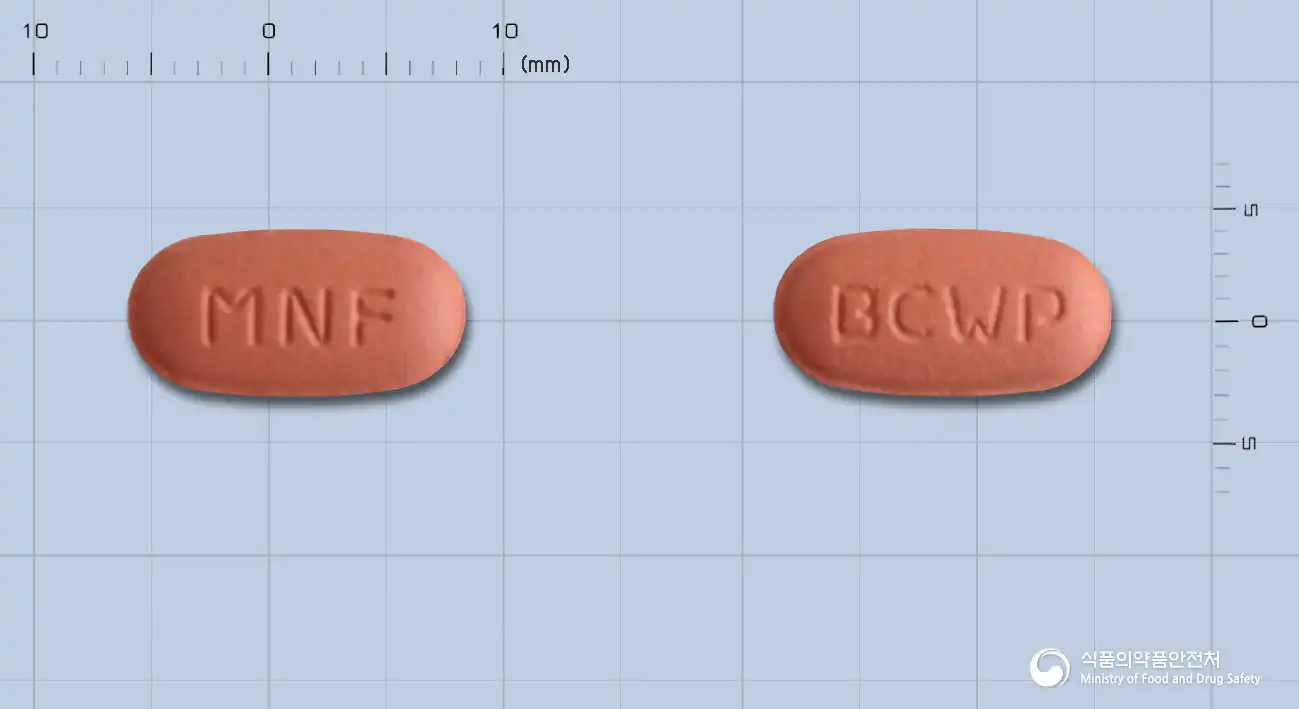
Deep pink colored diamond-shaped film-coated tablet
For domestic use - 25 tablets/box [(5 tablets/PTP×5)], for export - 10 tablets/box [(5 tablets/PTP×2)]
Even with the same ingredient, strength, dosage form and how it is taken can differ.
Viewing nowMoxifloxacin Hydrochloride 436.8mg
Tablet · Prescription medication
BC World Pharma Co., Ltd.
Moxifloxacin Hydrochloride 436.8mg
Tablet · Prescription medication
Bayer Korea Co., Ltd.
Moxifloxacin Hydrochloride 1.744mg
Injections · Prescription medication
Bayer Korea Co., Ltd.
Moxifloxacin Hydrochloride 5.45mg
Eye drops · Prescription medication
Novartis Korea Co., Ltd.
Moxifloxacin Hydrochloride 5.45mg
Eye drops · Prescription medication
Samchundang Pharmaceutical Co., Ltd.
Moxifloxacin Hydrochloride 5.45mg
Eye drops · Prescription medication
Samil Pharmaceutical Co., Ltd.
Moxifloxacin Hydrochloride 5.45mg
Eye drops · Prescription medication
Optus Pharmaceutical Co., Ltd.
Moxifloxacin Hydrochloride 5.45mg
Eye drops · Prescription medication
Hankook Hyutecs Pharmaceutical Co., Ltd.
Even with the same ingredient, the dose and directions can differ by strength and dosage form. Talk to a doctor or pharmacist before switching from a medication you are already taking.
No questions yet.
For anything that needs medical judgment, consult a doctor or pharmacist.
This drug information is based on data provided by the Korea Ministry of Food and Drug Safety.
Consult a doctor or pharmacist for accurate dosage, administration, and usage instructions.