
 한국어
한국어 English
 日本語
日本語 中文(简体)
 Viewing now
Abilify Tablet 15 mg (Aripiprazole (Micronized))
Aripiprazole 15mg
Tablet · Prescription medication
Hyundai Pharmaceutical Co., Ltd.
MFDS item code 201005134 · Approved 2010.08.24 · Insurance code 642002730
Treatment of schizophrenia and bipolar disorder (acute mania and mixed episodes)
This medication is used to treat schizophrenia and is also effective for acute mania and mixed episodes associated with bipolar disorder. It is additionally utilized as an adjunctive treatment for major depressive disorder and to help alleviate irritability associated with autism spectrum disorder. It is also used to improve symptoms of Tourette's disorder.
For adults with schizophrenia, the recommended initial dose is 10 mg or 15 mg once daily, regardless of meals. The dose can be adjusted within a range of 10-30 mg per day, and should not be increased before 2 weeks. Maintenance therapy should be continued at a dosage of 15 mg once daily for more than 3 months. For adults with bipolar disorder, the recommended initial dose is 15 mg once daily, with the possibility to increase to 30 mg.
For adolescents with schizophrenia (aged 13-17), the recommended dose is 10 mg once daily, starting from an initial dose of 2 mg, increasing to 5 mg, and subsequently to 10 mg every 2 days. For children with bipolar disorder (aged 1
This medication may increase the risk of suicidal thoughts or behaviors in children, adolescents, and young adults with major depressive disorder or other psychiatric disorders. Therefore, careful monitoring of the patient's condition is necessary during treatment, and families or guardians should also closely observe any changes in the patient's behavior. This medication is not approved for the treatment of pediatric depression, so caution is needed in its use. It may cause a rare but life-threatening side effect known as Neuroleptic Malignant Syndrome, characterized by symptoms such as high fever, muscle rigidity, altered mental status, and irregular pulse and blood pressure; if any abnormal symptoms occur, medical attention should be sought immediately. Additionally, prolonged use can lead to tardive dyskinesia, a form of irreversible movement disorder, thus regular assessments are necessary during long-term treatment. In elderly patients with dementia, there is an increased risk of stroke or other cerebrovascular accidents, necessitating special caution. It may affect blood sugar control; therefore, patients with diabetes or those at risk of diabetes should regularly monitor their blood sugar levels. Moreover, it may increase the risk of thromboembolism, requiring careful management in patients with thromboembolic risk factors both before and during treatment. This medication should not be administered to patients with hypersensitivity or lactose intolerance. It should be used with caution in patients with orthostatic hypotension, history of seizures, or concerns about cognitive or motor impairments, and caution is advised regarding the operation of machinery or driving due to potential drowsiness or dizziness. Also, there may be a decreased ability to regulate body temperature, so exposure to excessive exercise or hot environments should be approached with caution. There is a risk of dysphagia and aspiration pneumonia when taking this medication, so special attention is required for the elderly or patients with swallowing difficulties. Patients posing a risk of suicide should be closely monitored, especially at the start of treatment and during dosage adjustments, and this medication should not be used for the treatment of ADHD. During the course of taking this medication, side effects such as nausea, vomiting, constipation, headache, dizziness, insomnia, anxiety, drowsiness, fatigue, and changes in appetite may occur; if symptoms are severe or persistent, consulting a physician is advised.
Hives, severe swelling (edema), tightness in the chest, difficulty breathing, cold sweat, pallor, severe rash with high fever, blisters, skin peeling, pain in oral/eye mucosa, difficulty breathing, asthma attacks, respiratory distress accompanied by cough and fever, jaundice (yellowing of skin or eyes), profound lethargy, sudden and severe headache, thunderclap headache, seizures, altered consciousness, vision abnormalities, paralysis, urine retention
Not everyone experiences these, and they can vary from person to person.
This medication should be stored in a tightly closed container to protect it from air and moisture. The appropriate storage temperature is a cool place between 1 and 30 degrees Celsius. It is advisable to avoid extremely hot or cold places.
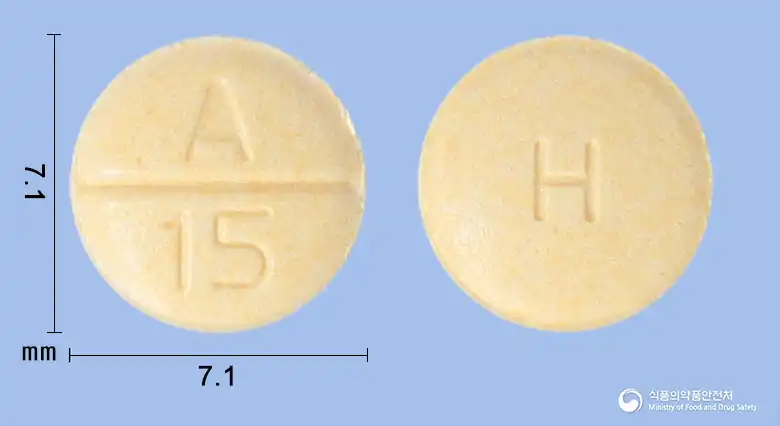
Yellow round tablet
30 tablets/bottle, 100 tablets/bottle
Even with the same ingredient, strength, dosage form and how it is taken can differ.
Viewing nowAripiprazole 15mg
Tablet · Prescription medication
Hyundai Pharmaceutical Co., Ltd.
Aripiprazole 5mg
Tablet · Prescription medication
Otsuka Pharmaceutical Co., Ltd.

Aripiprazole 10mg
Tablet · Prescription medication
Otsuka Pharmaceutical Co., Ltd.

Aripiprazole 15mg
Tablet · Prescription medication
Otsuka Pharmaceutical Co., Ltd.

Aripiprazole 2mg
Tablet · Prescription medication
Korea Otsuka Pharmaceutical Co., Ltd.
Aripiprazole 10mg
Tablet · Prescription medication
Hyundai Pharmaceutical Co., Ltd.

Aripiprazole 5mg
Tablet · Prescription medication
Hyundai Pharmaceutical Co., Ltd.

Aripiprazole 15mg
Tablet · Prescription medication
Hanin Pharmaceutical Co., Ltd.
Even with the same ingredient, the dose and directions can differ by strength and dosage form. Talk to a doctor or pharmacist before switching from a medication you are already taking.
No questions yet.
For anything that needs medical judgment, consult a doctor or pharmacist.
This drug information is based on data provided by the Korea Ministry of Food and Drug Safety.
Consult a doctor or pharmacist for accurate dosage, administration, and usage instructions.