
 한국어
 English
 日本語
 中文(简体)
 Viewing now
Paxerotine Extended-Release Tablets 12.5 mg (Paroxetine Hydrochloride Hemihydrate)
Paroxetine Hydrochloride Hydrate 14.25mg
Tablet · Prescription medication
Hanmi Pharmaceutical Co., Ltd.
MFDS item code 200808754 · Approved 2008.08.18 · Insurance code 652104360
Treatment of major depressive disorder, panic disorder, social anxiety disorder, and premenstrual dysphoric disorder
This medication is used to treat major depressive disorder, panic disorder (regardless of agoraphobia), social anxiety disorder (social phobia), and premenstrual dysphoric disorder.
This medicine should be taken once daily, usually in the morning, regardless of meals. Swallow this medicine whole; do not chew or crush it. 1. Major depressive disorder 1) Starting dose: The recommended initial dose is 25 mg of paroxetine once daily. In clinical trials conducted to demonstrate the efficacy of this medicine for the treatment of major depressive disorder, subjects received 25~62.5 mg. As with other treatments for major depressive disorder, an adequate response may be delayed. For some patients who do not respond to 25 mg, the dose may be increased in 12.5 mg increments up to a maximum of 62.5 mg once daily. Dose changes should be made at intervals of at least 1 week. 2) Maintenance therapy: Acute episodes of major depressive disorder require continuous pharmacological treatment for several months or longer. It is not known whether the dose of an antidepressant needed to relieve symptoms is the same as the dose needed to maintain a stable condition. Systematic evaluation of the efficacy of paroxetine immediate-release tablets showed that efficacy was maintained when an average dose of 30 mg (equivalent to 37.5 mg of this medicine based on relative bioavailability) was administered for 1 year. 2. Panic disorder 1) Starting dose: The starting dose is 12.5 mg of paroxetine once daily, increased by 12.5 mg each week. In clinical trials conducted to demonstrate the efficacy of this medicine, patients received 12.5~75 mg once daily. The daily dose should not exceed 75 mg. 2) Maintenance therapy: Long-term maintenance of the efficacy of paroxetine immediate-release tablets was demonstrated in a 3-month relapse-prevention trial. In this trial, the relapse rate among patients with panic disorder who took paroxetine immediate-release tablets was lower than that among patients who took placebo. Panic disorder is a chronic condition, and it is advisable to continue treatment in patients who respond. The dose of this medicine should be adjusted to the lowest effective dose for the patient, and patients should be periodically reassessed to determine whether continued treatment is needed. 3. Social anxiety disorder/social phobia 1) Starting dose: The recommended starting dose is 12.5 mg of paroxetine once daily. In clinical trials conducted to demonstrate the efficacy of this medicine for the treatment of social anxiety disorder, patients received 12.5~37.5 mg once daily. If the dose is increased, increase it by 12.5 mg at intervals of at least 7 days; the maximum dose is 37.5 mg once daily. 2) Maintenance therapy: There is no available evidence regarding how long this medicine should be taken. In placebo-controlled clinical trials for social anxiety disorder, the efficacy of this medicine was not evaluated beyond 12 weeks. However, social anxiety disorder is recognized as a chronic condition, and it is advisable to continue treatment in patients who respond. The dose should be adjusted to the lowest effective dose for the patient, and patients should be periodically reassessed to determine whether continued treatment is needed. 4. Premenstrual dysphoric disorder 1) Starting dose: Based on the physician's assessment, this medicine may be administered throughout the entire menstrual cycle or limited to the luteal phase of the menstrual cycle. The recommended starting dose is 12.5 mg of paroxetine once daily. In clinical trials, both 12.5 mg and 25 mg once daily were effective. Dose changes should be made at intervals of at least 1 week. 2) Maintenance therapy: In placebo-controlled trials, the efficacy of this medicine was not systematically evaluated for periods exceeding 3 menstrual cycles. However, it is generally reported that symptoms worsen with age until menopause begins and symptoms resolve. Therefore, it is advisable to continue treatment in patients who respond. Patients should be periodically reassessed to determine whether continued treatment is needed. ○ Elderly patients and patients with severe renal/hepatic impairment: The recommended starting dose of this medicine for elderly patients and patients with severe renal/hepatic impairment is 12.5 mg of paroxetine once daily. The dose may be increased if needed, but should not exceed 50 mg once daily. ○ Switching from MAO inhibitors used to treat psychiatric disorders When discontinuing an MAO inhibitor used to treat psychiatric disorders and starting treatment with this medicine, an interval of at least 14 days must be allowed. Conversely, when starting an MAO inhibitor to treat psychiatric disorders, at least 14 days must elapse after discontinuing this medicine. ○ Other MAO inhibitors, such as linezolid or methylene blue Patients receiving linezolid or intravenous methylene blue should not start treatment with this medicine because of the increased risk of serotonin syndrome. For patients who require treatment for a more urgent psychiatric condition, including hospitalization, other interventions should be considered. It may be necessary to urgently administer linezolid or intravenous methylene blue to a patient already receiving this medicine. If no alternative to linezolid or intravenous methylene blue is available and, for a particular patient, the benefits of treatment with linezolid or intravenous methylene blue are judged to outweigh the risk of serotonin syndrome, this medicine may be stopped immediately and linezolid or intravenous methylene blue administered. The patient should be monitored for symptoms of serotonin syndrome for 2 weeks after starting linezolid or intravenous methylene blue, or until 24 hours after the last dose, whichever comes first. Treatment with this medicine may be restarted 24 hours after the last dose of linezolid or intravenous methylene blue. The risk associated with administration of methylene blue by non-intravenous routes (oral tablets or local injection) or intravenous administration of this medicine at a dose of 1mg/kg or less is unclear. Nevertheless, clinicians should be aware of the possibility of emergency symptoms of serotonin syndrome with these uses. ○ Discontinuation of this medicine Symptoms associated with discontinuation of paroxetine immediate-release tablets have been reported. These symptoms should be monitored when discontinuing treatment, regardless of the indication for which it was prescribed. Gradual dose reduction is recommended rather than abrupt discontinuation. If symptoms that cannot be controlled occur after reducing the dose of this medicine or discontinuing treatment, consider resuming the previously prescribed dose. The physician may then continue reducing the dose at a more gradual rate.
This medication is primarily used for the treatment of depression and psychiatric disorders, and care should be taken when administering it to children, adolescents, and young adults due to an increased risk of suicidal thoughts and behaviors. This medication may be dangerous when taken with certain other drugs, for example, MAO inhibitors, medications that prolong the QT interval, and patients currently taking serotonin precursors should not be treated with this medication. Patients with specific health conditions, such as epilepsy, heart disease, diabetes, or bleeding tendencies, should be particularly cautious when using this medication. Various side effects such as dizziness, drowsiness, nausea, weight change, and sexual dysfunction may occur during treatment with this medication, and if treatment is stopped suddenly, withdrawal symptoms such as dizziness or anxiety may appear. Pregnant women should consult a doctor as taking this medication during pregnancy may increase the risk of cardiovascular defects or neonatal pulmonary hypertension for the fetus. During breastfeeding, this medication is secreted in small amounts in breast milk; therefore, the effects on newborns should be considered before making a decision to use it. This medication may interact with other drugs; thus, it is essential to inform healthcare providers of any other medications being taken, particularly those affecting blood clotting which may increase bleeding risks. If there are changes in mental state or abnormal behaviors such as suicidal thoughts or aggression while taking this medication, immediate medical attention should be sought. Additionally, this medication may influence driving or operating machinery, so caution is advised. In case of overdose, symptoms such as nausea, tremors, and changes in blood pressure may manifest and immediate medical attention is required. Lastly, this medication should be stored out of reach of children and should not be transferred to another container.
Tachycardia, transient increase or decrease in blood pressure, orthostatic hypotension, bradycardia, increased cholesterol levels, decreased appetite, hyponatremia, blurred vision, pupil dilation, acute glaucoma, nausea, constipation, diarrhea, vomiting, dry mouth, gastrointestinal bleeding, weight gain, asthenia, peripheral edema, increased liver enzymes, liver disease, dizziness, tremor, headache, extrapyramidal disorder, inability to sit still, seizures, restless legs syndrome, serotonin syndrome, drowsiness, insomnia, anxiety, abnormal dreams, confusion, hallucinations, mania, agitation, depersonalization, panic attacks, suicidal ideation and suicidal behavior, urinary retention, incontinence, sexual dysfunction, hyperprolactinemia, excessive milk secretion, menstrual disorders, priapism, postpartum hemorrhage, sweating, skin rash, itching, severe skin adverse reactions, urticaria, photosensitivity reactions, abnormal bleeding from skin and mucous membranes, thrombocytopenia, pancytopenia, agranulocytosis, leukopenia, severe allergic reactions, syndrome of inappropriate antidiuretic hormone secretion, yawning, tinnitus, arthralgia, myalgia, dizziness, sensory disturbances, sleep disorders, agitation, anxiety, confusion, sweating, headache, diarrhea, palpitations, emotional instability, irritability, visual disturbances, emotional instability, nervousness, abdominal pain, hyperactivity, hostility, rigidity, dysuria, urinary disorders, edema, decreased libido, dyspepsia, tinnitus, facial edema, neurosis, gastrointestinal disturbances, flushing, weight loss, weight gain, fatigue, chest pain, dry mouth, hypersensitivity, fever, blood pressure changes, involuntary muscle contractions, tachycardia, coma, electrocardiogram changes
Not everyone experiences these, and they can vary from person to person.
This medication is sensitive to light and should be stored in a container that blocks light. Additionally, it is important to store it in a cool place below 25 degrees Celsius to maintain its efficacy.
Yellow round film-coated tablets
30 tablets/bottle
Even with the same ingredient, strength, dosage form and how it is taken can differ.
Viewing nowParoxetine Hydrochloride Hydrate 14.25mg
Tablet · Prescription medication
Hanmi Pharmaceutical Co., Ltd.
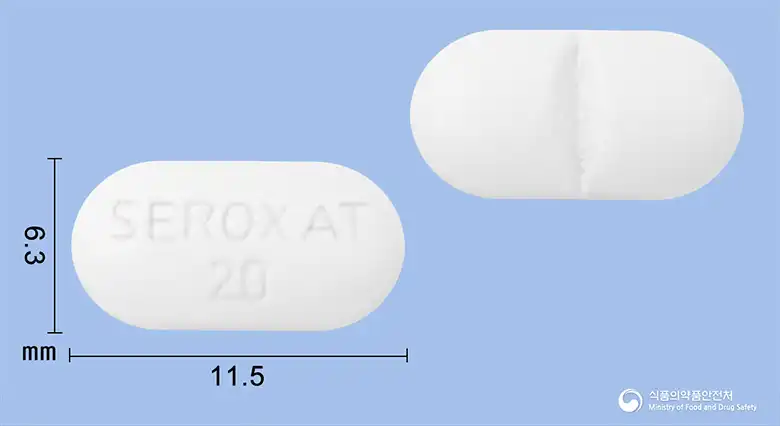
Paroxetine Hydrochloride Hydrate 22.88mg
Tablet · Prescription medication
Handok Co., Ltd.

Paroxetine Hydrochloride Hydrate 11.4mg
Tablet · Prescription medication
Handok Co., Ltd.
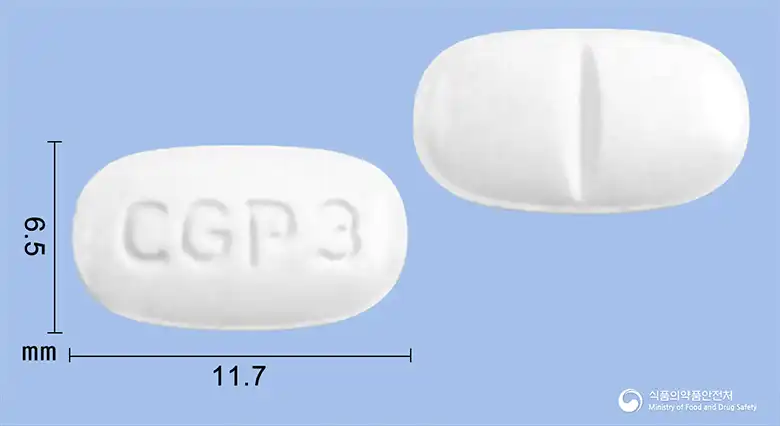
Paroxetine Hydrochloride Hemihydrate 22.88mg
Tablet · Prescription medication
Aprogen Biosciences Co., Ltd.
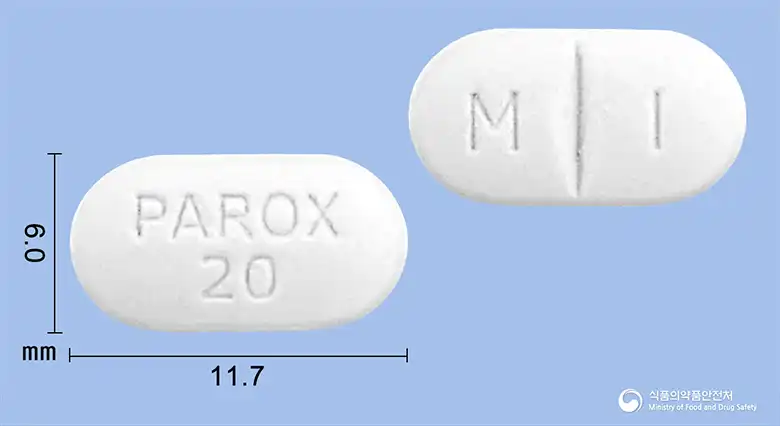
Paroxetine Hydrochloride Hydrate 22.88mg
Tablet · Prescription medication
Myeongin Pharmaceutical Co., Ltd.
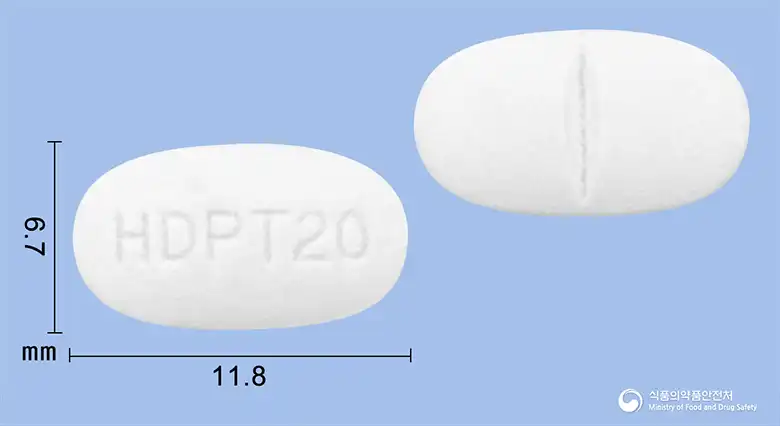
Paroxetine Hydrochloride Hemihydrate 22.88mg
Tablet · Prescription medication
Hyundai Pharmaceutical Co., Ltd.
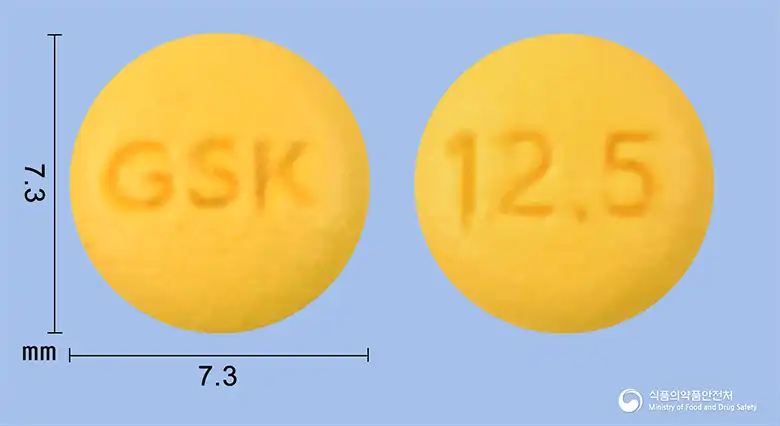
Paroxetine Hydrochloride Hydrate 14.25mg
Tablet · Prescription medication
GlaxoSmithKline Co., Ltd.
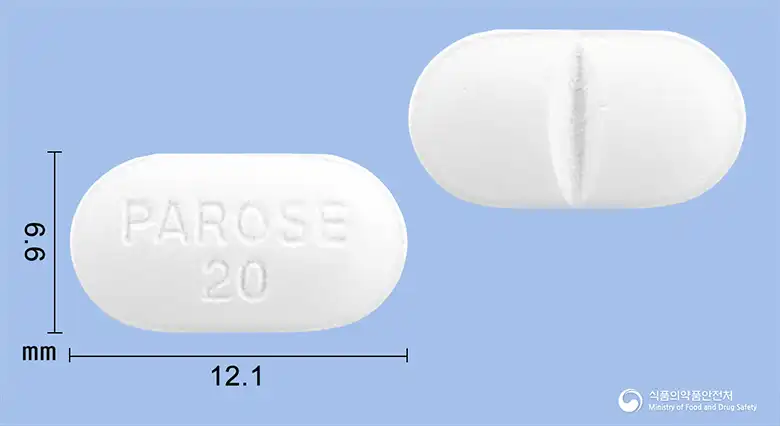
Paroxetine Hydrochloride Hydrate 22.88mg
Tablet · Prescription medication
Jongkundang Co., Ltd.
Even with the same ingredient, the dose and directions can differ by strength and dosage form. Talk to a doctor or pharmacist before switching from a medication you are already taking.
No questions yet.
For anything that needs medical judgment, consult a doctor or pharmacist.
This drug information is based on data provided by the Korea Ministry of Food and Drug Safety.
Consult a doctor or pharmacist for accurate dosage, administration, and usage instructions.