
 한국어
 English
 日本語
 中文(简体)
Summary
- Main use
- Treatment of severe keratinization disorders unresponsive to other treatments (e.g., pustular psoriasis)
- Who takes it
- Adults · Children
- Adult dose
- Because the absorption and metabolic rate of acitretin vary among individuals, the dosage and administration should be adjusted individually. If possible, administer orally once daily with a meal or milk. The following dosage regimen may also be used as a guideline. Initial dose: Satisfactory therapeutic results may be obtained by administering 25 ~ 30 mg of acitretin orally once daily for approximately 2 ~ 4 weeks. Maintenance dose: This should be based on the clinical effect and tolerability of the initial treatment. In general, optimal therapeutic results are obtained by administering 25 ~ 50 mg of this drug once daily for an additional 6 ~ 8 weeks. In some cases, the dose may be increased to a maximum of 75 mg of this drug once daily. In patients with psoriasis, treatment should be discontinued once the lesions have healed sufficiently. If the disease recurs, treatment should be given according to the dosage and administration described above. For keratotic disorders, maintenance therapy is usually required, and the lowest possible dose should be administered. The daily dose may be 20 mg or less of acitretin and must not exceed a maximum of 50 mg of acitretin. When used in combination with other treatments, the dose of this drug may be reduced according to the individual patient's response. In general, standard topical treatment may be continued and does not interfere with the action of this drug.
- Child dose
- Approximately 0.5 mg per kg of body weight, daily dose Up to 1 mg per kg of body weight; the daily dose must not exceed 35 mg of this drug. Maintenance dose: Considering the possibility of long-term adverse reactions, the lowest possible dose should be administered.
Ingredients
- Importer
- Chong Kun Dang Pharm.
Efficacy & effects
Treatment of severe keratinization disorders unresponsive to other treatments (e.g., pustular psoriasis)
- Severe keratinization disorders
- localized or generalized pustular psoriasis
- vulgaris psoriasis
View approved original textHide original text
This drug is used when existing treatments are ineffective for severe keratinization disorders such as localized or generalized pustular psoriasis and vulgaris psoriasis. It helps improve the symptoms of these skin disorders and contributes to the improvement of the patient's skin condition.
How to take
Adult dose
Because the absorption and metabolic rate of acitretin vary among individuals, the dosage and administration should be adjusted individually. If possible, administer orally once daily with a meal or milk. The following dosage regimen may also be used as a guideline. Initial dose: Satisfactory therapeutic results may be obtained by administering 25 ~ 30 mg of acitretin orally once daily for approximately 2 ~ 4 weeks. Maintenance dose: This should be based on the clinical effect and tolerability of the initial treatment. In general, optimal therapeutic results are obtained by administering 25 ~ 50 mg of this drug once daily for an additional 6 ~ 8 weeks. In some cases, the dose may be increased to a maximum of 75 mg of this drug once daily. In patients with psoriasis, treatment should be discontinued once the lesions have healed sufficiently. If the disease recurs, treatment should be given according to the dosage and administration described above. For keratotic disorders, maintenance therapy is usually required, and the lowest possible dose should be administered. The daily dose may be 20 mg or less of acitretin and must not exceed a maximum of 50 mg of acitretin. When used in combination with other treatments, the dose of this drug may be reduced according to the individual patient's response. In general, standard topical treatment may be continued and does not interfere with the action of this drug.
Child dose
Approximately 0.5 mg per kg of body weight, daily dose Up to 1 mg per kg of body weight; the daily dose must not exceed 35 mg of this drug. Maintenance dose: Considering the possibility of long-term adverse reactions, the lowest possible dose should be administered.
Precautions
This drug should absolutely not be used by women who are pregnant or may become pregnant. Women of childbearing potential must use effective contraceptive methods at least 4 weeks before taking this drug, during treatment, and for at least 3 years after treatment. If pregnancy is confirmed during treatment, the drug should be discontinued immediately and a doctor should be consulted. Additionally, blood donation is not allowed during treatment and for 3 years afterward. This drug may produce a substance in the body that is toxic when taken with alcohol, so alcohol consumption should be avoided during the treatment period and for 2 months after treatment. This drug should be used under the supervision of a qualified dermatologist due to serious side effects and the risk of teratogenicity. Patients with impaired liver function or kidney function, hypervitaminosis A, and very high blood lipid levels should not take this drug. Patients at risk for diabetes, obesity, alcohol addiction, and cardiovascular diseases should have their blood lipid and blood sugar levels monitored regularly while taking this drug, and dosage adjustment or discontinuation should be considered if their condition worsens. This drug can cause various side effects, including dry lips, dry skin, hair loss, dry mouth, eye dryness and conjunctivitis, muscle aches, headaches, etc., so patients should consult a doctor if any abnormal symptoms occur. Liver function tests should be performed regularly before and during treatment, and if liver dysfunction occurs, the drug should be discontinued. This drug may impact mental health, so any signs of depression or mood changes should be reported to a doctor immediately for treatment adjustment. Caution is needed when driving or operating machinery at night as night vision may be impaired. It may be dangerous to take this drug with other vitamin A preparations or certain antibiotics, so consultation with a doctor or pharmacist is essential. Special caution is needed for children and the elderly, as it may affect skeletal development in children, and it should be used with care. In case of overdose, discontinuation of the drug is sufficient and no special emergency treatment is needed. This drug should be kept out of the reach of children and should not be transferred to other containers.
Side effects
Dry lips, polymorphic erythema, toxic epidermal necrolysis (Lyell's syndrome), skin erosion, scaling, thinning hair, alopecia, paronychia, nail growth disorders, granuloma formation, cheilitis, angular cheilitis, dry mouth, polydipsia, mucosal dryness, conjunctivitis, dry eye syndrome, myalgia, bone pain, hyperostosis, calcification of bone cortex, osteoporosis, precocious epiphyseal fusion, headache, visual disturbances, elevated aminotransferases and ALP levels, hepatitis, abnormal skin odor, abnormal hair tissue, vesicular rash, cold skin, dermatitis, increased sweating, psoriatic rash, purpura, suppurative granuloma, rash, seborrhea, skin heat, skin ulcer, sunburn, acne, chest pain, cyst, eczema, fungal infection, furunculosis, hair discoloration, herpes simplex, keratosis, hirsutism, decreased sensation, delayed healing, otitis media, external otitis, phototoxic reactions, psoriasis exacerbation, scleroderma, skin nodules, skin hypertrophy, dermatological conditions, skin irritation, apocrine gland dysfunction, urticaria, warts, gum bleeding, gingivitis, increased saliva, stomatitis, thirst, ulcerative stomatitis, salivary changes, anal diseases, gingival hyperplasia, bleeding, pharyngitis, abdominal pain, diarrhea, nausea, tongue disorders, constipation, dyspepsia, esophagitis, gastritis, gastroenteritis, glossitis, gastrointestinal bleeding, hemorrhage, back sensation, glossal ulcer, blurred vision, blepharitis, corneal epithelialization, night blindness, eye diseases, eye pain, glare, abnormal lacrimation, chalazion, conjunctival hemorrhage, corneal ulcer, diplopia, ectropion, itching of the eyes and eyelids, papilledema, recurrent chalazion, subepithelial corneal trauma, arthritis, arthrosis, back pain, hypertonia, peripheral joint hyperostosis, bone/bone disorders, bursitis, spinal hyperostosis, tendinitis, headache, pain, abnormal gait, migraine, neuritis, gastric tumor in the brain, ear pain, taste disorders, tinnitus, depression, insomnia, drowsiness, somnolence, anxiety, restlessness, voice disorders, decreased libido, nervous irritability, dysarthria, hearing impairment, loss of taste, abnormal urine, urination disorders, penile disorders, itching, dyshidrotic eczema, erythematous follicular rash, hand/foot vesicles, facial pigmentation, eyebrow hair loss, facial edema, discomfort in the chest, fatigue
Not everyone experiences these, and they can vary from person to person.
Storage
This drug is sensitive to air and moisture, so it should be stored in a sealed container. Additionally, it is important to store it at a cool temperature of below 25 degrees to maintain the drug's effectiveness.
Appearance and packaging
Appearance
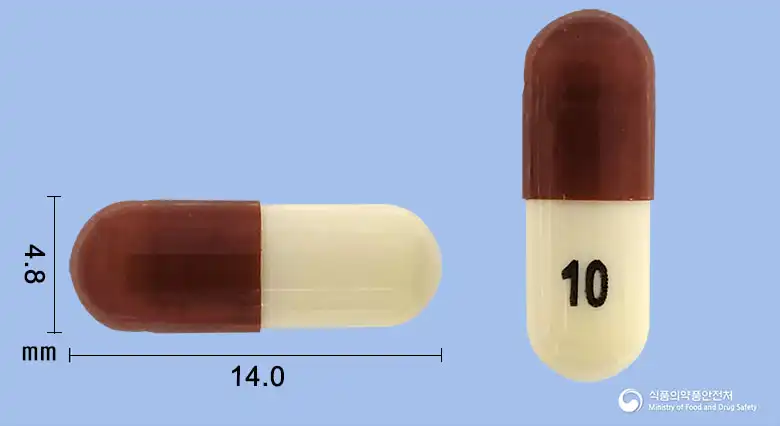
Hard capsules with a brown upper part and a white lower part filled with a pale yellow or yellow powder.
Package unit
100 capsules (10 capsules/PTP X 10)
Questions about this medicine
No questions yet.
For anything that needs medical judgment, consult a doctor or pharmacist.