
 한국어
 English
 日本語
 中文(简体)
Dosage form image
Viewing nowHydinole Capsule 100 mg (Cefdinir Hydrate)
Cefdinir Monohydrate 100mg
Prescription medication
Aju Pharmaceutical Co., Ltd.
MFDS item code 200803972 · Notified 2008.04.11 · Insurance code 654002280
This product's status changed to Approval withdrawn on 2025.10.16. It may no longer be sold, so consult a doctor or pharmacist before taking it.
Treatment of respiratory and head and neck infections, skin and soft tissue infections, and genitourinary infections
This medication is effective against various bacteria such as Staphylococcus, Streptococcus, and Pneumococcus. Major indications include lymphangitis, chronic furunculosis, mastitis, perianal abscess, and various skin and soft tissue infections. It is also effective for respiratory infections such as pharyngitis, acute bronchitis, tonsillitis, and pneumonia, and is used to treat genitourinary infections including pyelonephritis, cystitis, and gonococcal urethritis. It is employed for gynecological infections such as adnexitis, intrauterine infections, and Bartholin's gland inflammation, as well as ocular and oral infections such as chalazion and glossitis. This medication is also effective for ENT infections like otitis externa, otitis media, and sinusitis, and is applicable for dental infections like periodontitis, pericoronitis, and osteomyelitis. It is used to effectively treat various bacterial infections.
Adults: Administer 100 mg (potency) of cefdinir orally per dose, 3 times daily. For patients on hemodialysis, administration of 100 mg (potency) once daily is recommended. Increase or decrease the dose as appropriate according to symptoms.
This medication should not be used in certain patients. For example, it should not be given to those who have a history of shock due to this medication or who are allergic to this medication, its components, or cephalosporin antibiotics. Additionally, it should be used cautiously in those with a history of allergy to penicillin, those with a family history of such allergies, patients with allergic constitution, severe renal dysfunction, patients who cannot take oral medications, those with poor general condition, elderly patients, and those with a history of colitis. This medication can rarely cause serious side effects; if symptoms of shock, dyspnea, skin rashes, blood disorders, colitis, interstitial pneumonia, renal dysfunction, or liver dysfunction occur, administration should be stopped immediately and appropriate treatment should be provided. To prevent the emergence of resistant organisms, susceptibility testing should be performed, and it should only be used for the minimum necessary duration. Additionally, it is advisable to examine the patient's history and conduct skin reaction tests prior to prevent hypersensitivity reactions. There may be interactions when taken with iron supplements, warfarin, antacids, probenecid, and adequate time intervals should be maintained between doses. The safety of using this medication during pregnancy has not been established; it should only be used under a physician’s judgment when the benefits outweigh the risks. The safety in children and premature infants has also not been adequately confirmed, so caution is necessary. In elderly patients, side effects may occur more easily due to a decline in physical function, so dosages and intervals should be adjusted while monitoring their condition. In cases of overdose, symptoms such as nausea, vomiting, diarrhea, and seizures may occur, and in severe cases, blood dialysis may be necessary. This medication can affect certain clinical test results, so this should be communicated to the healthcare professionals during testing. Finally, this medication should be kept out of the reach of children and stored away from direct sunlight and moisture.
Not everyone experiences these, and they can vary from person to person.
This medication should be stored in a tightly sealed container to protect it from air and moisture. It is best to maintain room temperature between 1 and 30 degrees Celsius.
This medication is a light red hard capsule with contents that are a light yellowish-white powder or granules.
For domestic use - 30 capsules/bottle, For domestic use - 100 capsules/bottle, For export - 100 capsules/box [10 capsules/PTP*10]
Even with the same ingredient, strength, dosage form and how it is taken can differ.
Cefdinir Monohydrate 100mg
Prescription medication
Aju Pharmaceutical Co., Ltd.
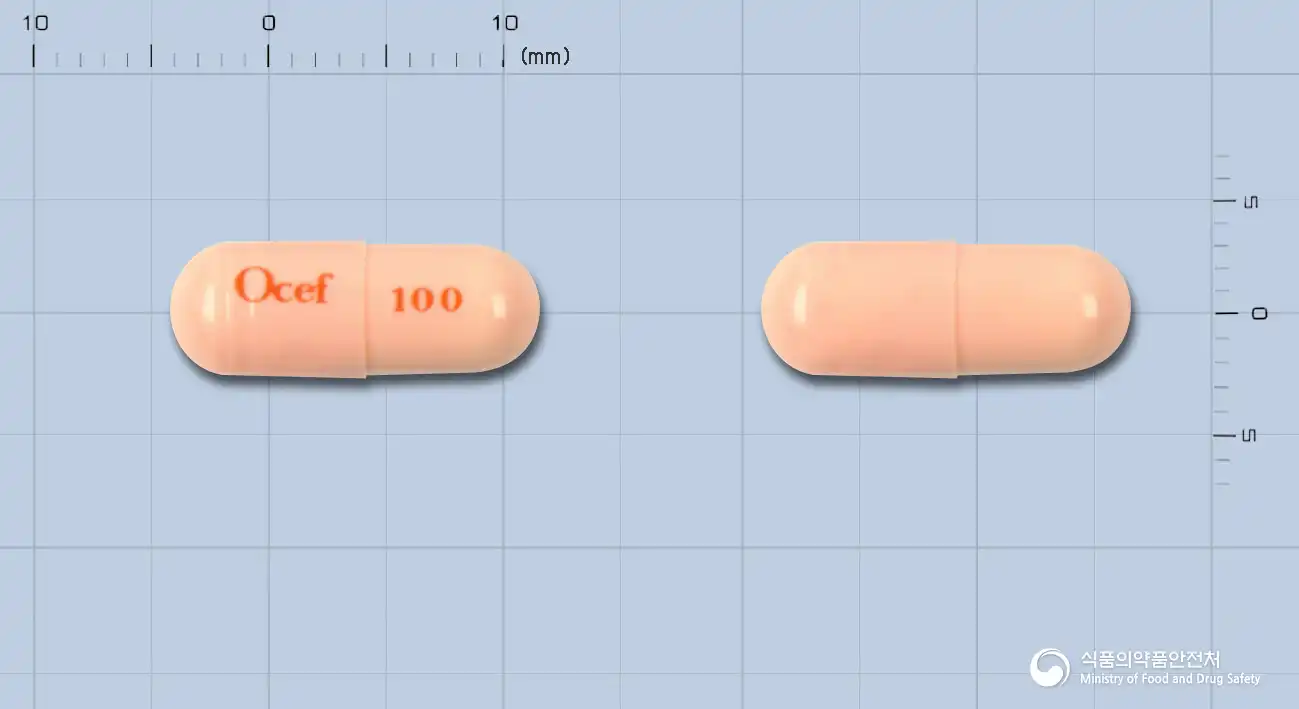
Cefdinir 100mg
Hard capsule · Prescription medication
Jeil Pharmaceutical Co., Ltd.
Cefdinir 100mg
Prescription medication
Jeil Pharmaceutical Co., Ltd.
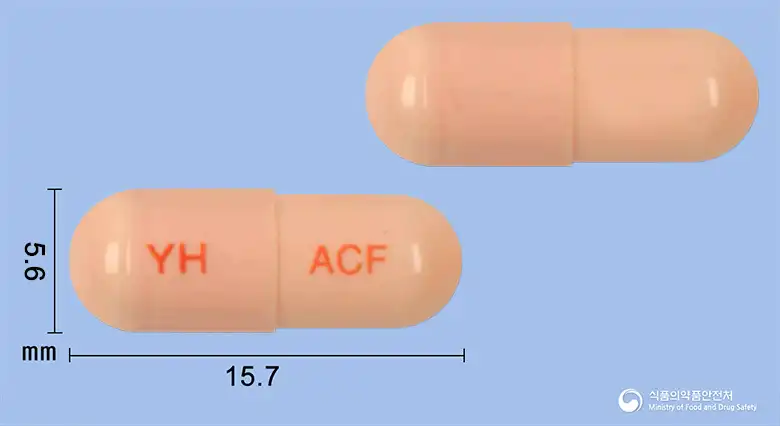
Cefdinir 100mg
Hard capsule · Prescription medication
Yuhan Corporation
Cefdinir 100mg
Prescription medication
Yuhan Corporation
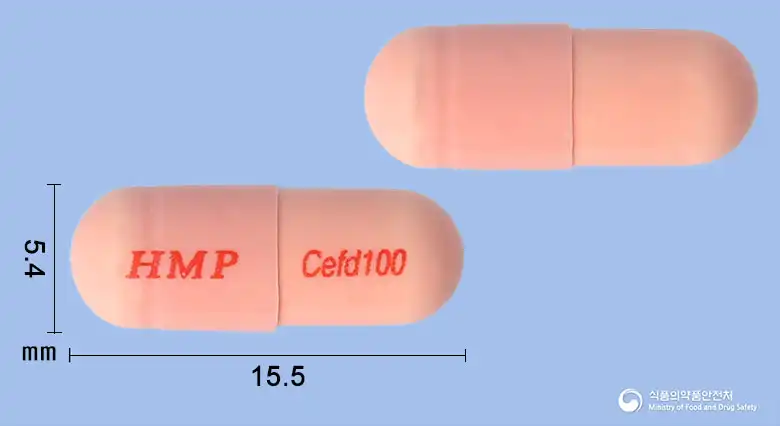
Cefdinir Monohydrate 100mg
Hard capsule · Prescription medication
Hanmi Pharmaceutical Co., Ltd.
Cefdinir 100mg
Prescription medication
Hanmi Pharmaceutical Co., Ltd.
Cefdinir Monohydrate 100mg
Hard capsule · Prescription medication
JW Pharmaceutical Co., Ltd.
Even with the same ingredient, the dose and directions can differ by strength and dosage form. Talk to a doctor or pharmacist before switching from a medication you are already taking.
No questions yet.
For anything that needs medical judgment, consult a doctor or pharmacist.
This drug information is based on data provided by the Korea Ministry of Food and Drug Safety.
Consult a doctor or pharmacist for accurate dosage, administration, and usage instructions.