한국어
 English
 日本語
 中文(简体)
 Viewing now
Arthitil Arginine Tablet 5 mg (Perindopril Arginine)
Perindopril Arginine 5mg
Tablet · Prescription medication
Korea Servier Co., Ltd.
MFDS item code 200710635 · Approved 2007.09.19 · Insurance code 676300030
Treatment of hypertension; adjunctive treatment of congestive heart failure; reduction of cardiovascular risk in stable coronary artery disease
This medication is used for the treatment of hypertension, lowering blood pressure to reduce strain on the cardiovascular system. It is also used as adjunct treatment along with potassium-sparing diuretics and digitalis in patients with congestive heart failure. In patients with stable coronary artery disease, especially those with a history of myocardial infarction or vascular surgeries, it helps reduce the risk of death due to cardiovascular diseases and the risk of non-fatal myocardial infarction. Thus, this drug is used to overall improve cardiovascular health.
The dose should be adjusted according to the patient's condition and blood pressure response. It is recommended that this medicine be taken once daily in the morning before breakfast. This medicine can be split in half (5 mg only). Hypertension — Adults: Administer 5 mg of perindopril arginine orally once daily in the morning. If necessary, the dose may be increased to 10 mg once daily after 1 month of treatment. Hypertension — Patients with strongly activated renin-angiotensin-aldosterone system (RAAS) (especially those with renovascular hypertension, salt and/or volume depletion, cardiac decompensation, or severe hypertension): Excessive lowering of blood pressure may occur after administration of 5 mg of this medicine. In these patients, an initial dose of 2.5 mg is recommended under a physician's supervision. Hypertension — Older adults: Depending on the patient's condition and status, administer an initial dose of 2.5 mg once daily in the morning. If necessary, the dose may be increased to 5 mg once daily after 1 month of treatment. Hypertension — Patients with renal impairment: Adjust the dose according to the degree of renal impairment. Measure serum potassium and creatinine, and administer the following doses: Creatinine clearance ≥ 60 mL/min: 5 mg/day Creatinine clearance 30 <, < 60 mL/min: 2.5 mg/day Creatinine clearance 15 <. < 30 mL/min: 2.5 mg every other day Patients on hemodialysis* < 15 mL/min: 2.5 mg on dialysis days * The dialysis clearance of perindoprilat, the active metabolite of this medicine, is 70 mL/min. Patients receiving hemodialysis should take this medicine after dialysis. Hypertension — Patients taking diuretics: When starting treatment with 5 mg of this medicine, symptomatic hypotension may occur, mainly in patients taking diuretics. These patients may have salt and/or volume depletion, so administer this medicine with caution. If possible, discontinue the diuretic 2 ∼ 3 days before starting treatment with 5 mg of this medicine. In patients for whom discontinuation of the diuretic is not possible, start treatment with 2.5 mg of this medicine. In this case, monitor renal function and serum potassium, and adjust the dose of this medicine according to the blood pressure response. The diuretic may be restarted if necessary. Hypertension — Renovascular hypertension: Revascularization is preferable; however, if surgery is planned or cannot be performed, administer an initial dose of 2.5 mg once daily with caution. Congestive heart failure — Adults: An initial dose of 2.5 mg once daily in the morning is recommended. If well tolerated after 2 weeks, the dose may be increased to 5 mg. Adjust the dose according to the patient's clinical response. Congestive heart failure — Patients with severe congestive heart failure, older adults, patients with very low initial arterial pressure, patients with renal impairment, and patients receiving high doses of diuretics: Administer an initial dose of 1.25 mg once daily with close observation and caution. Stable coronary artery disease — Adults: Administer an initial dose of 5 mg once daily for 2 weeks. Thereafter, if 5 mg is well tolerated, administer 10 mg once daily, taking renal function into consideration. Stable coronary artery disease — Older adults: Administer an initial dose of 2.5 mg once daily for 1 week, followed by 5 mg once daily for the next week. Thereafter, administer 10 mg once daily, taking renal function into consideration. Increase the dose to a higher dose only if the lower dose is well tolerated, taking renal function into consideration. Stable coronary artery disease — Patients with renal impairment: Adjust the dose as follows according to renal function (creatinine clearance): Creatinine clearance ≥ 60 mL/min: 5 mg/day Creatinine clearance 30 <, < 60 mL/min: 2.5 mg/day Creatinine clearance 15 <, < 30 mL/min: 2.5 mg every other day Patients on hemodialysis* < 15 mL/min: 2.5 mg on dialysis days * The dialysis clearance of perindoprilat, the active metabolite of this medicine, is 70 mL/min. Patients receiving hemodialysis should take this medicine after dialysis. Patients with hepatic impairment: No dose adjustment is necessary in patients with hepatic impairment.
This medication may cause a serious side effect of decreased white blood cell count in patients with weakened immune systems, so strict adherence to dosing is required. Swelling may occur in the face, lips, tongue, etc., and if swelling occurs in the larynx, there is a risk of airway obstruction; therefore, administration should be stopped immediately and emergency treatment should be sought. Patients undergoing desensitization therapy to bee venom should be cautious as serious allergic reactions may occur with this medication. Patients undergoing specific dialysis treatments may need to discontinue this medication due to the risk of serious allergic reactions, depending on the dialysis method. During pregnancy, this medication can cause serious harm to the fetus, so it should be discontinued immediately upon confirmation of pregnancy. Individuals with a history of allergic reactions to this medication or angioedema, those undergoing specific dialysis treatments, pregnant women, and children should not use this medication. Patients with poor kidney function or specific diseases such as hypertension or heart failure should start on a lower dose and be closely monitored. During the use of this medication, side effects such as dizziness, cough, hypotension, skin rash, muscle cramps, and others may occur; any unusual symptoms should be reported to a healthcare professional immediately. There is a risk of excessively low blood pressure; therefore, special caution should be taken with patients with inadequate fluid or salt, and if hypotensive symptoms develop, the patient should lie down and, if necessary, receive fluids. This medication can increase potassium levels in the blood, so it should be used carefully with potassium-sparing diuretics or potassium supplements. Diabetic patients should frequently monitor their blood sugar levels due to potential fluctuations. Caution should be taken to avoid lithium toxicity when used with lithium preparations. This medication should be discontinued prior to surgery or anesthesia, and blood pressure management should be emphasized before and after surgery. Dizziness or fatigue may occur while driving or operating machinery, so caution is advised. The safety of this medication in children has not been established, so it is advisable not to use it in those under 18 years of age. In the case of overdose, effects such as hypotension, kidney dysfunction, and electrolyte abnormalities may occur, requiring immediate hospital evaluation and treatment. This medication should be stored out of reach of children and not transferred to another container.
Neutropenia, agranulocytosis, angioedema, anaphylactic reactions, cough, dizziness, headache, paresthesia, vertigo, visual disturbances, tinnitus, hypotension, dyspnea, abdominal pain, constipation, diarrhea, dysgeusia, nausea, vomiting, pruritus, rash, muscle cramps, myasthenia, dyspepsia, thrombocytopenia, decreased hemoglobin and hematocrit, leukopenia, thrombocytopenia, hemolytic anemia, hypoglycemia, hyperkalemia, hyponatremia, syndrome of inappropriate antidiuretic hormone secretion, mood disorders, sleep disorders, depression, drowsiness, syncope, confusion, palpitations, tachycardia, angina, arrhythmia, vasculitis, secondary myocardial infarction due to excessive blood pressure reduction in high-risk patients, secondary stroke due to excessive blood pressure reduction in high-risk patients, Raynaud's phenomenon, bronchospasm, eosinophilic pneumonia, rhinitis, xerostomia, pancreatitis, cytolytic hepatitis, bile acid stagnation hepatitis, urticaria, photosensitivity reactions, erythema multiforme, hyperhidrosis, eczema, psoriasis, flushing, multiple erythema, arthralgia, myalgia, renal failure, acute renal failure, anuria, decreased urinary output, erectile dysfunction, chest pain, malaise, peripheral edema, fever, elevated blood urea, elevated blood creatinine, elevated serum bilirubin, elevated liver enzyme levels, falls, nitrite reaction, hypotension, circulatory shock, electrolyte disturbances, renal failure, tachypnea, tachycardia, palpitations, bradycardia, anxiety
Not everyone experiences these, and they can vary from person to person.
This medication should be stored in a tightly sealed container to prevent exposure to air or moisture. It is important to maintain a storage temperature between 1 and 30 degrees Celsius. This will help ensure the safety and efficacy of the medication.
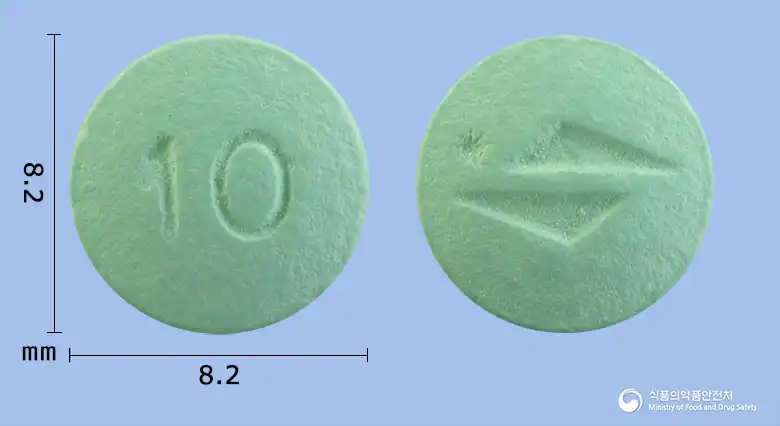
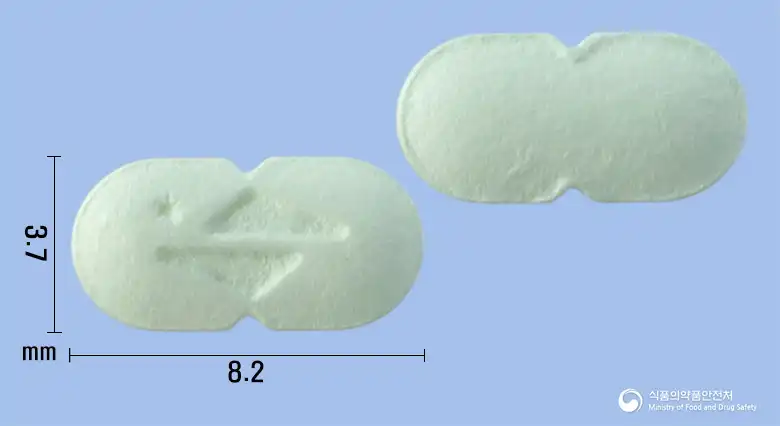
Bright green rectangular film-coated tablet with the company logo engraved on one side
30 tablets/bottle
Even with the same ingredient, strength, dosage form and how it is taken can differ.
Even with the same ingredient, the dose and directions can differ by strength and dosage form. Talk to a doctor or pharmacist before switching from a medication you are already taking.
No questions yet.
For anything that needs medical judgment, consult a doctor or pharmacist.
This drug information is based on data provided by the Korea Ministry of Food and Drug Safety.
Consult a doctor or pharmacist for accurate dosage, administration, and usage instructions.